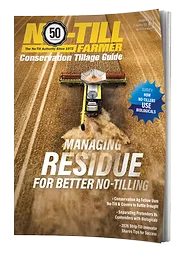
Below are key no-till takeaways from several of the features found in the August 2025 issue of No-Till Farmer.
Severe Drought Challenges ‘Full Flex’ No-Till Farm
- Combine cover crops and livestock to improve farm flexibility and profitability
- Select corn hybrids that can help you avoid seasonal drought and heat
- Consider shifting soybean acres to warm-season covers if covering the soil is a priority
Conservation is Standard, But Strategy is Flexible
- No-till planter upgrades allow greater accuracy at higher speeds.
- Gypsum applications reduce magnesium needs and improve soil tilth.
- Buffer strips protect water and provide valuable wildlife habitat.
Multi-Tasking Vertical Tillage Tools an Asset for Growers
- Vertical tillage tools can be effective in reducing damage wildfires threaten
- Managing residue not only makes planting easier but can speed up plant establishment
- Vertical tillage can help growers address problems in the field without causing major soil loss
Soil Health Principle 5: Livestock Integration
- Pursuing plant diversity can bring no-tillers soil and water resiliency
- Walk the paddocks and confirm if too little or too much litter and leaf was taken
- Farms with livestock integration can process crop residues through the ruminant, as the soil food web benefits by a readily available food supply.
'AI' Already Much Busier in No-Till Than Many Realize
- AI can provide tools for maximizing no-till and strip-till efficiency and reducing expenses.
- Machine learning capabilities can improve outcomes with every plant.
- AI-fueled technology can eliminate weeds while greatly reducing crop injury.
Managing Weeds with Precision Tech
- Electro-herb technology can bring immediate effects without the need for chemicals or disturbing the soil
- Laser-weed machines eliminate hand labor in specialty crops and can also eliminate herbicide use
- Light waves can destroy weed seeds during harvest, and AI innovations can spot-spray weeds and provide control in a variety of situations