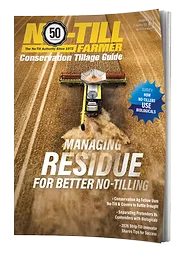
Below are key no-till takeaways from several of the features found in the November 2025 issue of No-Till Farmer.
Major Planter ‘Thoroughbreds’ Go Head-to-Head in Beck’s Trial
- Something as simple as a hard rain and baking sun can crust soil over and change the dynamics with closing systems.
- Singulation readings in the cab don’t always match what’s happening in the field. Get out of the cab and check your results.
- Getting all corn plants up within 24-48 hours is a great goal but not always realistic based on conditions.
How Soil Testing is Evolving into ‘Predictive Agronomy’
- Look deeper than N, P and K and micros for better ROI on inputs.
- Treat the soil as a living system and not merely an anchor for plants.
- Invest in integrated “complete” soil analysis with labs capable of timely, precision testing.
No-Till and Livestock Provide Resiliency in Drought
- Maintain adequate field residue to protect soil moisture.
- Build soils with a diverse approach that includes crops, livestock and manure.
- Increase soil carbon content for better water-holding capacity.
Opportunity Knocks & a Farmer is Reborn
- Soil health benefits crops and landlord relations.
- Timing and placement make fertilizer more effective and efficient.
- Repetition and accountability are critical for effective farm safety.
Zooming from ‘0 to 50’ Dollars an Acre with No-Till
- Focus on what you can control — your management.
- Fix drainage, nutrient problems in fields before going to no-till.
- Sell your tillage equipment and commit 100% to no-till.
Soil-borne ‘Springtails’ Likely Weed Control Agents
- Soil health could be a definite partner in fighting back resistant weeds.
- Results of springtail activity may vary by weed species.
- Thickness of seed coats could have an impact on effectiveness.