
No-Till Farmer editors encounter a variety of articles, social media posts, podcasts and videos that offer a unique look at the grower's world from the lofty digital realm. Here is our favorite content from the past week from across the web:
- No-Tilling Double Crop Soybeans
- Soil Health Savings in Alabama
- No-Till Soybean Scouting
- Tillage to No-Till: The 7 Stages of Grief
- No-Till, Cover Crops Improve Irrigation Efficiency
No-Tilling Double Crop Soybeans
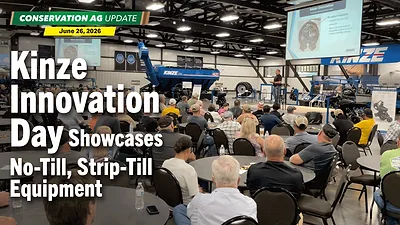
Wheat harvest and double crop soybean planting are happening at the same time in western Ohio! In this video, Mike Less visit Zimmer Farms south of Greenville, Ohio, as they harvest their 2026 winter wheat crop and plant no-till soybeans directly into the freshly harvested wheat stubble. Wheat harvest is underway with a CLAAS Lexion 8600 combine equipped with a MacDon FD140 draper head. Just down the road, the farm is no-till planting double crop soybeans with a Challenger MT738 tractor pulling a Fendt Momentum 32 planter set up as a 32-row planter on 15-inch row spacing.
Soil Health Savings in Alabama
Over time, healthy soil benefits your bottom line. Explore this Alabama profitability study, where cotton net income rose an average of $108/acre for farmers using soil health practices for at least five years. In this webinar, SHI Educator Jessica Kelton walks through findings from the farmers, and Marjory Walker of the U.S. Cotton Trust Protocol moderates a Q&A with Jessica, Wendiam Sawadgo (Auburn University), and Dr. Archie Flanders (SHI Agricultural Economist).
No-Till Soybean Scouting
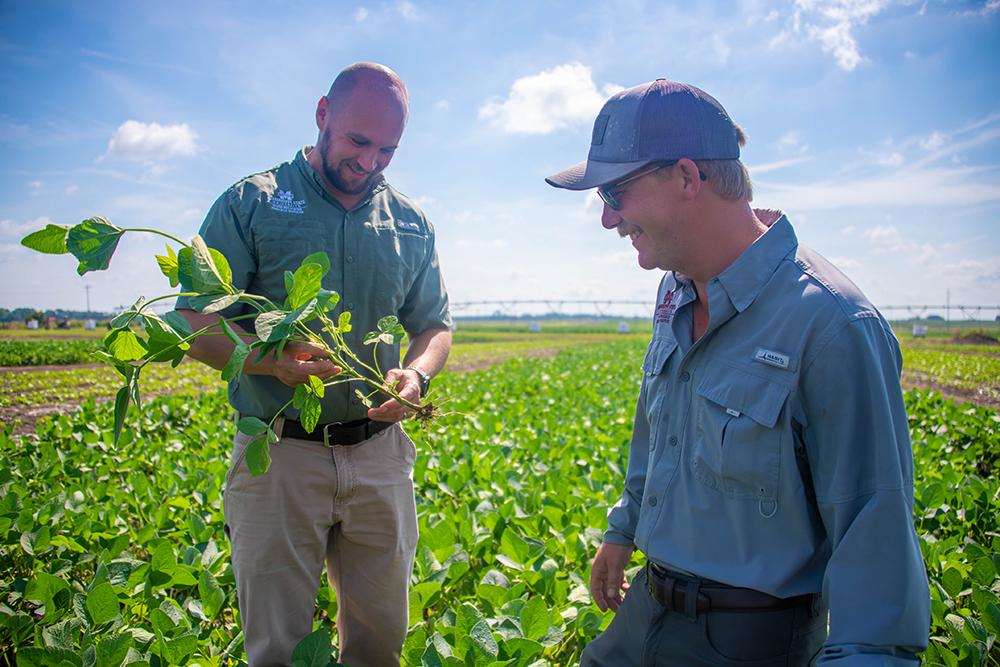
The Broke Farmers of Northeast Iowa focus on nurturing soil health by creating an ecosystem in the soil. On July 6, 2026 they check on soybeans that were no-tilled into a cover crop. After receiving 2 inches of rain in the preceding week, the soybeans are developing well.
Tillage to No-Till: The 7 Stages of Grief
Recently I read an article where the farmer said that he “went through all seven stages of grief letting go of tillage and the smell of freshly turned soil.” For many farmers, giving up tillage is not just changing a field operation — it is changing a mindset. Tillage has been part of farming for generations. It creates clean-looking fields, buries residue and often provides a sense of control. Moving to no-till or strip-till means letting go of familiar practices and embracing a different way of thinking about soil. Read the full article here.

No-Till, Cover Crops Improve Irrigation Efficiency
Mississippi State scientists are building on two decades of irrigation research to identify production practices that help growers save water while improving crop yields. Dave Spencer, plant and soil sciences associate professor and scientist in the university’s Mississippi Water Resources Research Institute, is studying how tillage, row spacing, fertility management and irrigation practices affect crop productivity and water use at the Mississippi Agricultural and Forestry Experiment Station’s Black Belt Branch in Brooksville. Read the full article here.
Is there something you want to share in "This Week"? Send us an email.