 RSS
RSS
In Depth: The Money-Making Power of Soil Microbes
Reducing soil disturbance, increasing plant diversity and adding livestock to farms accelerates soil health and productivity, helping growers stay profitable, soil experts say.
Read More


.webp?height=125&t=1765819283&width=150 "Frankly-Speaking-logo_0324_1000px (1).png")

Get full access NOW to the most comprehensive, powerful and easy-to-use online resource for no-tillage practices. Just one good idea will pay for your subscription hundreds of times over.
Download these helpful knowledge building tools
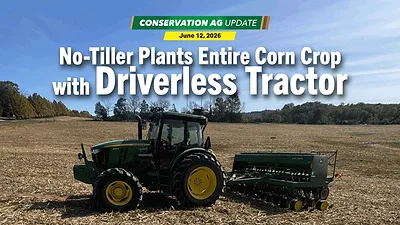
On this episode of Conservation Ag Update, brought to you by Titan International, we catch up with young Kentucky no-tiller Quint Pottinger to see how he autonomously planted his entire crop in 2026. Senior editor John Dobberstein checks in from the CTIC Conservation in Action Tour in Scotland Neck, N.C., where no-tiller Zeb Winslow III talks about his multi-species cover crop program.

We have engineered and developed the most advanced concave system that threshes all crops, eliminates rotor loss, improves grain quality, gives you a cleaner sample – all with one set of XPR concaves.

At Titan International, our product portfolio reflects our commitment to innovation and high-quality products. Titan International offers a full line of solution-focused wheel, tire, and undercarriage products for a wide variety of off-the-road equipment in agriculture, construction, forestry, mining, power sports, high-speed trailers, and outdoor power equipment segments. As one of the largest North American manufacturers, with a network of dealers all over the world, Titan is an industry leader that original equipment manufacturers and operators can count on for durable products and quality service.

Provide expert analysis and decision support to increase productivity and profitability.