 Premium content is for our Digital-only and Premium subscribers. A Print-only subscription doesn't qualify. Please
No-Till Farmer
Get full access NOW to the most comprehensive, powerful and easy-to-use online resource for no-tillage practices. Just one good idea will pay for your subscription hundreds of times over.
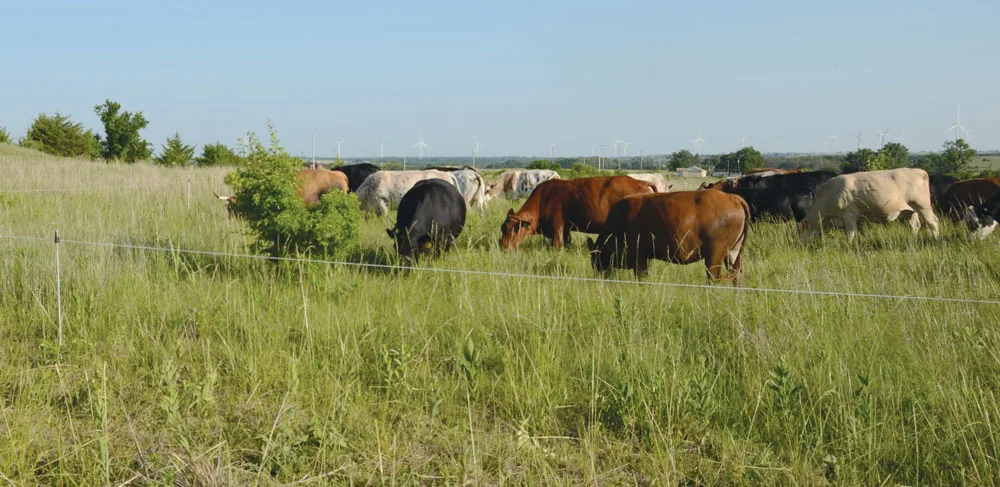
STOCK UP & SAVE. Increased stock density and intensive grazing management helps long-term forage production, boosts farm income, and reduces weed and insect pressure, particularly when added as a tool to diversify a crop-only farm. Research shows the “animal equation” is vital to building soils and reducing inputs — usually within the first year. Dan Crummett
With barely break-even commodity prices threatening the viability of many farm operations, a major influencer in regenerative agriculture firmly believes more no-tillers should add livestock to diversify their operations.
Jonathan Lundgren, owner of Blue Dasher Farm and CEO of the non-profit Ecdysis Foundation, says livestock integration on U.S. farms isn’t a crazy idea anymore, which has been proven in the scientific data gathered through the Foundation’s 1000 Farms research project.
Lundgren, a research entomologist, launched Blue Dasher Farm in Brookings, S.D., after his high-profile exit from the USDA over his belief that corporate financing was too heavily involved in the agency’s research efforts.
The 1000 Farms initiative, the largest of its type globally, began in 2022 and currently includes 1,800 U.S. farming operations voluntarily collecting data through research projects focusing on various regenerative practices.
Lundgren opines that farmers are almost paying for the right to farm when current commodity prices and utilization of marginal lands are factored in.
“Converting marginal cropland to rangeland and managing those pastures for animal agriculture increases a farm’s overall productivity and adds diversity of revenue streams,” he says…

Get full access NOW to the most comprehensive, powerful and easy-to-use online resource for no-tillage practices. Just one good idea will pay for your subscription hundreds of times over.
Download these helpful knowledge building tools

We have engineered and developed the most advanced concave system that threshes all crops, eliminates rotor loss, improves grain quality, gives you a cleaner sample – all with one set of XPR concaves.

At Titan International, our product portfolio reflects our commitment to innovation and high-quality products. Titan International offers a full line of solution-focused wheel, tire, and undercarriage products for a wide variety of off-the-road equipment in agriculture, construction, forestry, mining, power sports, high-speed trailers, and outdoor power equipment segments. As one of the largest North American manufacturers, with a network of dealers all over the world, Titan is an industry leader that original equipment manufacturers and operators can count on for durable products and quality service.

Provide expert analysis and decision support to increase productivity and profitability.