Takeaways
- Soil unprotected from the elements stands little chance against wind erosion
- Strengthening soil structure can give young plants better odds of survival in challenging climates
- Many strains of bacteria, using sunlight and air, pull carbon dioxide into their cells and leak the leftovers as simple organic matter
Occasionally I come across a headline that truly makes me stop and think. And that’s the case with an article that I read recently on Earth.com.
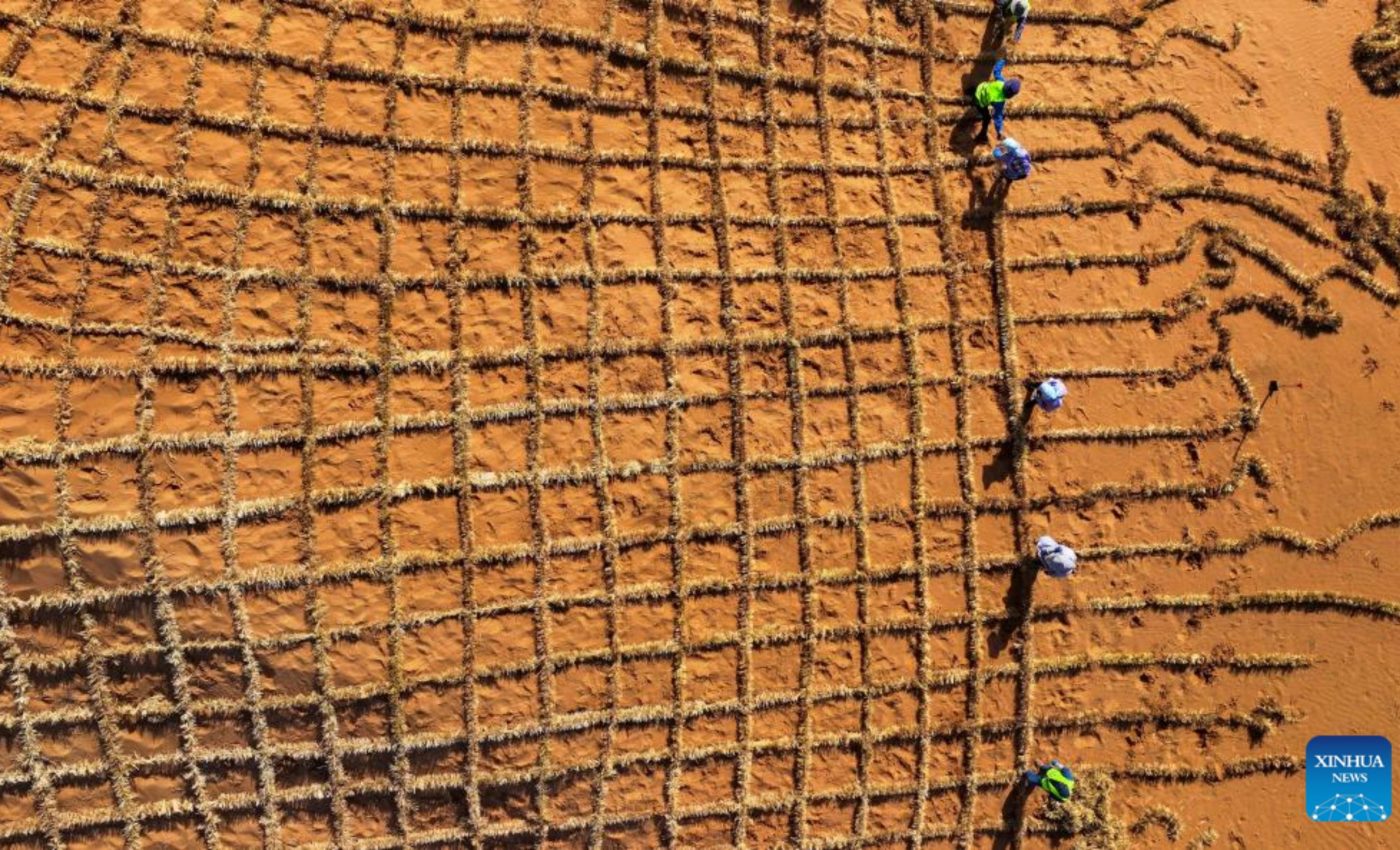
It’s hard to grow anything where there is little or no moisture. That’s why deserts are deserts. But scientists in China are trying to change the paradigm with lab-grown cyanobacteria microbes and straw checkerboards laid over the soil. The microbes bind the sand particles together into a thin crust that doesn’t blow away as easily.
This buys researchers from the Chinese Academy of Scientists enough time to plant shrubs and grasses before prolific winds destroy young plants. The study, first appearing in Soil Biology and Biochemistry, reports that in trials near the Taklamakan Desert in Xinjiang in northwestern China, researchers saw crusts stabilize sand within 10 to 16 months.
 Source: Earth.comAs Earth.com explains, long before forests existed, cyanobacteria — sunlight-powered bacteria that thrive in harsh places — likely appeared about 3.5 billion years ago.
Many strains, using sunlight and air, pull carbon dioxide into their cells and leak the leftovers as simple organic matter.
In desert soils short on fertilizer, some species perform nitrogen fixation, turning nitrogen gas into plant-ready nutrients for the crust community. Once they take hold, their living layer binds loose grains and gives the first plants a better place to root, the study says.
Over the first year, the treated surface began holding nutrients near the top inch instead of letting dust blow away.
As nutrients concentrated, more microbes could feed on them, and the crust community became harder to disturb. For seedlings, that created a better starting point, authors say, but survival still depended on rain arriving at the right time.
After short rains, a crusted patch kept moisture closer to the surface, while nearby bare sand dried out quickly. Lab tests with a manufactured crust cut wind-driven soil loss by more than 90% in controlled winds.
Reading this reminded me of some visits I’ve made to farms in the western U.S. to farms that have managed to get cover crops to work despite windy, semi-arid conditions. Colorado grower Scott Ravenkamp showed me how soils that were covered created a microenvironment with higher humidity that kept soil biological activity alive.
But still, I was shocked to read how soil could be made in such harsh environments using this technology, shortening the soil rehabilitation process from decades to years. It bears repeating that soil is MEANT to be covered, and healthier soil does a better job retaining moisture and utilizing nutrients.