Require Subscription

Rockey_2.jpg

Digging Up Soil Health, Profitability with ‘Biotic’ Farming

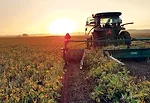
Brendon Rockey turned to companion cropping, covers, compost applications and livestock to regenerate soils on his potato farm in a dry, arid environment.
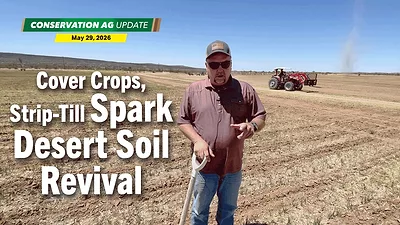
For all intents and purposes, Brendon Rockey farms in a desert where native soils have almost zero organic matter and precipitation is infrequent. But as bleak as that may sound, Rockey’s farm is actually thriving and biologically active.
Read More
Open.jpg
12th Annual No-Till Operational Benchmark Study

Profitability Picture Mixed, but Brighter for No-Tillers

Growers plan to stay frugal with fertilizer and equipment spending as they work to keep their finances in the black during the 2020 season.
In spite of record rainfall in some states, unplanted acreage and trade wars erupting between the U.S. and several countries, no-tillers still managed to improve their financial position a bit in 2019, according to results of the 12th annual No-Till Farmer Operational Benchmark Study.
Read More
Carbon_credit_1.jpg

‘Getting Paid’ for Your No-Till Soil Health

Indigo Ag, Nori pushing programs to pay farmers for the carbon they sequester, as a switch to the open market looms.
While it may not be an immediate windfall, no-tillers who’ve been doing the right thing to protect and enrich their soils may finally have a chance to cash in on that beyond the money they’ve already saved in fuel, machinery and labor.
Read More
Grumbine-1.jpg

Unlocking the Yield Potential of No-Tilled Corn

No-tiller Darren Grumbine has logged 300-bushel-per-acre corn by taking care of the soil and managing nutrients efficiently and responsibly.
Darren Grumbine is leaving no stone unturned in his quest to maximize yield production on his no-till operation, whether that means tweaking equipment or casting a critical on eye on long-held assumptions about nutrient and disease management.
Read More
wheat-w-early-beans.jpg

Maximizing Solar Efficiency for Higher Profits, Better Soil Health

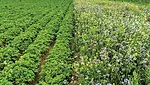
Gaston, Ind., no-tiller Jason Mauck captures maximum sunlight and carbon through relay intercropping cash crops and cover crops and integrating manure.
Read More
Jack-Herricks.jpg
What I've Learned from No-Tilling

Achieving Profits and Sustainability with a Properly Cycling System

In this no-tiller’s book, conservation practices must work for your soils and your bank account.
The good thing about Cashton soils is they don’t dry out. The bad thing about Cashton soils is they don’t dry out. That’s the saying around here. It’s partly why I use cover crops like cereal rye.
Read More
SCN-females.jpg

Managing Around Plant Disease Hotspots for 2020

Soilborne pathogens and fungal diseases are likely concerns for corn and soybean no-tillers this season, but pathologists say pay particular attention to soybean cyst nematodes, sudden death syndrome, tar spot and target spot.
Soybean cyst nematode (SCN) and sudden death syndrome (SDS) are expected to plague U.S. no-till soybean producers again this year, especially if the local planting season is accompanied by cooler and wetter than average conditions.
Read More

Top Articles

Current Issue

NTF-July-2026_BookWithPages_Curl_art-link.png

No-Till Farmer

Get full access NOW to the most comprehensive, powerful and easy-to-use online resource for no-tillage practices. Just one good idea will pay for your subscription hundreds of times over.

Subscribe Now

View More

Must Read Free Eguides

Download these helpful knowledge building tools
View More
Top Directory Listings