 RSS
RSS

Require Subscription
The “Grandfather” of Strip-Till Talks Transition and Technique
Illinois farmer Rich Follmer reflects on how a desire to warm the soil while still maintaining his conservation efforts led to the invention of strip-tilling and shares what methods are working on his farm today.
Read More
No-Tillers Practice the Art of ‘Covering Up’ for Decades
Over the years, no-tillers have led the way in seeding cover crops to boost soil health and capitalize on the many benefits they can bring to their farming operations.
Read More

Teaching the World to Save the Soil
Five educators discuss the past, present and future of sharing no-till knowledge with farmers.
Read More
Editorial Viewpoint
Impacts and Insights of Influential No-Tillers
Our editors hear amazing stories from no-tillers every day, but not every quote or anecdote makes it into print for one reason or another. Here, we chronicle a handful of tales from our encounters that have made a lasting impression.
Read More
No-Till's Historical Highlights (Through 2021)
With more than 75 new updates, this historical record identifies what built no-till into a profitable farming practice now embraced on 110 million U.S. acres.
Read More
Two Roads to Farming’s Future: What to Choose?
Veteran ag economist John Ikerd says U.S. agriculture may need to look at a more integrated approach to the challenges it faces with growing public concern over environmental and social issues.
Read More

Strip-Till Nutrient Placement Requires Flexibility, Diligence
Strip-tillers from three farms talk about what works and what’s a challenge in strip-till nutrient management.
Top Articles
Current Issue

No-Till Farmer
Get full access NOW to the most comprehensive, powerful and easy-to-use online resource for no-tillage practices. Just one good idea will pay for your subscription hundreds of times over.
Cover Crops Managed Properly Can Bring Immediate Benefits
Boost Revenue & Soil Health by Integrating Livestock with No-Till
Quake Sensors Show Tillage Weakens Soil
Must Read Free Eguides
Download these helpful knowledge building tools
- How Beneficial Insects, Pollinators Can Boost No-Till Resilience
- How No-Till Improves Your Land Value
- 5 Pillars for No-Till Farming Effectively, Efficiently
- Making the Precision Basics Even Better with Implement Guidance
Videos
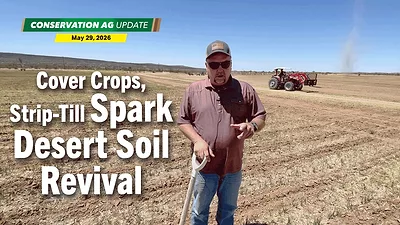
Cover Crops, Strip-Till Spark Desert Soil Revival
On this episode of Conservation Ag Update, brought to you by Titan International, we pay a visit to Strip-Till Innovator Robert Boyle’s farm in Coolidge, Ariz., for an up-close look at how he’s transforming his soils with cover crops and diverse rotations.
Top Directory Listings

Estes Performance Concaves
We have engineered and developed the most advanced concave system that threshes all crops, eliminates rotor loss, improves grain quality, gives you a cleaner sample – all with one set of XPR concaves.

Titan International Inc
At Titan International, our product portfolio reflects our commitment to innovation and high-quality products. Titan International offers a full line of solution-focused wheel, tire, and undercarriage products for a wide variety of off-the-road equipment in agriculture, construction, forestry, mining, power sports, high-speed trailers, and outdoor power equipment segments. As one of the largest North American manufacturers, with a network of dealers all over the world, Titan is an industry leader that original equipment manufacturers and operators can count on for durable products and quality service.

Servitech
Provide expert analysis and decision support to increase productivity and profitability.