Require Subscription

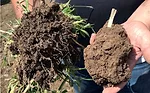
soil-aggregates.jpg

Soil Function Key to Regenerative No-Till

Putting soil health at the center of a no-till operation can take a farm from status quo to truly regenerative with balanced and diversified soil biology, improved aggregate stability, increased water infiltration rates and improved nutrient cycling.

Longtime soil conservationist Barry Fisher says improving soil health requires well-planned, step-by-step actions aimed at specific goals. However, taking those steps can seems daunting, especially if they add complexity to a system that seems to be working well.


Read More
Great Plains Mfg. Exacta TL GEOspread 3900 Fertilizer Spreader_0519 copy

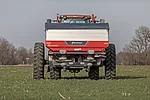
Can a Fertilizer Spreader Replace a Drill or Planter When No-Tilling Soybeans?

With extremely wet conditions, this veteran no-tiller is looking at “spinning” soybeans into a living cover crop.

While he’s been no-tilling and using cover crops for over two decades, traditional cropping ideas haven’t always worked for Frank Martin when soil conditions turn extremely wet in the spring. As a result, the Hallsville, Mo., no-tiller is looking at trying a different soybean seeding idea on his poorly-drained clay pan soils this spring.


Read More
Matt-Splitter-Family.jpg
What I've Learned from No-Tilling

Collaborating with No-Till Pros Takes Farm from Bleak to Booming

Matt and Janna Splitter connected with long-time no-tillers Margaret and Lee Scheufler for guidance. What they got was so much more.
It started with one simple question asked to no-tiller Lee Scheufler at a winter meeting: “Why do you plant soybeans with an airseeder on 7½-inch rows?” A farmer icebreaker if there ever was one. 
Read More
planting-green.jpg
14th Annual No-Till Operational Benchmark Study

No-Till Remains Strong, High Interest in Biologicals, Love-Hate with Covers?

14th annual No-Till Operational Benchmark Study shows yields, acreage up as cost, nutrient uncertainties loom.

No-Till Farmer’s annual benchmark survey received 480 responses from growers in the U.S. and Canada. Results showed the ongoing strength of the no-till movement as the 60th anniversary of the commercial launch of the practice will be marked later this year.


Read More
DSC_0042.JPG

On-Farm Testing Unlocks No-Till Success

Longtime no-tiller and retired Wisconsin Extension agent Jim Leverich — the inaugural No-Till Farmer Operator Fellow — encourages farmers to gather and utilize data from their own experience and operations for useful and practicable insights.

As a former extension educator, Leverich is accustomed to keeping good records of practices and having others pick his brain about all the nuances of no-till, making him an excellent candidate for our inaugural Conservation Ag Fellow. He is an advocate for integrating data and precision ag into farming practices and believes on-farm testing is critical to achieving no-till success.


Read More
rainbow-crowns-part-of-Ruth-Rabinowitzs-Iowa-farm.jpg

Women Landowners Arm for Conservation Push

Growing number of women landowners seek role in land operational decisions, helped by federally funded outreach programs.

Ruth Rabinowitz had a problem.
The long-time professional wedding photographer inherited hundreds of acres of fertile farmland in Iowa and South Dakota from her deceased father, David Rabinowitz, a Great Depression-era doctor, who invested heavily in Iowa farmland between 1978 and the mid 1990s.


Read More
NNTC_AgroLiquid8-2.jpg

Refining Nutrient Needs with Smart, Targeted Testing

The 14th class of Responsible Nutrient Management Practitioners shares insights into how soil and sap testing, monitoring moisture and spoon feeding are leading to big reductions in on-farm fertilizer applications.

Recognized for their successful fertilizer application practices, Brooks Garland, of Lee, Fla., Adam Chappell of Cotton Plant, Ark., and Paul Overby of Wolford, N.D., were honored as the 14th class of Responsible Nutrient Management Practitioners at the 2022 National No-Tillage Conference in Louisville, Ky.


Read More
Kernza-DeHaan.jpg

Deep-Rooted Kernza Shows Promise as Dual-Purpose Perennial Crop

Kernza, a specialty grain crop developed by The Land Institute, is a perennial cool-season, dual-purpose crop that can provide high-quality winter grazing as well as grain in the summer.

The land institute's nearly 20-year-old breeding program with intermediate wheatgrass is on track to perfect a no-tiller’s “dream come true” — a cool season perennial that can be managed for both winter grazing and a grain crop the following summer.


Read More

Top Articles

Current Issue

NTF-July-2026_BookWithPages_Curl_art-link.png

No-Till Farmer

Get full access NOW to the most comprehensive, powerful and easy-to-use online resource for no-tillage practices. Just one good idea will pay for your subscription hundreds of times over.

Subscribe Now

View More

Must Read Free Eguides

Download these helpful knowledge building tools

View More
Top Directory Listings