 Premium content is for our Digital-only and Premium subscribers. A Print-only subscription doesn't qualify. Please
No-Till Farmer
Get full access NOW to the most comprehensive, powerful and easy-to-use online resource for no-tillage practices. Just one good idea will pay for your subscription hundreds of times over.

By the time the farm crisis in the 1980s had abetted, and the oil crisis shortly thereafter, Joe Swanson was at a crossroads.
The Windom, Kan., farmer had been neck-deep in both industries. Farm interest rates had soared, and oil prices plummeted, from $25 per barrel to $8 per barrel in less than three months.
As he recalls, “I was a broke son-of-a-gun. We were losing money so fast it wasn’t even funny.”
Leaving the oil business, Joe and his father, Albert, focused on the farm. They had dabbled in no-till in the 1970s, but equipment and crop-protection products weren’t as conducive to the practice back then.
They had an International Cyclo Air planter, to which they added Acra Plant shoes and extra weight to plant grain sorghum and soybeans. The practice worked, “but we ruined that planter,” Swanson says.
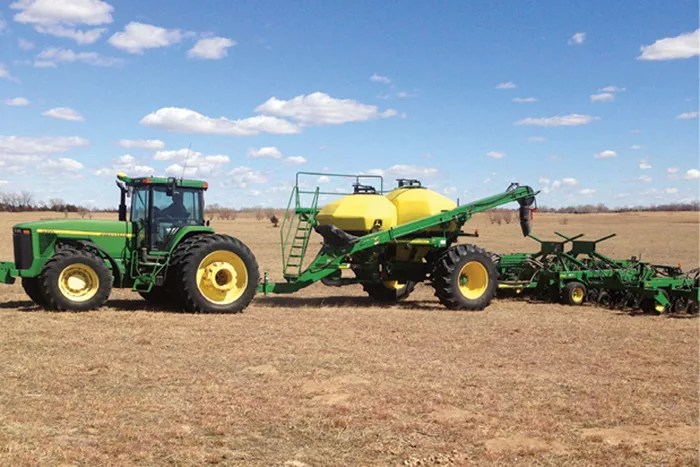
By the early 1990s, Joe had scraped enough cash together to buy a 15-foot John Deere 750 no-till drill, and a six-row John Deere 7000 planter. “I farmed 1,500 acres with that little dab of equipment,” he says.
He couldn’t do conventional tillage and no-till at the same time, so Swanson chose no-till. His goal — besides staying in business — was controlling soil erosion. Even though central Kansas soils are reasonably level, rills and gullies still occurred. No-till, Swanson reasoned, would help fix those problems.
Fast forward 30 years, and Swanson’s vision that no-till would solve these problems was prescient.
The simple no-till operation from the 1990s has blossomed…
Get full access NOW to the most comprehensive, powerful and easy-to-use online resource for no-tillage practices. Just one good idea will pay for your subscription hundreds of times over.
Download these helpful knowledge building tools

We have engineered and developed the most advanced concave system that threshes all crops, eliminates rotor loss, improves grain quality, gives you a cleaner sample – all with one set of XPR concaves.

At Titan International, our product portfolio reflects our commitment to innovation and high-quality products. Titan International offers a full line of solution-focused wheel, tire, and undercarriage products for a wide variety of off-the-road equipment in agriculture, construction, forestry, mining, power sports, high-speed trailers, and outdoor power equipment segments. As one of the largest North American manufacturers, with a network of dealers all over the world, Titan is an industry leader that original equipment manufacturers and operators can count on for durable products and quality service.

Provide expert analysis and decision support to increase productivity and profitability.