When corn and soybean stockpiles grow and prices stagnate, no-tillers may want to decide whether it’s time to diversify their crops to explore new markets and work toward being a market maker instead of a market taker.
Cover crops can be used for different reasons, such as to provide soil erosion protection, alleviate compaction, control weeds, fix atmospheric nitrogen for the next crop, harvest for hay, and as a grazing resource. The reason for using a cover crop will determine which species or mixture of species you choose, as well as how you manage it.
One major consideration before deciding to plant a double crop or cover crop after wheat is the potential for herbicide carryover. Cover crops can be challenging in this regard.
Researchers are studying the soil around sorghum plants in hopes of gleaning how microbes help the crop continue to produce during droughts, possibly providing clues to helping other crops improve drought tolerance traits.
No-Till Farmer readers appear firmly committed to using cover crops. The percentage of no-tillers using cover crops grew to 83% in 2017 — a 6-point jump over the prior year, an all-time high in the decade-old no-till benchmark study and the 6th consecutive year of growth.
Allowing soils to regenerate is the key to bottom-line success for producers, and the No-till on the Plains Winter Conference is the place to learn more.
Josh Lofton, cropping systems specialist for Oklahoma State University Extension, discusses the need for growers to plan early for sugarcane aphid pressure, and what factors to consider when deciding whether to replant sorghum after recent cold weather and hail damage.
Satisfying the appetites of a few thousand head of cattle is the linchpin of Boyle Farms and McClintock Dairy, both multimillion dollar operations near Coolidge, Ariz.
Kansas State University agronomist Alan Schlegel discusses his multi-year field tests of intensive dryland cropping systems for western Kansas, going beyond the conventional wheat-sorghum-fallow rotations.
Dow AgroSciences announced that in response to the states’ requests, the EPA has granted Section 18 emergency use exemptions in Alabama, Arkansas, Georgia and Texas for the application of Transform WG insecticide for control of sugarcane aphids in sorghum. Section 18 approvals are still pending in five other states.
Get full access NOW to the most comprehensive, powerful and easy-to-use online resource for no-tillage practices. Just one good idea will pay for your subscription hundreds of times over.
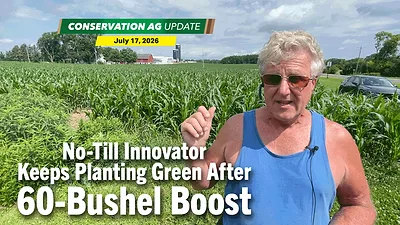
On this episode of Conservation Ag Update, brought to you by Yetter Farm Equipment, we get the scoop on the benefits of planting green with Jackson, Wis., no-tiller Ross Bishop.
We have engineered and developed the most advanced concave system that threshes all crops, eliminates rotor loss, improves grain quality, gives you a cleaner sample – all with one set of XPR concaves.
At Titan International, our product portfolio reflects our commitment to innovation and high-quality products. Titan International offers a full line of solution-focused wheel, tire, and undercarriage products for a wide variety of off-the-road equipment in agriculture, construction, forestry, mining, power sports, high-speed trailers, and outdoor power equipment segments. As one of the largest North American manufacturers, with a network of dealers all over the world, Titan is an industry leader that original equipment manufacturers and operators can count on for durable products and quality service.