On this episode of Conservation Ag Update, brought to you by Titan International, we share some #Plant26 highlights from across the U.S., including a young strip-tiller in Nebraska, a cutting-edge no-till drill in Pennsylvania and an innovative intercropping system in Indiana.
In the Farmer Feature, we head west to Tipton, Calif., where Tom Barcellos helped pave the way for no-till and strip-till in the area. Barcellos showcases his John Deere 1590 drill and explains why it’s one of the best investments he’s ever made.
In the Cover Crop Connection, Mackane Vogel takes us inside Tony Peirick’s Watertown, Wis., operation. Peirick, No-Till Farmer’s 2026 Conservation Ag Operator Fellow, shares his no-till origin story and details key farmer-led conservation initiatives in the region.
Later in the episode, Chris Weaver, who no-tilled his way to a dryland soybean record 154 bushels per acre in 2025, reveals his biggest no-till aha moment.
Plus, hear from leaders at Yetter and Martin in an exclusive interview following Yetter’s acquisition of Martin.
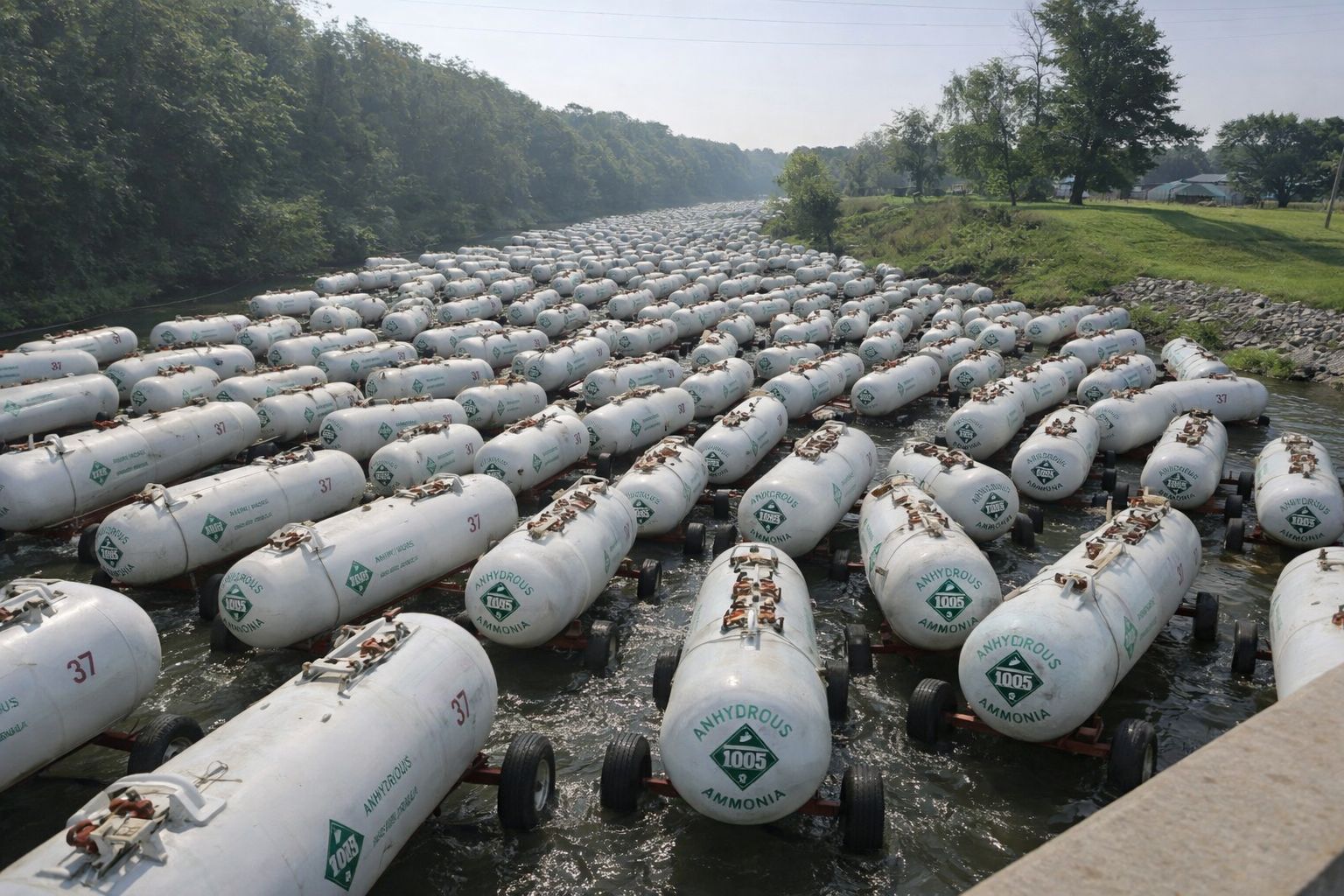
Finally, in the Photo of the Week segment, Cambridge, Ill., no-tiller Monte Bottens uses AI to help hammer home the severity of nutrient runoff problems.

This episode of Conservation Ag Update is brought to you by Titan International.
Titan International is a global leader in off-the- road wheels and tires, and is the maker of Titan Wheels, Titan Tires and Goodyear Farm Tires. Super Single Goodyear Farm Tires, featuring Titan LSW®️ technology help growers unlock greater performance.
Featuring a larger rim and smaller sidewall, LSW technology minimizes soil compaction and creates a smoother ride in and out of the field. Titan has you covered with a full lineup of tires to fit every application on your farm. Contact your local Titan and Goodyear Farm Tire dealer today and learn more about LSW Tire Technology.
TRANSCRIPT
Jump to a section or scroll for the full episode...
- #Plant26 Highlights: Young Strip-Tiller, New No-Till Drill & Relay Cropping
- No-Till Trailblazer Shares His Best Investment
- Tony Peirick Highlights Importance of Farmer-Led Learning
- Chris Weaver’s Pivotal No-Till Aha Moment
- No-Till Innovators Join Forces as Yetter Acquires Martin
- Photo of the Week: Addressing Major Runoff Problems
#Plant26 Highlights: Young Strip-Tiller, New No-Till Drill & Relay Cropping
Welcome to Conservation Ag Update. Planting season 2026 is officially underway for many of you. And we’re seeing some great videos from the field on social media. Let’s get right to the highlights.
We Begin in southwestern Nebraska, where the future of strip-till is so bright, you need shades. 12-year-old Jase kicking off his rookie campaign in strong fashion, as he runs the strip-till rig for the first time... with some assistance from dad… Great job Jase. Already looking like a pro.
From a rookie to a legend. Out in Holtwood, Pa., Steve Groff reveals his new custom-built no-till drill with 4-inch row spacing to plant hemp and flax. Steve says each row will have 400 pounds of down pressure and the row units can travel 17 inches up and down. He hopes to begin testing it this summer.
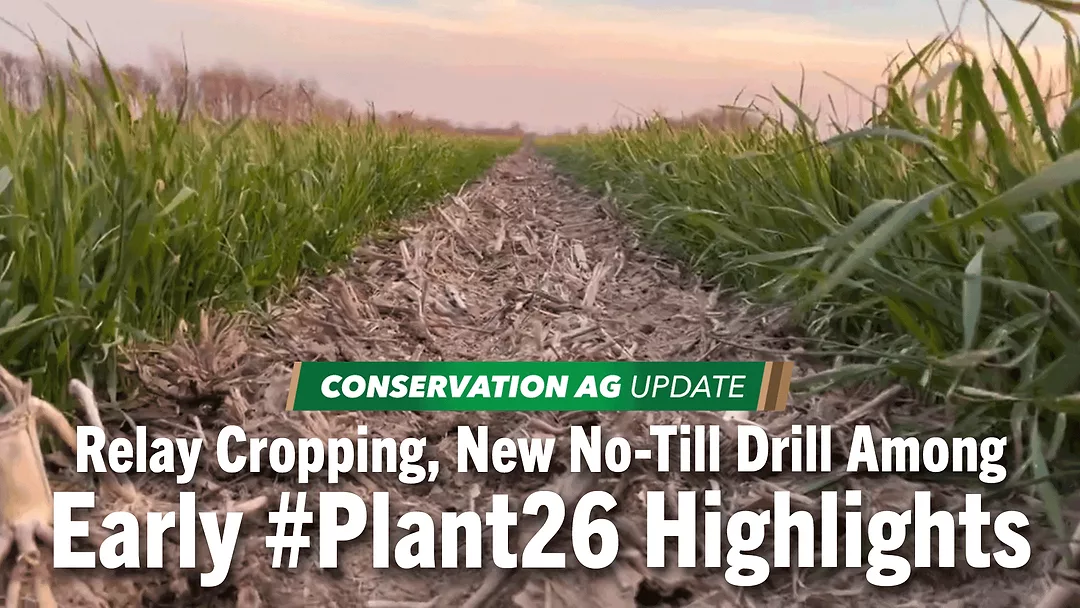
Meanwhile in Gaston, Ind., relay cropper Jason Mauck continues to #FarmWeird. Here he is on April 8, planting soybeans in between rows of standing wheat. Jason expects to harvest the wheat around June 25th, which means the two crops will be friendly neighbors for about 80 days. Let’s go down to the field for an up-close look.
“Trying to get them about an inch and a half in the ground. You have a row right here and a row right here. We’re basically using the proximity of the wheat here to create more oxygen for the beans. Look at that root mass.”
I encourage you to give Jason a follow on social media, he’s always posting great videos and sharing information.
No-Till Trailblazer Shares His Best Investment
While some of you are just getting started, Tom Barcellos never stopped! It’s busy season 24/7/365 for the no-till pioneer in Tipton, Calif. He runs a big dairy operation, grows pistachios, citrus, strip-tills corn for silage and no-tills small grains.
Barcellos was the first in his area to move away from the plow when he started no-tilling 30 years ago. Now he estimates about 60% of all corn production in his area is grown under conservation tillage practices. Tom says his no-till drill, which he bought about 20 years ago, is one of the best investments he’s ever made.
“This is our John Deere 1590 no-till drill. You just don’t find these in California because nobody does no-till grain. We use this primarily when we’re taking out an alfalfa field. It works really well. You get some moisture in the ground, and we’ll drill either oats or wheat into the alfalfa stand. And once that crop comes off and we harvest it, the soil is so mellow from that little root structure in the top. Then we can come back and strip-till corn into it, and it just does a beautiful job. This is probably one of my best investments. I’ve had this 18-19 years and it paid itself off right away. It’s one of my favorite tools.”
Barcellos learned early on that no-till and strip-till aren’t “set it and forget it” magic bullets. A lot of management is required, especially in a dry climate, where he gets about 9 inches of rain per year.
Tony Peirick Highlights Importance of Farmer-Led Learning
If you haven’t had a chance to dive into this year’s Conservation ag Operator Fellowship series with Wisconsin no-tiller Tony Peirick, now is the time. He and many other growers around the country are making plans to get into the field and plant in the coming weeks.
I’ll have more on his planting season very soon but first, let’s get you caught up on his background and some other projects he is working on.
“My name is Tony Peirick. We live here in Watertown, Wisconsin. I farm here with my brother and our sons and families. It's called under T&R Dairy Farm, LLC. We've been farming since the ... Oh, we kind of took it over from my dad in the early 80s already and been farming ever since. So we've been moving a long time. We're a dairy and cash grain operation. We have our own grain facility. We store all the grain on farm. We do milk around just around 200 cows here always. We keep it more of a family operation. Most of the land we own, we rent very too much of it. We got a good base here with a lot of land over the years we're able to buy. And we've been doing covers since the 90s, late 90s, we started with cover crops. So we've been doing a lot of no-till now in covers the last 20 some years.”
“So people just got to try something. You can't not say you're never going to do it. Try it, move forward, and it does work. And like I say, I'm involved with the different farmer-led groups. I'm with Dodge County Farmers. I started that group up. It'll be close to 10 years ago. We got a group of farmers out there that we're pushing the regenerative side. We're doing no-till and covers and strip cropping and all kinds of other stuff. And then also the Fields of Sinsinawa is another big organization we got going down there in Sinsinawa, Wisconsin down by Platteville in the corner down there. That's a farmer learning center. We're going to do a full scale farming set up down there with regenerative agriculture and showing people what it is we need to do as far as the rotational grazing. We got a stock cropper going on down there.”
“There's a lot of different projects, so you can always keep an eye on that down there with ... But one of the important things over the years I got started here was all our farmer-led groups here in Wisconsin. We've got over 50 now that goes to 55 groups in Wisconsin, which Wisconsin has really been looked upon as a leader in these farmer-led groups and getting regenerative agriculture going, which is pretty important. Farmers don't want to try this on their own and they need that group support there.”
There will be much more coverage on Tony as the year goes on but for now, head to https://www.no-tillfarmer.com/conservation-ag-fellowship to see all the stories and videos we have so far.
Chris Weaver’s Pivotal No-Till Aha Moment
A couple months ago we reported on Maryland no-tiller Chris Weaver’s record-breaking 154-bushel, non-irrigated soybean crop. Cover crops, timely fertility and a slow and steady harvest are all big keys to his no-till success. But he says one of his biggest aha moments came a few years ago in the winter.
“We also run a feedlot. One of the aha moments for me with running that feedlot was the yellow straw that we had out there in the manure, and what I was noticing was our corn yields kept decreasing. I wasn't composting that straw. It was taking away my nitrogen. So now we compost all of our manure before we put it out. We used to haul a couple hundred loads of manure out of our feedlot. Now we're down to 50 or 60 because we have less manure because we're composting it there inside our facility. The same thing's happening with our fodder. Just because I'm going out there in no-till situations and I have fodder and I didn't see the soil move over the winter, that nitrogen you're putting out or that fertility you're putting out that's regenerating your biology to really get it kicking to eat your crop. So if you're not doing something in the fall to get your biology working, then you got serious problems. Not in seven degree temperatures like we have right now, but most times when it snows, some of our ground is the last to get snow on it because our biology's got at two to five degrees warmer that the snow's not landing on the ground because our soils are warmer.”
Every year, Weaver stays true to a simple acronym, S.T.O.P., which stands for “Start Thinking Out your Plan.” If you go into a growing season without a plan, you’re not going to succeed, he says.
No-Till Innovators Join Forces as Yetter Acquires Martin
A couple months ago, we broke the news of Yetter’s plans to acquire Martin. The acquisition became official this week. Our editorial team sat down for an exclusive interview with leaders from both companies to talk about how this move combines decades of no-till expertise and innovation.
Derek Allensworth, VP of Sales & Marketing, Yetter Farm Equipment: “You’ve got to hit the rewind button and backtrack to 1989 when the original row cleaner was invented by Howard Martin. That wheel started both these companies in a sense. Yetter had some other items, but for many years, planter attachments based around the row cleaner have been key to helping farmers, and there have been many different versions of the row cleaner. But at the end of the day, the row cleaner wheel is what these two companies have worked together from the beginning, and we’re going to continue to work together going forward.”
Tom Patterson, VP of Sales & Marketing, Martin-Till: “Derek has talked about the beginning of 1989 with the wheel. We’ve got some new products here, and I think that’s the nice thing about it is the two companies with the ability to work together. We’re going to continue to have new innovative products come on the market as we see needed for no-till, and I think that’s going to be a big plus for the no-till farming community. Theyr’e going to see the products they think they need and get them from either one of us.”
We also discussed the innerworkings of the acquisition with Martin president, Steve Martin. Catch that interview on No-Till Farmer.com.
Photo of the Week: Addressing Major Runoff Problems
Our Photos of the Week come to us from no-tiller Monte Bottens in Cambridge, Ill. He asked ChatGPT to create a photo with 52 semi-trailers dumping anhydrous ammonia into the river.
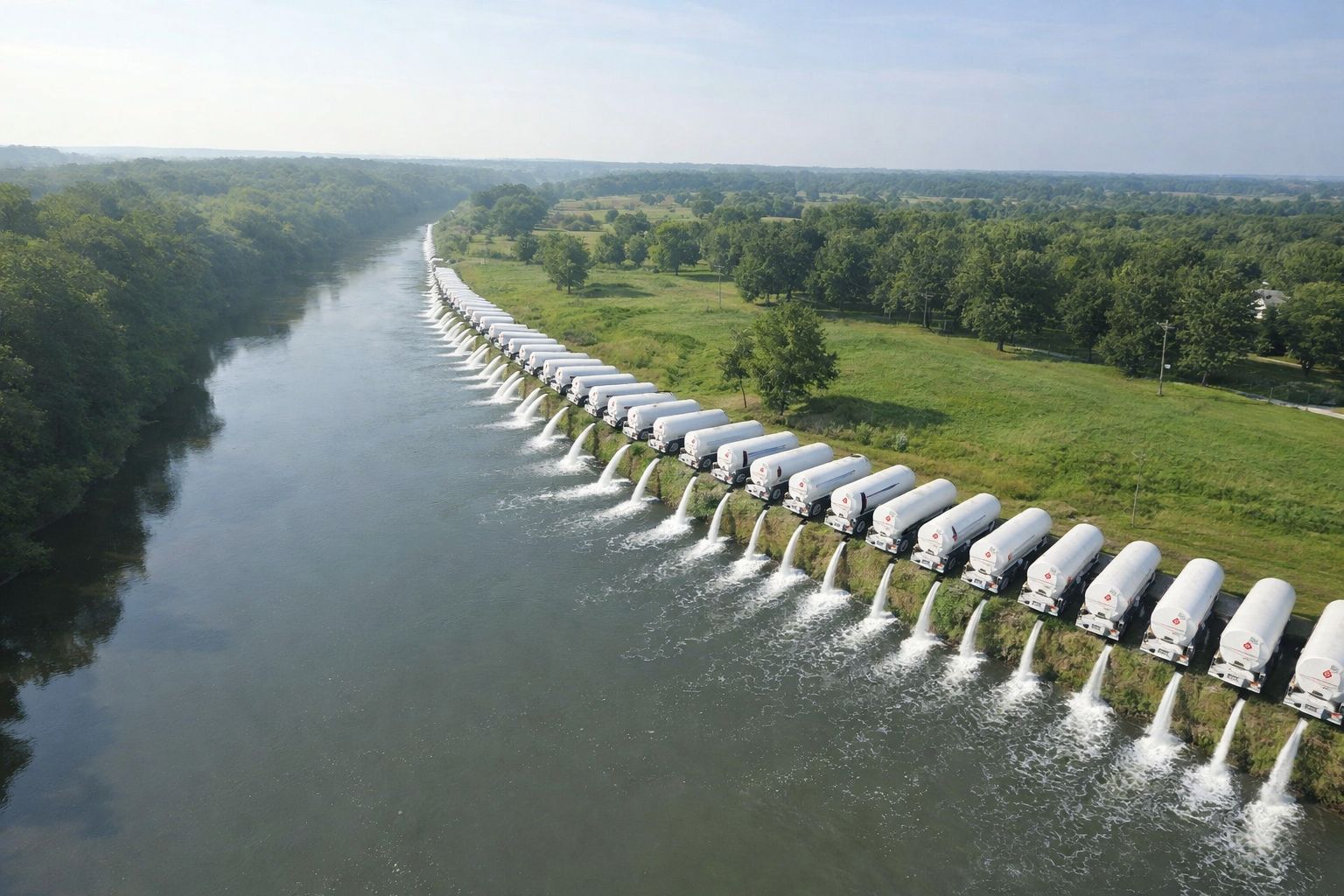
Why you ask? Monte says 1,000 tons of nitrogen flowed under the Green River Bridge by Geneseo, Ill., between April 1-12, the equivalent of 52 semi-trailers’ or 278 trailers’ worth into the river.
Monte says… “If we saw tankers spilling into a river, we’d take action. Runoff is considered normal and that there’s nothing we can do about it. The reality is, we as farmers are overapplying nitrogen to crops, which results in loss and pollution to streams.”
What do you think? Send me your thoughts and story ideas to Nnewman@Lessiter Media.com. Thanks for watching. Until next time, for more stories visit no-tillfarmer.com, striptillfarmer.com and covercropstrategies.com.