Back in 2017, the No-Till Farmer editors recognized 43 North American farmers and educators as “No-Till Legends.” At that time, we also recognized 11 honorees from seven countries outside of North America as “International No-Till Legends.”
Since then, we’ve been asked numerous times why we haven’t added to the list of international farmers and educators who are well deserving of this recognition.
Because of this continuing interest, No-Till Farmer introduced a yearly program in 2023 to honor the outstanding accomplishments of other international no-tillers and educators. Our goal is to add several internationally known farmers and educators in the no-till and conservation agriculture (CA) movements to this honor roll each year.
That year, several international conservation ag colleagues assembled a comprehensive list of worldwide no-till pioneers and champions exclusively for No-Till Farmer. That list included nearly 60 individuals who have made significant contribution to developing, promoting and spreading the word about the many benefits of no-tillage and conservation agriculture internationally. Other names have been added to the list in the past few years and this year’s honorees were selected by a panel of judges.
If you would like to nominate other well-deserving international farmers or educators for future No-Till Legend awards, please send a 1-2-page letter that outlines their accomplishments and email it to lessitef@lessitermedia.com before March 31, 2026.
Our 2025 “International No-Till Legends”
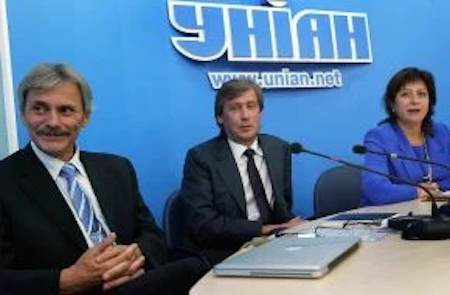
Volodymyr Khorishko and Sergey Prokayev, Dnipro, Ukraine
Co-owned by Volodymyr Khorishko and Sergey Prokayev, Ukraine’s Agro-Soyuz large-scale agricultural enterprise has centered around implementing global time-tested experiences in no-till crop production and livestock farming. Innovative energy and resource-saving technologies are used in this large-scale farming operation to produce environmentally friendly agricultural products from crop, production, seed breeding, dairy, swine and ostrich operations.
In 2011, the two agricultural entrepreneurs visited several U.S. no-tilled farms along the Missouri River under the guidance of Dwayne Beck, manager of the Dakota Lakes Research Farm in Pierre. The tour demonstrated to the Ukrainians how long-term no-tillers were effectively taking a systems approach to conservation agriculture. Their goal was to identify newly proven innovative ways to reduce costs with no-till on the 15,000 acres they were leasing from villagers and land shareholders in the Ukraine.
Arriving in the U.S. after a multi-year drought allowed them to observe crops growing well in no-till fields adjacent to crops that were wilting in fields where intensive tillage had been used. Yet even before leaving South Dakota, Volodymyr called the company’s farm manager in the Ukraine and instructed him to immediately cease all tillage.
“He called the Ukraine farm manager and told him to immediately stop all tillage work…”
What soon followed was an intensive learning process for the crop production department at Agro-Soyuz Ukraine to immediately implement a systems approach to conservation agriculture.
Before the Soviet Union government collapsed in 1989, Khorishko and Prokayev (both 31 years old at the time) began selling spare farm machinery and auto parts from the trunks of their cars. After the country’s declaration of independence in December 1991, the two entrepreneurs formed Agro-Soyuz.
After the Russian government collapsed, so did the Ukraine collective farming system. In 1994, government provided each member of collective farms with a certificate of ownership for a specified number of acres. With this change in land ownership, members could their allocated ground themselves or rent it out, but they weren’t allowed to sell it. Not until 2021 was this program changed to open up the land market, which led to the dramatic expansion of the Agro-Soyuz operation.
In 1996, Prokayev and Khorishko invested in a collective farm called Druzhba (or friendship in English). They have also hosted several no-till conferences for their staff and areas landowners from whom they rent ground.
Staffers from Agro-Soyuz have made numerous trips to the U.S. to visit leading crop, dairy and swine farms. To learn more about modern-day no-till practices, they mainly visit Canada and the U.S., but the staff has also visited no-till operations in Brazil and Argentina.

Saidi Mkomwa, Dar es Salaam, Tanzania
Having over 30 years of experience in rural agriculture training, research and development. Saidi Mkomwa serves as a conservation agriculture advocate throughout numerous African countries. His research and educational interests center around working with small-acreage farmers in developing their entrepreneurial skills and introducing environmentally friendly technologies in terms of food security and wealth creation based on a family’s limited land resources.
With a keen interest in conservation agriculture, he has served as the secretary of the African Conservation Tillage Network since 2008. Founded in 1998, the group’s mission is to promote conservation agriculture in 21 African countries by providing assistance to local field projects along with offering policy advice to national governments.
“Mkomwa has served as the secretary of the African Conservation Tillage Network since 2008…”
Mkomwa also serves as a member of numerous international and African regional committees. These include the international steering committee that has hosted several World Conservation Agriculture congresses and acting as an advisor to The Center for International Forestry Research and World Agroforestry drylands development program.
In addition, he has served as a registered professional member of the engineers’ registration board of Tanzania, technical secretary of the International Conservation Agriculture Advisory Panel for Africa. He also serves as a member of the Common Market for Eastern and Southern Africa Joint Technical Committee on Agriculture, Environment and Natural Resources, which includes 21 Africa nations who promote regional conservation agricultural goals.
Mkomwa holds a Master of Science degree in agricultural engineering from Canada’s University of Guelph and a Bachelor of Science degree in engineering from the University of Dar es salaam. He worked as an agricultural engineering researcher and tutor with the Ministry of Agriculture in Tanzania prior to joining the African Conservation Network program.
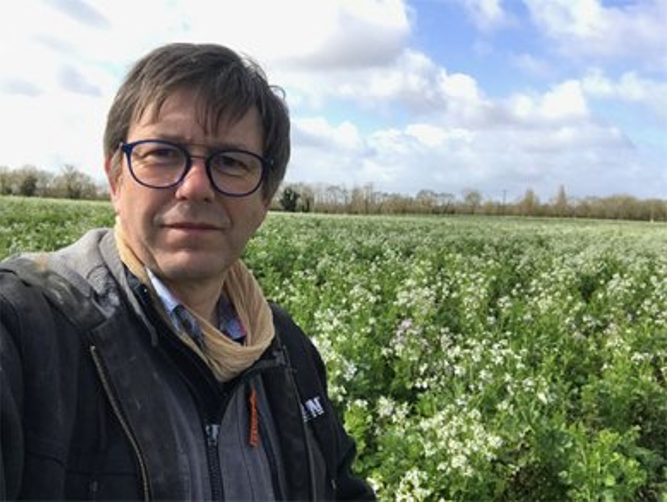
Frédéric Thomas, Sologne, France
Frenchman Frederic Thomas is a farmer, soil health educator and European agriculture magazine publisher who discovered minimum tillage and conservation agriculture during personal experiences carried out in the U.S, Australia and New Zealand. His strong convictions regarding the economic, agronomic and environmental interest of less tillage and better soil health allows him to play an active role both in France and throughout the world with producers, technicians and decision-makers in the reduced tillage movement.
After interning and working overseas, Thomas taught machinery mechanics and agronomy at an agricultural high school in Brittany, France. At the same time he also created and chaired for 16 years a French organization called the Biodiversity Agriculture Sol et Environnement - Biodiversity, Agriculture, Soil, and Environment organization.
“Thomas has brought European farmers to the Midwest to study no-till and other soil-saving practices…”
In 1999 he created “TCS,” a magazine specializing in no-till and other soil-saving techniques that has become a valuable reference for soil conservation throughout Europe. Over the years, Thomas has also brought groups of European farmers to the U.S. Midwest to study American no-till and other soil-saving practices.
A farmer since 1996 in central-north France, he farms low-potential hydromorphic sandy soils. By eliminating tillage, developing new crop rotations, adding cover crops and adding compost, he has succeeded in significantly improving both soil fertility and economic results.
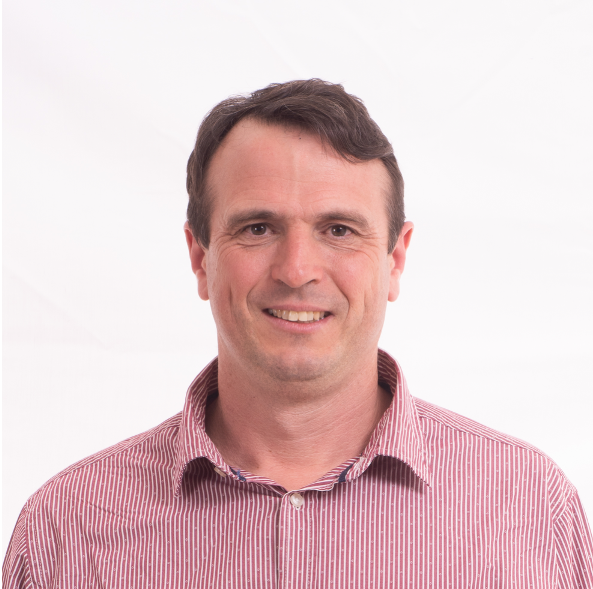
Christian Thierfelder, Harare, Zimbabwe
Christian Thierfelder serves as a cropping systems agronomist with the International Maize and Wheat Improvement Center’s sustainable intensification program in Harare, Zimbabwe, since 2018. His research and educational activities are guided by the principles of efficiency, timeliness, reliability, dedication, enthusiasm and outstanding abilities as a communicator.
“His research has focused no-till and minimum tillage and its impact on water infiltration, surface runoff and soil water content…”
Thierfelder’s research centers around developing conservation agriculture systems that fit the needs and environments of small-scale family farmers in Malawi, Mozambique, Zambia and Zimbabwe. This work includes fine tuning conservation agriculture systems for varying environments and researching farmer adoption of new technology, green manure cover crops and grain legume integration into corn-based farming, climate-smart agriculture and effective management of the fall armyworm.
His tillage research has focused no-till and minimum tillage and its impact on water infiltration, surface runoff and soil water content. This research has demonstrated that conservation agriculture is possible and feasible in Africa based on positive results found in other parts of the world.
Trained as a soil scientist at Germany’s University of Kiel, Thierfelder conducted his Ph.D research with the International Centre for Tropical Agriculture in Cali, Colombia, and at Germany’s University of Hohenheim. He has published numerous research papers s in peer-reviewed high-impact journals and books and has supervised the research programs of many undergraduate and graduate students.
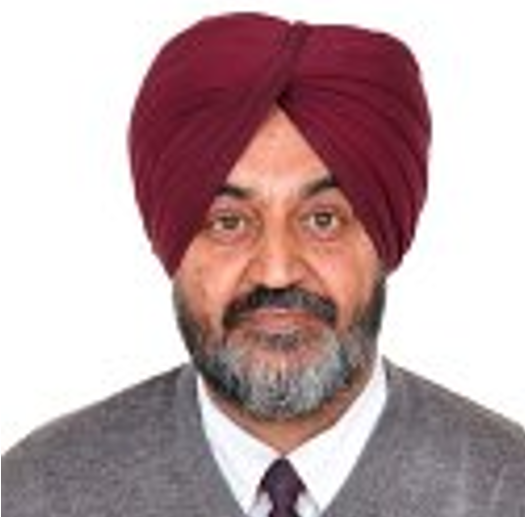
Harminder Siddhu Singh, Ludhiana, India
An agricultural engineer and a die-hard promoter of conservation agriculture, Harminder Siddhu has worked with several Indian and international research institutions on developing and promoting conservation agriculture in rice-based cropping systems. In addition, he was instrumental in development of the “Happy Seeder,” which has led to the effective handling of rice straw after harvest prior to immediately no-tilling a second crop.
He is a senior research engineer at the Borlaug Institute for South Asia, based in Ludhiana, India. Before joining this group, he served as a senior research engineer at the Department of Farm Machinery & Power Engineering at Punjab Agricultural University for 17 years. He has over 22 years of experience in research, extension and teaching in the area of farm machinery.
Singh’s research has focused on the machinery related to conservation agriculture, including strip-till, no-till, straw management systems for combines, laser land leveling and developing needed relay-cropping equipment.
Sidhu has made significant contributions on conservation agriculture for a range of stakeholders in South Asia and has organized and participated in more than 25 international workshops dealing with conservation ag machinery needs around the world. His research contributions have been well documented in over 50 publications.
“His research has focused on the machinery needed for strip-till, no-till, straw management systems for combines, laser land leveling and relay-cropping equipment…”
Awarded the John Dillon young scientist fellowship by the Australian Centre for International Agricultural Research in 2006, he also received the “Jyoti Award” from the Indian Society of Agricultural Engineering in 2011. He enjoys very good rapport with his superiors and his counterparts among of associated departments of machinery manufacturer associations and numerous international organizations.
Serving as the principal scientist in the department of farm machinery & power engineering at Punjab Agricultural University, he also received a bachelor’s master’s and a Ph.D from that institution.
Nominations Open for 2026 “International No-Till Legend” Awards
If you would like to nominate other well-deserving international farmers or educators for future “International No-Till Legend” awards, please write a 1-2-page letter that outlines their accomplishments and email it to lessitef@lessitermedia.com before March 31, 2026.
International No-Till Legends
Here’s the list of 18 “International No-Till Legends” from 13 countries around the world, as honored by No-Till Farmer. They have been honored for playing a key role in no-till’s acceptance around the world.
- John Baker, New Zealand
- Gottlieb Basch, Portugal
- Herbert Bartz, Brazil
- Ademir Calegari, Brazil
- Bill Crabtree, Australia
- Carlos Crovetto, Chile
- Franke Dijkstra, Brazil
- Richard Findlay, South Africa
- Theodor Friedrich, Bolivia
- Manoel Henrique, Brazil
- Amir Kassam, United Kingdom
- Brian Oldrieve, Zimbabwev
- Allen Postlethwaite, Australia
- Roberto Peiretti, Argentina and Uruguay
- Steven Powles, Australia
- Tony Reynolds, United Kingdom
- Sarah Singla, France
- Wolfgang Sturney, Switzerland
Related Content
- Three French, British & South African Growers, Educators Named 2024 International No-Till Legends
- Pioneers & Champions of No-Till & Conservation Ag from Across the World
- European Farmers Let Nature Do Their Tillage
- 5 International No-Till Legends Honored