Require Subscription

dahmer_DSCN3393.jpg

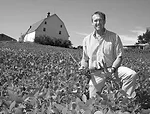
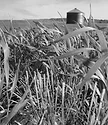
Cereal Rye Before Soybeans Helps Balance Moisture

Southern Illinois no-tiller successfully drills soybeans into cereal rye standing more than 5 feet tall.’
It may seem improbable and even Terry Dahmer admits his neighbors have thought it a bit unusual, but each spring you’ll find the Marion, Ill., no-tiller pulling a soybean drill through fields of cereal rye about 5 feet tall.
Read More
BuildOrganicMatter_2.jpg

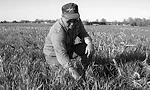
Build Organic Matter With Diverse Cropping Rotations

Continuous no-till, along with winter wheat, field peas, proso millet and a CANULA cover crop, raised organic-matter levels and led to better water infiltration for this Nebraska no-tiller.
Randy Rink used to have the typical Midwestern crop operation. He rotated corn and soybeans. With this 2-year rotation, Rink would disc corn stalks once in the fall, and plant soybeans in the spring. The next year, he would no-till corn into soybean residue.
Read More

Rising Input Costs Concerning No-Tillers

With crop input costs likely to soar again in 2009, a major worry among no-tillers is whether grain prices will continue to remain high.
Even with many new cost-cutting cropping developments, no-tillers are definitely worried about having to deal with increasing input costs in 2009.
Read More
Minow_2.jpg

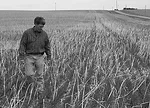
More Moisture, More Cropping Acres In Drylands

No-till allowed Montana dryland producer Ben Minow to reduce overhead and increase cropping acres by eliminating summer fallow.
Many producers may ask how continuous cropping can work in a semi-arid environment. For southeastern Montana farmer and rancher Ben Minow, the question isn’t if producers can make it work, it’s how anyone could economically raise a crop any other way.
Read More
WIL_ReadSmith_2.jpg
What I've Learned from No-Tilling

Preserving The Fertile Soils Of The Palouse

Going 100% no-till in 1997 has placed Read Smith in position to help lead the effort to protect the fragile farmland of eastern Washington.
We're no doubt biased, but my family and I think there are few more breathtaking views of production agriculture than seen from the highest point of our farm in the Palouse region of eastern Washington. In midsummer, flowing fields of crops — which may include wheat, canola, barley, sunflowers, mustard, alfalfa, peas and lentils — stretch across the hills to the horizon.
Read More
FocusOnDetail_1.jpg

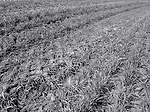
Focus On The Details With High-Yielding No-Till Wheat

Improving stand uniformity, fertility levels and seed placement often require little expense but can bring increased no-till profits.
While corn and soybeans received the lion’s share of the press this year as prices moved sharply higher, wheat producers have also been enjoying healthy prices. It’s also spurring more interest in no-till winter wheat, which many soil experts say makes the ideal rotational crop with corn and soybeans.
Read More

Top Articles

Current Issue

NTF-July-2026_BookWithPages_Curl_art-link.png

No-Till Farmer

Get full access NOW to the most comprehensive, powerful and easy-to-use online resource for no-tillage practices. Just one good idea will pay for your subscription hundreds of times over.

Subscribe Now

View More

Must Read Free Eguides

Download these helpful knowledge building tools
View More
Top Directory Listings