 Premium content is for our Digital-only and Premium subscribers. A Print-only subscription doesn't qualify. Please
No-Till Farmer
Get full access NOW to the most comprehensive, powerful and easy-to-use online resource for no-tillage practices. Just one good idea will pay for your subscription hundreds of times over.
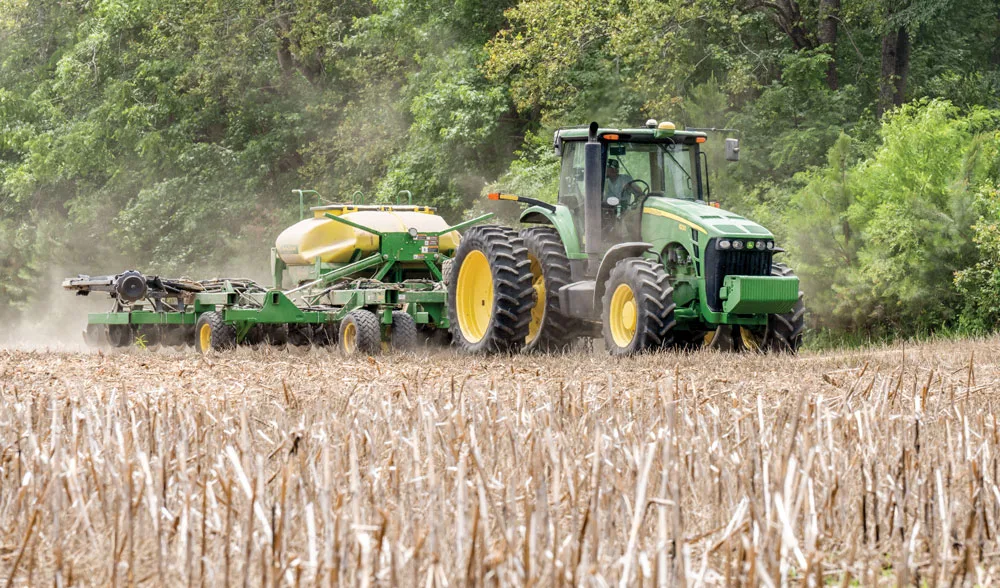
PRECISION MANAGEMENT. Yield data and grid soil sampling along with variable-rate technology allow Ellis to apply the right amount of seed and other inputs to each acre. This technology has yielded significant savings as tree-lined fields diminish in production from center to field edges. Benjamin Ellis Jr.
YOU HAVE TO change with the times. At this juncture in agriculture it seems if you don’t change you will get left behind.
Tradition was the example I was raised with. Of the 800 acres we own, some of those acres have been in our family since 1683.
We’ve built a lot of tradition in those years. That’s great for traits like work ethic and understanding the landscape, but when it comes to the thin margins we face, it just doesn’t cut it. We’re in the Chesapeake Bay Watershed. That means not only do we face the pressure of profitability to change, but regulation and responsibility to protect the Chesapeake and other waters.
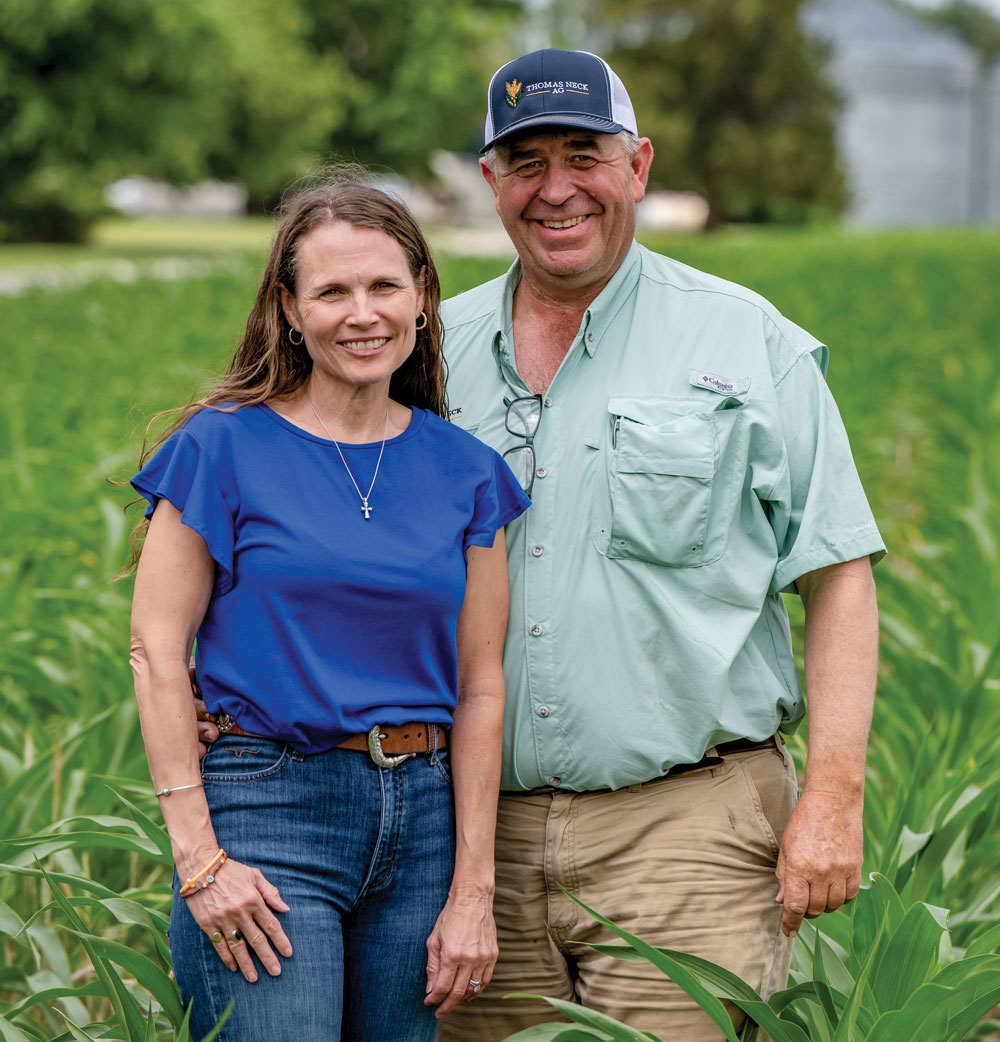
NAME: Shannon & Benjamin Ellis Jr.
LOCATION: Champlain, Va.
ACRES: 4,000
YEARS NO-TILLING: 40+
CROPS: Corn, soybeans, winter wheat
PRIMARY SOIL TYPE: Sandy loam
ANNUAL PRECIPITATION: 42-47 inches
My father and grandfather started no-tilling in the ‘80s. My wife Shannon’s father also started no-tilling in the late ‘70s and early ‘80s. We were brought up with the practice so it came natural for both of us. We combined the two farms in 2023 after the passing of our fathers in 2019 and 2022 and continued the no-till tradition.
No-till was a move in the right direction for our family farms. Our…

Get full access NOW to the most comprehensive, powerful and easy-to-use online resource for no-tillage practices. Just one good idea will pay for your subscription hundreds of times over.
Download these helpful knowledge building tools

We have engineered and developed the most advanced concave system that threshes all crops, eliminates rotor loss, improves grain quality, gives you a cleaner sample – all with one set of XPR concaves.

At Titan International, our product portfolio reflects our commitment to innovation and high-quality products. Titan International offers a full line of solution-focused wheel, tire, and undercarriage products for a wide variety of off-the-road equipment in agriculture, construction, forestry, mining, power sports, high-speed trailers, and outdoor power equipment segments. As one of the largest North American manufacturers, with a network of dealers all over the world, Titan is an industry leader that original equipment manufacturers and operators can count on for durable products and quality service.

Provide expert analysis and decision support to increase productivity and profitability.