 Premium content is for our Digital-only and Premium subscribers. A Print-only subscription doesn't qualify. Please
No-Till Farmer
Get full access NOW to the most comprehensive, powerful and easy-to-use online resource for no-tillage practices. Just one good idea will pay for your subscription hundreds of times over.
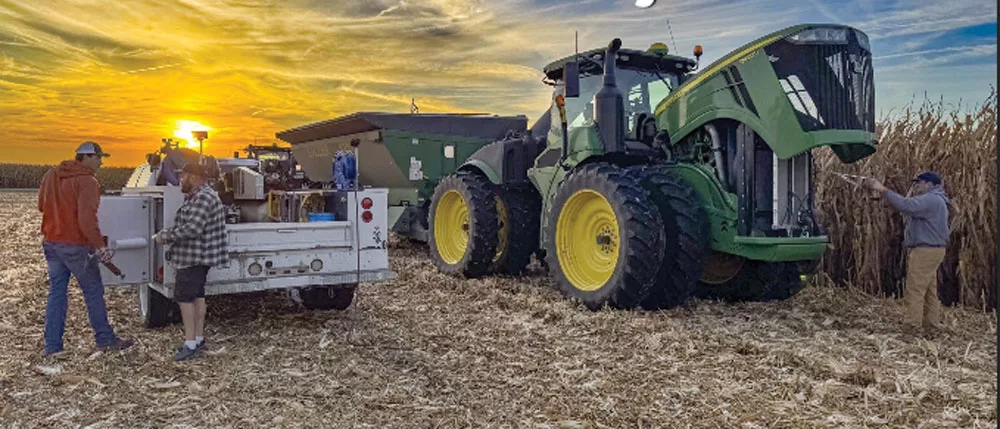
ADDING UP. Light tillage in corn and soybean rotations can pay in some circumstances, but increased machinery and input costs make reducing field passes a good management decision, according to researchers with the Illinois Corn Growers Assn.’s Precision Conservation Management program. Univ. of Illinois
Most farmers who’ve been no-tilling have likely already seen the benefits to their farm’s bottom line in terms of reduced fuel, labor and equipment costs.
But some growers may still be utilizing some type of tillage practice for a variety of reasons, such as managing residue, optimizing field conditions ahead of planting, incorporating cover crops, and killing stubborn weeds among them. The growth of strip-till and high-speed, low-disturbance vertical tillage implements has also created more options.
But when are extra tillage passes worth the time and expense, and how do conservation practices compare? University of Illinois ag economist Gary Schnitkey and Laura Gentry, water quality specialist with the Illinois Corn Growers Assn., shared the results of a data-driven study that dove into the economics of tillage practices over the last decade.
The study used data from the ICGA’s Precision Conservation Management program. They analyzed no-till, strip-till and multi-pass systems, machinery and input costs, commodity prices, soil productivity ratings, and soil loss and greenhouse gas (GHG) emissions. Here’s what they found.
PCM collects data from farmers participating in the program for every field pass for on tillage, fertilizer and chemical application, harvesting and planting. A cost is assigned to each category based on…

Get full access NOW to the most comprehensive, powerful and easy-to-use online resource for no-tillage practices. Just one good idea will pay for your subscription hundreds of times over.
Download these helpful knowledge building tools

We have engineered and developed the most advanced concave system that threshes all crops, eliminates rotor loss, improves grain quality, gives you a cleaner sample – all with one set of XPR concaves.

At Titan International, our product portfolio reflects our commitment to innovation and high-quality products. Titan International offers a full line of solution-focused wheel, tire, and undercarriage products for a wide variety of off-the-road equipment in agriculture, construction, forestry, mining, power sports, high-speed trailers, and outdoor power equipment segments. As one of the largest North American manufacturers, with a network of dealers all over the world, Titan is an industry leader that original equipment manufacturers and operators can count on for durable products and quality service.

Provide expert analysis and decision support to increase productivity and profitability.