 Premium content is for our Digital-only and Premium subscribers. A Print-only subscription doesn't qualify. Please
No-Till Farmer
Get full access NOW to the most comprehensive, powerful and easy-to-use online resource for no-tillage practices. Just one good idea will pay for your subscription hundreds of times over.
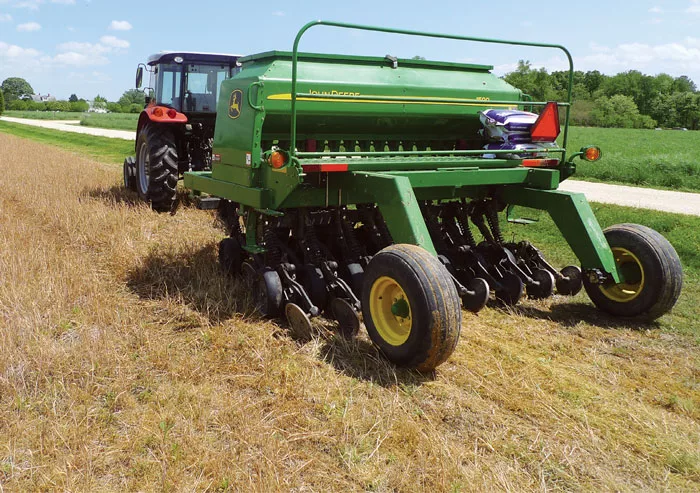
With corn prices looking a little more bear than bull these days, many no-tillers may be looking for places to trim their input costs. Fair or unfair, the newest management darling of no-tillers — cover crops — may find themselves in the crosshairs.
For most farmers, covers are a somewhat easy target, as there’s a good chance they’re the most recent, and least proven, management practice on the farm. And farmers may have a harder time calculating an exact return on investment with covers vs. other practices.
Before any hasty decisions are made, experts advise that no-tillers give cover crops their fair due.
Stefan Gailans, head of on-farm research for Practical Farmers of Iowa, notes that Iowa State University estimates the cost of crop production each year, including seed, nitrogen and other inputs, and now the group is adding cover crops to that list.
“But instead of seeing it as an added cost, we suggest growers look at it rather as a substitution for other inputs,” Gailans says. “Take a look at if you’re able to cut back on herbicide or fertilizer applications as a result of cover crops.”
He notes that long-term cover-crop users in his network believe they’re doing the right thing for the long-term productivity of their acres by saving topsoil and caching more nutrients in the field’s savings account. But it’s possible that even dedicated cover crop users can trim up programs that they funded aggressively during strong markets, without giving up on them entirely.

Get full access NOW to the most comprehensive, powerful and easy-to-use online resource for no-tillage practices. Just one good idea will pay for your subscription hundreds of times over.
Download these helpful knowledge building tools

We have engineered and developed the most advanced concave system that threshes all crops, eliminates rotor loss, improves grain quality, gives you a cleaner sample – all with one set of XPR concaves.

At Titan International, our product portfolio reflects our commitment to innovation and high-quality products. Titan International offers a full line of solution-focused wheel, tire, and undercarriage products for a wide variety of off-the-road equipment in agriculture, construction, forestry, mining, power sports, high-speed trailers, and outdoor power equipment segments. As one of the largest North American manufacturers, with a network of dealers all over the world, Titan is an industry leader that original equipment manufacturers and operators can count on for durable products and quality service.

Provide expert analysis and decision support to increase productivity and profitability.