To be honest, every time I hear commercials start on TV I’m fumbling to find the “mute” button on the remote. It’s a habit I picked up from my grandpa. He could tap the button in the split second between the program and the first commercial almost every time.
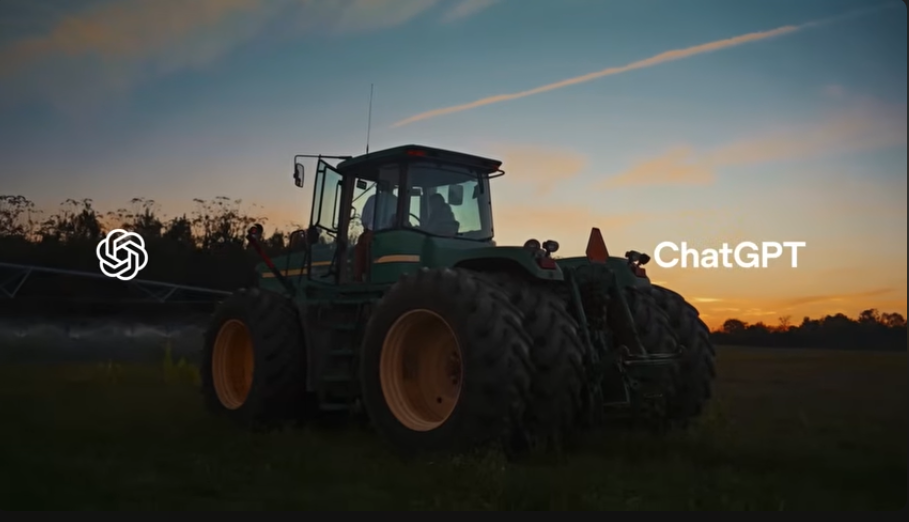
But for obvious reasons, a recent commercial got my attention: It shows Allendale, S.C., seed farmers Don Sharp and his daughter, Rachael, using ChatGPT to store and analyze data, log inventory, generate reports, analyze crops, manage irrigation use and make communication more efficient.
The commercial first aired during Super Bowl LX, and emerged again during the NCAA men’s college basketball championship on Monday.
Early in the 2½ minute commercial, Rachael thumbs through a tattered book that has records of every crop planted since 1971 and she says she uploaded them into ChatGPT. She admits being skeptical at first, but clearly has found the AI tool to help with farm management.
For simplicity sake, we’ll put aside the risk of uploading your proprietary data into public models. The idea being shared here strikes at the very real problem we have in the U.S. with farm succession.
Many young people don’t want to return to the family farm, and Rachael counted herself among them. An English major, she couldn’t get away from home fast enough. When she did return, her father had decades of farming knowledge she had to absorb, which is a daunting task.
She is obviously feeling the pressure of taking over a multi-generation farm and not “screwing it up.”
There’s no doubt this is a clever commercial from ChatGPT’s developer, OpenAI, to boost its stature with workaday Americans. And of course, it’s always best to treat these silver-bullet solutions with appropriate skepticism.
But used in the right way — as a decision-making tool rather than a crutch — AI has the potential to help younger farmers, who typically are far less skeptical about technology, find ways to bridge the knowledge gap and take some of the grind out of decision making.
If you pair that with a no-till or strip-till system that reduces fuel, labor and equipment costs, you have a promising value proposition to the next generation of farmers.