_1000x1000_webp.webp?t=1771360830&width=1000)
TAKEAWAYS
- Costs to run a high horsepower tractor can reach $350 or more per hour.
- Diesel fuel prices are projected to drop by 50 cents per gallon this year.
- Machinery costs rose by as much as 35% between 2021 and 2023.
There’s a gigantic difference in overall tractor costs between a no-tiller and a neighbor doing two-pass chisel plow/disc tillage on 1,000 acres of corn with a 240-horsepower tractor.
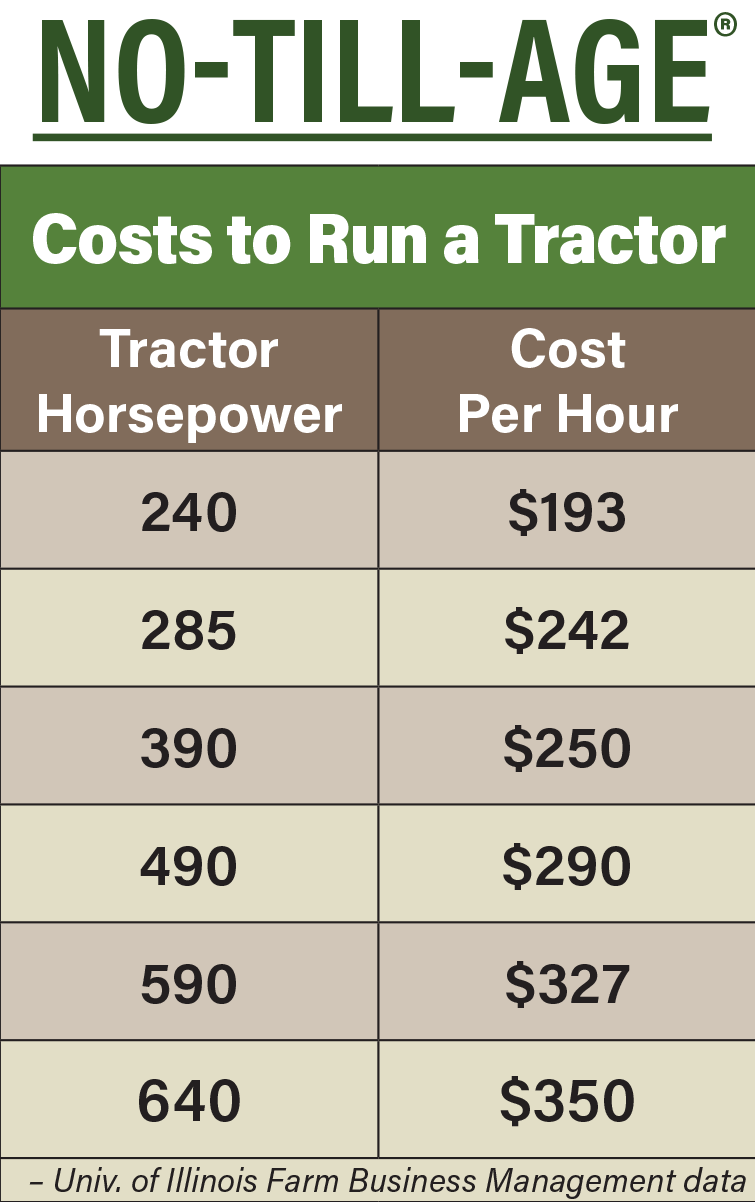
Let’s assume the grower using a two-pass minimum tillage system needs 30 minutes per acre more tractor time to get the crop in the ground. With a tractor cost of $193 per hour, he’s spending $96,500 more than the no-tiller on tractor time. Based on recent University of Illinois data, the “No-Till-Age” chart below spells out what it costs to run different horsepower tractors.
Machinery Savings
Purdue University data shows farms with 1,000-2,000 acres had a 2024 overall machinery investment that averaged $807 per acre. Between 2021 and 2024, machinery costs per acre soared by 25% for corn and 22% for soybeans, reaching $178 per acre for corn and $108 for soybeans. With a corn and soybean rotation, the machinery cost averaged $143 per acre.
When Illinois economists estimated new machinery costs for this year, the increases from 2003-2025 were much less than between 2021-2023 when costs increased by as much as 35%. In fact, the latest 2-year increase was the smallest in over the past 16 years.
Diesel Fuel Savings
For 2025, diesel fuel costs are estimated at 13.6 gallons per hour with a 310-horsepower tractor. With diesel expected to drop by 50 cents per gallon this year, fuel costs should fall to $44.89 compared to $52.50 per hour 2 years ago.
For neighbors still doing intensive tillage, the machinery cost for chisel plowing increased from $12.70 per acre in 2019 to $19.50 this year. Planter costs increased from $14.40 per acre to $24.40 during the same time span. There are lots of variables as a 24-row no-till planter today may need anywhere from 160-300 horsepower depending on the soils, hills and planter options such as on-board fertilizer application.
By no-tilling, you are seeing a huge savings on tractor operating costs compared with farmers using intensive tillage. In these times of low commodity prices and high input costs, these no-till benefits can add up fast.