 Premium content is for our Digital-only and Premium subscribers. A Print-only subscription doesn't qualify. Please
No-Till Farmer
Get full access NOW to the most comprehensive, powerful and easy-to-use online resource for no-tillage practices. Just one good idea will pay for your subscription hundreds of times over.

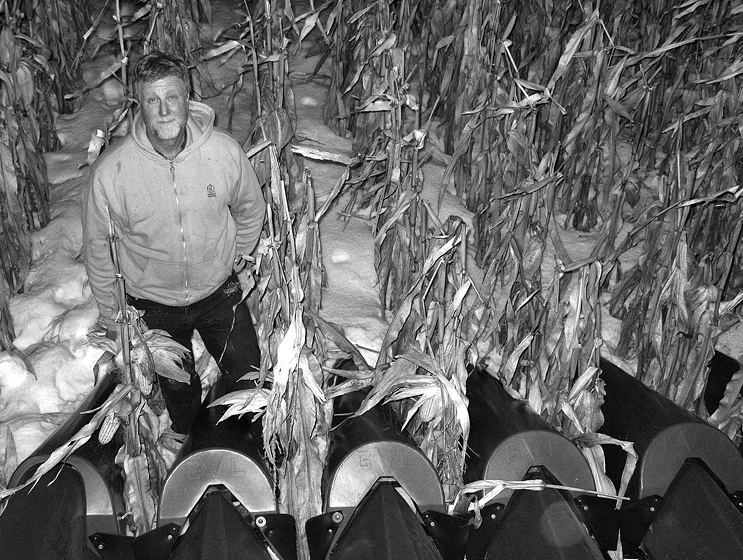
NAME: Ross Bishop
LOCATION: Jackson, Wis.
YEARS NO-TILLING: 16
ACRES NO-TILLED: 700
CROPS NO-TILLED: Corn, soybeans, winter wheat, alfalfa, cover crops (annual ryegrass and tillage radishes)
With the dire economics agriculture faced in the early 1980s, there was no opportunity for me to join our Wisconsin family farm operation. But farming was my first love and you might say, I was blessed.
After working a short time at a Milwaukee foundry, I was asked by the owner if I would help with planting crops at his 280-acre farm and beef cattle enterprise near Jackson, Wis. He must have sensed my intense desire to farm because he later offered me the opportunity, just after my 22nd birthday, to take over as manager.
The soils of Washington County in southeastern Wisconsin are rolling, with stones and high bedrock left behind by the glaciers. A rock picker is standard equipment on nearly every farm. And even after clearing a field, conventional tillage just brings up a new batch.
It was one of the primary reasons we first considered no-till. If you don’t disturb the soil, we figured the rocks would stay below the surface. Our first efforts at no-tilling, however, left us less than impressed.
On our home farm, we experimented with one of the industry’s first no-till corn planters, the 800 introduced by International Harvester in the 1970s. It may have been our inexperience as much as the machine, but nevertheless, yields dropped enough to be…
Get full access NOW to the most comprehensive, powerful and easy-to-use online resource for no-tillage practices. Just one good idea will pay for your subscription hundreds of times over.
Download these helpful knowledge building tools

We have engineered and developed the most advanced concave system that threshes all crops, eliminates rotor loss, improves grain quality, gives you a cleaner sample – all with one set of XPR concaves.

At Titan International, our product portfolio reflects our commitment to innovation and high-quality products. Titan International offers a full line of solution-focused wheel, tire, and undercarriage products for a wide variety of off-the-road equipment in agriculture, construction, forestry, mining, power sports, high-speed trailers, and outdoor power equipment segments. As one of the largest North American manufacturers, with a network of dealers all over the world, Titan is an industry leader that original equipment manufacturers and operators can count on for durable products and quality service.

Provide expert analysis and decision support to increase productivity and profitability.