 Premium content is for our Digital-only and Premium subscribers. A Print-only subscription doesn't qualify. Please
No-Till Farmer
Get full access NOW to the most comprehensive, powerful and easy-to-use online resource for no-tillage practices. Just one good idea will pay for your subscription hundreds of times over.
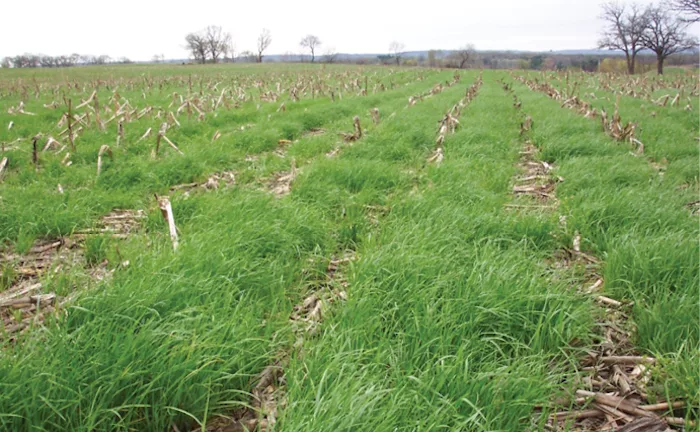
With its prolific root system and economical price tag, annual ryegrass is one of the most popular cover crops no-tillers have at their disposal. It’s also gotten a bad rap for being tough to manage, says Dan Towery.
But if no-tillers stick with a few rules of thumb when it comes to seeding and termination, they’ll have far more success with annual ryegrass, says the consultant for Ag Conservation Solutions. Towery shared several keys to success during the recent National No-Tillage Conference.
No-tillers should avoid bags of annual ryegrass that say “VNS” as that stands for “Variety Not Stated,” Towery says. This means multiple species or varieties of annual ryegrass may have been blended together and may break dormancy as much as 2 weeks apart.
Le Roy, N.Y., no-tiller Donn Branton says this happened on his farm. After applying 2,4-D and glyphosate to annual ryegrass as a burndown in the spring and planting corn, the ryegrass greened up again 2 weeks later.
He found that some of the product was Italian ryegrass and the plants probably weren’t all at the same growth stage during termination. Branton says it took 3 years to get the ryegrass problem cleaned up in some of his fields.
“Your cover-crop dealer needs to know the particulars of the variety they’re selling and when it starts to grow,” Towery says. “And do not seed a blend.”
Towery says he hears too many growers say they’ll plant annual ryegrass…

Get full access NOW to the most comprehensive, powerful and easy-to-use online resource for no-tillage practices. Just one good idea will pay for your subscription hundreds of times over.
Download these helpful knowledge building tools

We have engineered and developed the most advanced concave system that threshes all crops, eliminates rotor loss, improves grain quality, gives you a cleaner sample – all with one set of XPR concaves.

At Titan International, our product portfolio reflects our commitment to innovation and high-quality products. Titan International offers a full line of solution-focused wheel, tire, and undercarriage products for a wide variety of off-the-road equipment in agriculture, construction, forestry, mining, power sports, high-speed trailers, and outdoor power equipment segments. As one of the largest North American manufacturers, with a network of dealers all over the world, Titan is an industry leader that original equipment manufacturers and operators can count on for durable products and quality service.

Provide expert analysis and decision support to increase productivity and profitability.