 Premium content is for our Digital-only and Premium subscribers. A Print-only subscription doesn't qualify. Please
No-Till Farmer
Get full access NOW to the most comprehensive, powerful and easy-to-use online resource for no-tillage practices. Just one good idea will pay for your subscription hundreds of times over.

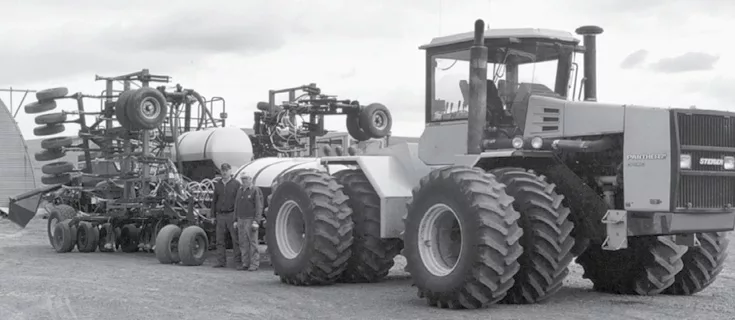
Having been 100 percent no-till for 7 years on 3,500 acres, Glenn and Bryan Dobbins are among only a few area farmers who don’t rely to some extent on summer fallow to conserve limited moisture.
The father and son team at Cheney, Wash., has utilized direct seeding for residue and moisture management for a dozen years. (No-till is known as direct seeding in the Pacific Northwest.) In a dry spring, direct seeding saves considerable soil moisture and results in higher yields compared to a highly intensive tillage, summer fallow system.
Years ago, Glenn built a pond near the house. “When we were summer fallowing, we had to take dirt out of the pond every 3 to 5 years,” says Glenn. “Since we started direct seeding, we’ve never had to take dirt out of the pond because soil erosion is much less of a concern.”
Before moving to direct seeding, the Dobbins tried strip cropping. A wheat, barley and summer fallow rotation helped control erosion, but there was still considerable soil loss.
The Dobbins rotations include fall-seeded wheat and triticale along with spring-seeded wheat, mustard and barley. Ideally, the Dobbins seed half of their crops in the fall and half in the spring to spread the workload.
“At first, we wanted to direct seed peas into stubble without any tillage,” says Bryan. “That was our introduction to direct seeding as we wanted to get away from summer fallowing much of our ground because of erosion concerns.”
The Dobbins later…

Get full access NOW to the most comprehensive, powerful and easy-to-use online resource for no-tillage practices. Just one good idea will pay for your subscription hundreds of times over.
Download these helpful knowledge building tools

We have engineered and developed the most advanced concave system that threshes all crops, eliminates rotor loss, improves grain quality, gives you a cleaner sample – all with one set of XPR concaves.

At Titan International, our product portfolio reflects our commitment to innovation and high-quality products. Titan International offers a full line of solution-focused wheel, tire, and undercarriage products for a wide variety of off-the-road equipment in agriculture, construction, forestry, mining, power sports, high-speed trailers, and outdoor power equipment segments. As one of the largest North American manufacturers, with a network of dealers all over the world, Titan is an industry leader that original equipment manufacturers and operators can count on for durable products and quality service.

Provide expert analysis and decision support to increase productivity and profitability.