 Premium content is for our Digital-only and Premium subscribers. A Print-only subscription doesn't qualify. Please
No-Till Farmer
Get full access NOW to the most comprehensive, powerful and easy-to-use online resource for no-tillage practices. Just one good idea will pay for your subscription hundreds of times over.

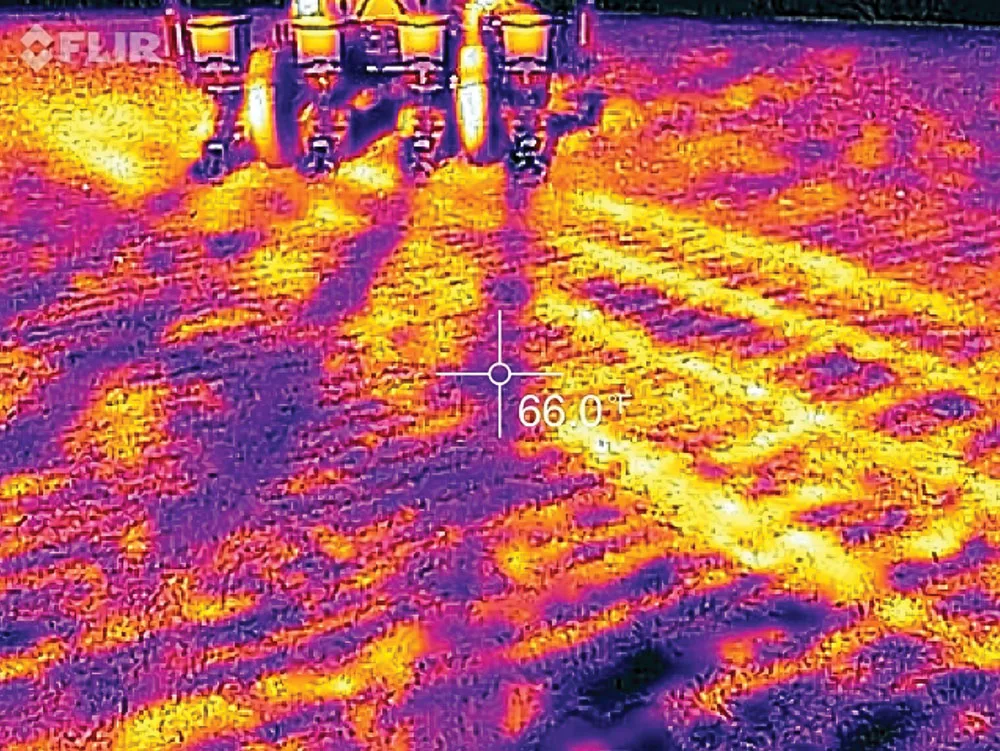
SEASON STARTS NOW. No-tillers and strip-tillers must ensure they’re managing residue properly or face problems with inconsistent soil temperatures, uneven stands, delayed emergence and possibly reduced yield. Phil Needham
To Phil Needham, successful no-tilling doesn’t begin when planters hit the ground in spring: it’s during harvest, when many growers think the growing season is ending.
Uneven residue spread during harvest can start a chain reaction of poor agronomic results the following growing season, including uneven soil temperatures, poor seedbed conditions and final stands, disease issues and more, says Needham, the founder of Calhoun, Ky.-based Needham Ag Technologies.
Improper combine setup compounds the problems no-tillers face at planting time, says Needham, who has spent decades working with growers to build successful farm operations. “Residue management to me is the difference between a good farmer and a bad farmer. It’s that clear and dry and simple,” Needham recently told attendees at the 2026 National No-Tillage Conference in St. Louis.
Needham has conducted stand counts for 37 years and finds it easy to correlate stands with surface residue levels in addition to emergence and early growth differences.
“The big difference is we can now measure the differences in residue distribution by quantifying the amount downforce, which shows residue streaks at a 90-degree angle to the seeder pass,” he says.
“As an example, the Precision Planting SeederForce system, with hydraulic cylinders on each row of a John Deere drill or air-seeder, shows…


Get full access NOW to the most comprehensive, powerful and easy-to-use online resource for no-tillage practices. Just one good idea will pay for your subscription hundreds of times over.
Download these helpful knowledge building tools

We have engineered and developed the most advanced concave system that threshes all crops, eliminates rotor loss, improves grain quality, gives you a cleaner sample – all with one set of XPR concaves.

At Titan International, our product portfolio reflects our commitment to innovation and high-quality products. Titan International offers a full line of solution-focused wheel, tire, and undercarriage products for a wide variety of off-the-road equipment in agriculture, construction, forestry, mining, power sports, high-speed trailers, and outdoor power equipment segments. As one of the largest North American manufacturers, with a network of dealers all over the world, Titan is an industry leader that original equipment manufacturers and operators can count on for durable products and quality service.

Provide expert analysis and decision support to increase productivity and profitability.