TAKEAWAYS
- Sticking with no-till, cover crops and livestock integration will build resilience in your soils.
- Take advantage of split nutrient applications when the weather turns on you.
- Soil biology improvements follow long-term no-till crop rotations.
After a growing season with less moisture than his grandfather experienced in the 1930s, Michael Thompson still ran the combines this fall on all 2,000 acres of corn he planted, plus he harvested 300 acres of 28- to 38-bushel soybeans he predicted would be a total loss.
He credits a quarter century of no-till, cover crops and contributions from his 200-head Angus-based cowherd for the harvest.
“This year was on par with the drought of 2011-12 and it was actually hotter,” he explains. “The difference was we didn’t have the daily, continual scorching winds of those years. Even when I started no-tilling in the dry years of 2000 and again in 2003 we didn’t harvest any acres back then. We didn’t even get the combines out of the shed.
“I feel good looking back to what my dad experienced in the early ’50s and what my grandpa went through in the ’30s, and you consider we had less moisture in 2025, to get through that and still have made a crop.”
Meeting His Goals
Thompson says the main thing he learned from the 2025 season is the importance of the resilience his farming practices have fostered in his soils over the years, and the flexibility he enjoys with a mixed operation including livestock.
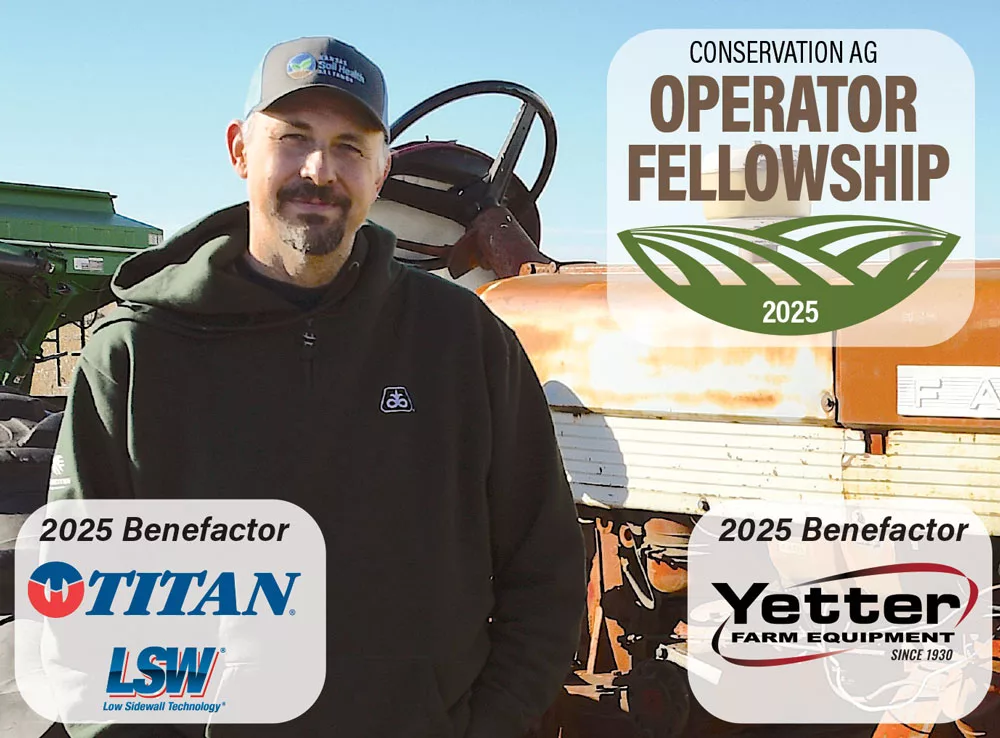
The Almena, Kan., no-tiller is No-Till Farmer’s 2025 Conservation Ag Operator Fellow, chosen because of his personal dedication to soil stewardship and no-till regenerative farm management. No-Till Farmer has followed Thompson throughout the growing season focusing on his “full-flex” management philosophy and the decision-making process he has used to improve his soils while remaining profitable over his 25 years of no-tilling.
Thompson Farms covers nearly 4,000 acres of Phillips and Norton Counties in northwest Kansas and extends a short distance northward into Nebraska. The operation includes Michael, his brother Brian and their father Richard.
“We thought we’d have to sell off some cattle to match our forage but that never became necessary…”
It certainly wasn’t the best year for yields, but Thompson’s best corn fields yielded 85-90 bushels per acre, which is in line with his goals for seasons he predicts will be very dry. “In a few fields that received hardly any rain and were in their second year of corn-on-corn yields were in the 40-60-bushel range,” he says.
Overall, however, the farm plan for 2025 accounted for the possibility of extremely dry conditions, and on the poorest-performing acres Thompson says crop insurance likely will keep things in the black.
Over the years when more “normal” rainfall patterns wet the farm, the Thompsons have binned 120-140 bushels of corn in an area where 70 bushels is a dryland average. And they generally expect to harvest 30-50 bushels on soybeans when late summer rains occur.
“The soil profile was limited early on. And after harvest on most of our fields around our homes, near the center of our operation, the ‘tank is dry.’ Further east and west, where there was a bit more rain during the season it’s not as bad. But overall, we need to catch some winter precipitation to replenish the profile,” Thompson explains.
Flexing the Flex
That moisture-driven-uncertainty loomed heavy over Thompson’s outlook as the year ended. Still, his “full-flex” management presented options — something lacking on many operations.
Thompson plans for drought each year but cites the family’s main priority of “taking care of the soil” as the deal breaker on planting decisions and how the operation’s cow herd will complete the annual farm-planning puzzle.
Planned rotational grazing helps manage warm-season pastures and cover crops, and at harvest’s end can add value to standing stalks and cool-season covers in pounds of beef. Those puzzle pieces will all fit in what the Thompsons finally determine what their operation will look like through 2026.
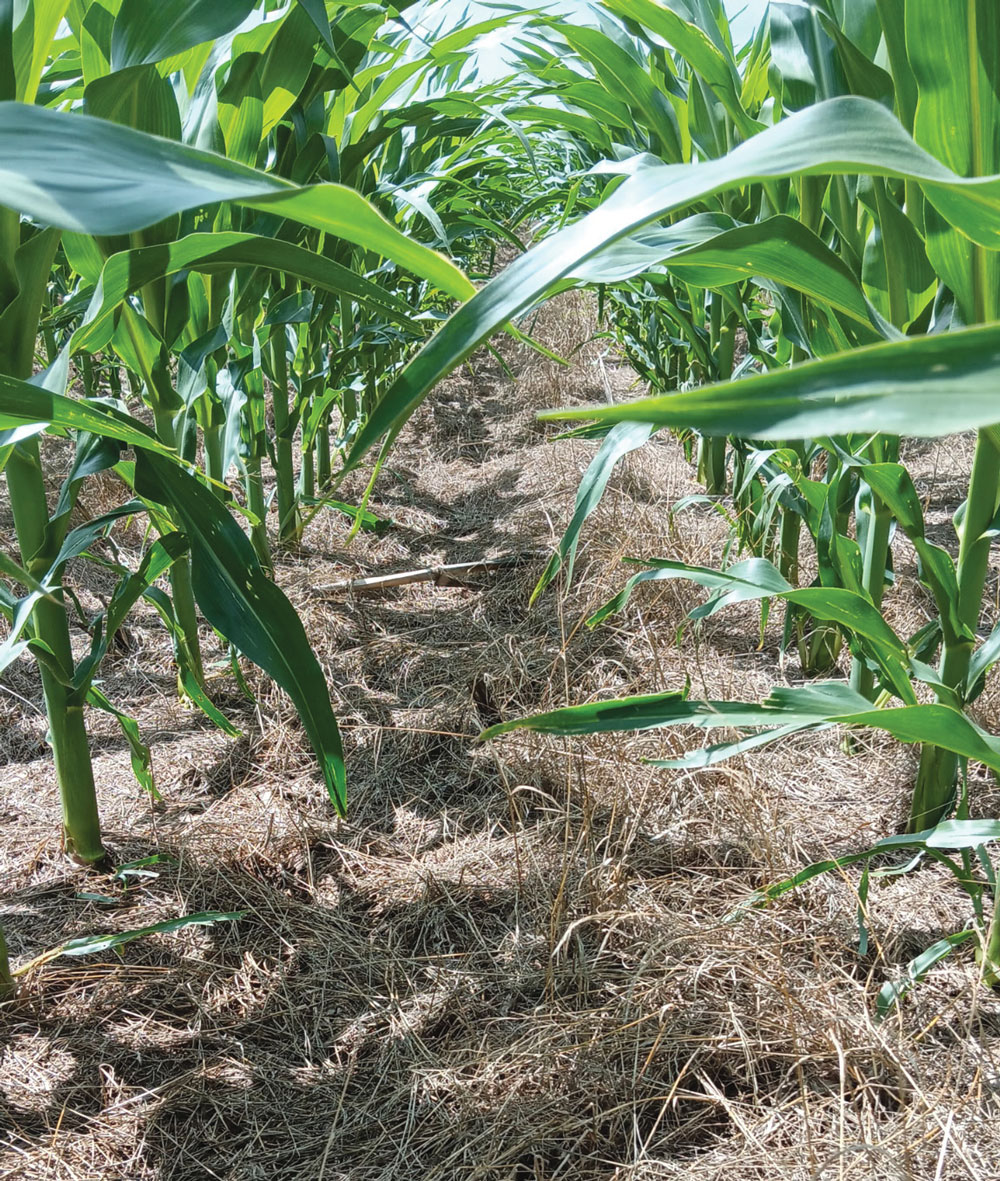
RISING UP. Thompson raised up to 90 bushels per acre of corn in drought-ridden conditions and kept within budgets by not applying extra fertilizer on acres where he didn’t think a yield bump would occur. “Guess what?” he says. “Fertilizer keeps just fine and that helped us live within our budget.” Michael Thompson
“It was a good year to show the benefit of building flexibility into our farming operation,” Thompson says. “We thought we’d have to sell off some cattle to match our forage but that never became necessary. We’ll go into 2026 with about the same numbers we had in 2025, although we’ll retain some of our heifers to maintain herd productivity as we cull some older cows.”
To match the herd rebuilding project, and to give forage and farm fields time for moisture recharge, Thompson is establishing fall- and early-winter planted cereal rye to the acreage roster — particularly on acres coming out of corn-on-corn production, and even on some fields that were in small grains in 2025.
Reach Out to Your Group
It’s been a stressful year for Michael Thompson, whose operation underwent a growing season with less than 11 inches of precipitation from January to late August. Staying in contact with some close acquaintances facing similar challenges was a big help, he says.
“There are many farmers that have had some tough times over a period of years, whether it be prices, health issues, drought or any number of things out of our own control. Those factors are mentally draining,” he explains. “I’m not going to lie, the drought was affecting me that way, too, but I was able to rely on my friends. They are folks I’ve been there for, and they’ve been there for me. We can talk about things and get pretty ‘real.’
“When you know someone’s going through some heavy circumstances, take the time to give them a call. Just let them know you care and are thinking of them. Sometimes that’s all it takes to give them some positive mental reinforcement at a time they need it very much.”
Thompson, whose social media presence reflects his care for others facing the stresses found in farming, says focusing on and counting good things and blessings with members of a peer group is a good place to start when negative thoughts seem overwhelming.
“From personal experience, my dad always reminded me during years of drought to look at yourself in the mirror every morning with the mantra that ‘you’re one day closer to rain’ or you’re one day closer to things turning around and you’re still here,” he recalls. “Sometimes it’s as basic as reminding myself my heart’s still beating and I don’t have major health ailments, and I thank God for that I’m able to farm another day.”
“We’re going to flex more of our acres to take advantage of grazing or hay opportunities for next spring,” he explains. “We raised a decent amount of hay in 2025, but if we have a normal winter with snow and very cold temperatures we’ll probably have all that eaten by spring.
“Right now, the animals (and their economic return) are something we can keep going should we not get a lot of snowfall or rain this winter to replenish our moisture profiles. In dry years if we shift more toward forage crops, which take very little rain compared with corn, we’ll generally plant more forage acres than we would cash crops. That’s a big flexibility benefit of having a mixed operation.”
Looking ahead, Thompson says that after establishing the small-grain stands he should be able to graze rye early in the spring, before moving the cattle onto developing warm-season grasses at planting time.
“It was a good year to show the benefit of building flexibility into our farming operation…”
“By mid-April into May we’ll be out on grass with the cattle and keep them there through June, again if it looks like we’ll have good moisture,” he says. “By late June and early July we’d hope to be on a warm-season cover mixture of millet, sunflower, sorghum sudangrass, cow peas and maybe some soybeans mixed in.
“We’ll just have to monitor how much moisture we have to work with and adjust accordingly, because we don’t want to hammer the grasses too hard after the dry year of 2025.”
He says corn likely will continue occupying the largest acreage of farm ground for 2026, but final planting plans will be weighed heavily against market and expected moisture conditions.
“I think we’ll be ‘full-flex’ on the final corn decision, but we plan to plant some beans also, along with increasing our forage crops. At year’s end we were totally out of soil moisture, so a lot depends on the ongoing weather map.”
Corn Hybrids Impress
Beyond the obvious opportunities provided by having cattle as a hedge against this year’s weather-related poor crop performance, Thompson credits the fact his Triple-Stack Pioneer corn was able to weather long weeks without rain and still make a crop on sporadic showers as testimony to good hybrid genetics and also improved soil biology born of years of using cover crops and no-tilling.
“Not just on our farm, but on neighboring operations that have been in no-till for long periods, most folks around us harvested corn,” Thompson explains. “There were some fields where they harvested maybe only half of the acreage, but we did produce corn in our area this year. And like I mentioned earlier, only 25 years ago many growers around here produced nothing in similar dry years.
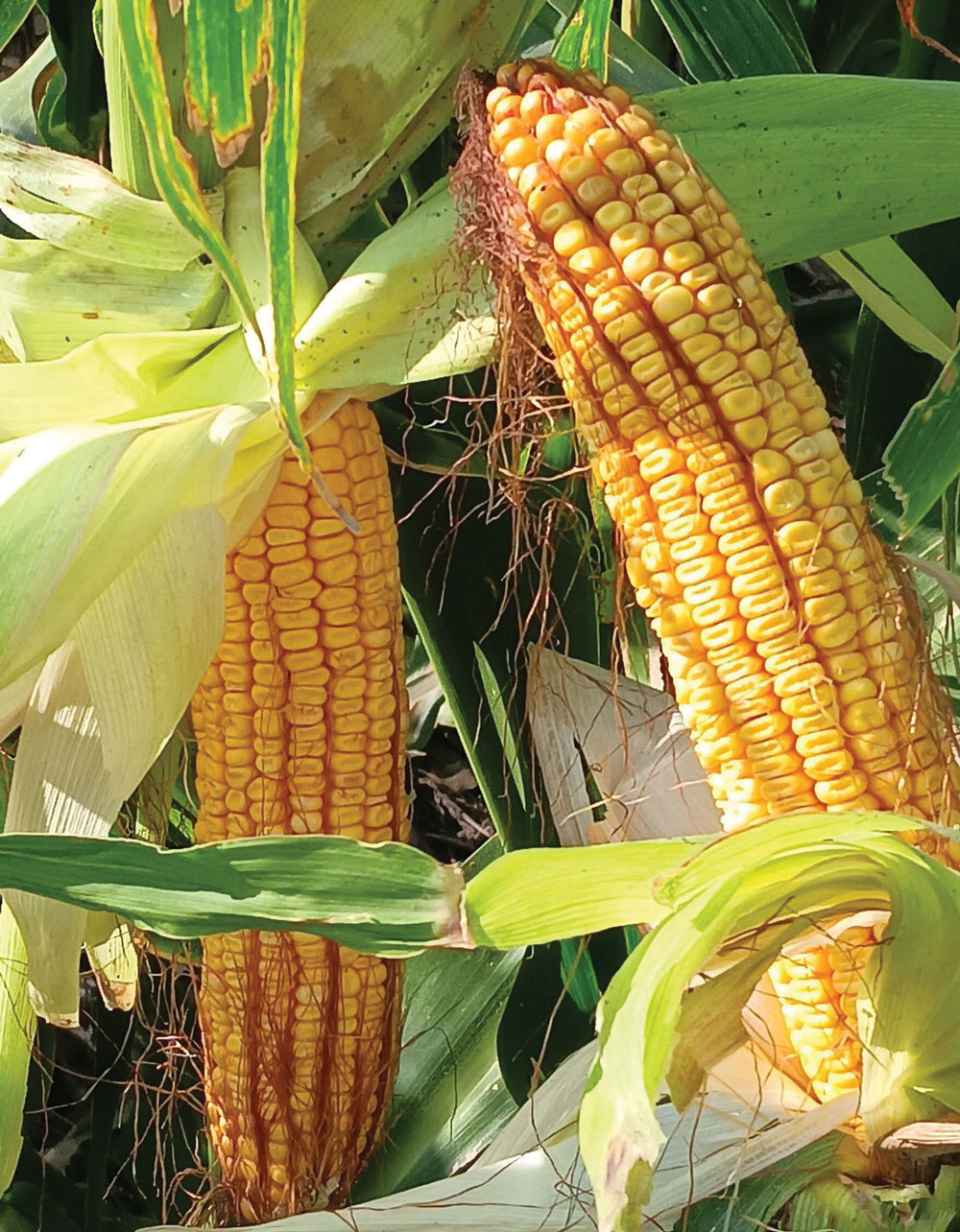
GOOD GENETICS. The fact that Thompson’s Triple-Stack Pioneer corn was able to weather long weeks without rain, and still make a crop on sporadic showers, is a testimony to good hybrid genetics and improved soil biology born of years of using cover crops and no-tilling, he says. Michael Thompson
“I think a lot of it has to do with soil biology making water available to plants. We’re not getting any more rain, yet our crops hold on for another three weeks until that next rain instead of burning up as they have in the past.”
He predicts science will begin proving his hypothesis over the next several years, showing soil structure and biology developed through regenerative conservation practices are enabling roots to better access water, even during a severe drought.
“Maybe it’s just that the plant itself is physically healthier and it’s able to hang on longer, I’m not certain, but I think it’s a combination of things,” he says. “Soil covers reduce evaporation, which provides more moisture for plant growth and transpiration. Improved soil aggregation accompanies improved soil organic matter, which improves water infiltration and moisture-holding capacity. These things taken together must be making some of the difference we’re seeing.”
ROI of Options
In addition to weathering a drought year in crop and beef production, Thompson’s flexibility can also show up on the Thompson Farms bottom line in the form of money not spent.
Just as he was wrapping up corn planting in early June after the season’s final “appreciable rainfall,” Thompson told No-Till Farmer he was fearful he might have just planted a “very expensive crop of cattle feed” and noted any additional nutrient inputs beyond his initial pre-plant and in-furrow applications would depend on rain.
“The rains I hoped for didn’t come, and with only a few acres exception, we didn’t go over the top with additional nutrients or micro-nutrients,” he explains. “I probably saved $35 per acre by aborting those operations because on the few places we did apply some additional inputs it might have yielded only a couple of bushels difference — certainly not enough to have paid for itself.
“When moisture is the most limiting factor, it’s been proven time and again you can’t feed your way to plant health when the plant is running out of water,” he explains.
“Soil covers reduce evaporation, which provides more moisture for plant growth and transpiration…”
Thompson says just by watching the weather trends there have been years he had liquid fertilizer in the tanks and just rolled it over to the next spring rather than make June or July over-the-top applications when he was certain the yield bump was not going to come. “Guess what? Fertilizer keeps just fine and that helped us live within our budget.”
Those experiences have convinced Thompson of the wisdom of split-nutrient applications or being flexible enough to not fertilize when it likely won’t pay.
“I know it’s a lot easier to put everything upfront. It’s more work to do split applications, but I think there’s more top-end profit potential in dry years or when you’re water-logged,” he explains. “Not applying nutrients when they won’t be profitably used is just good business both economically and environmentally. Wasted fertilizer is expensive and adds to the salt load of farm fields and winds up volatizing or in field runoff.”
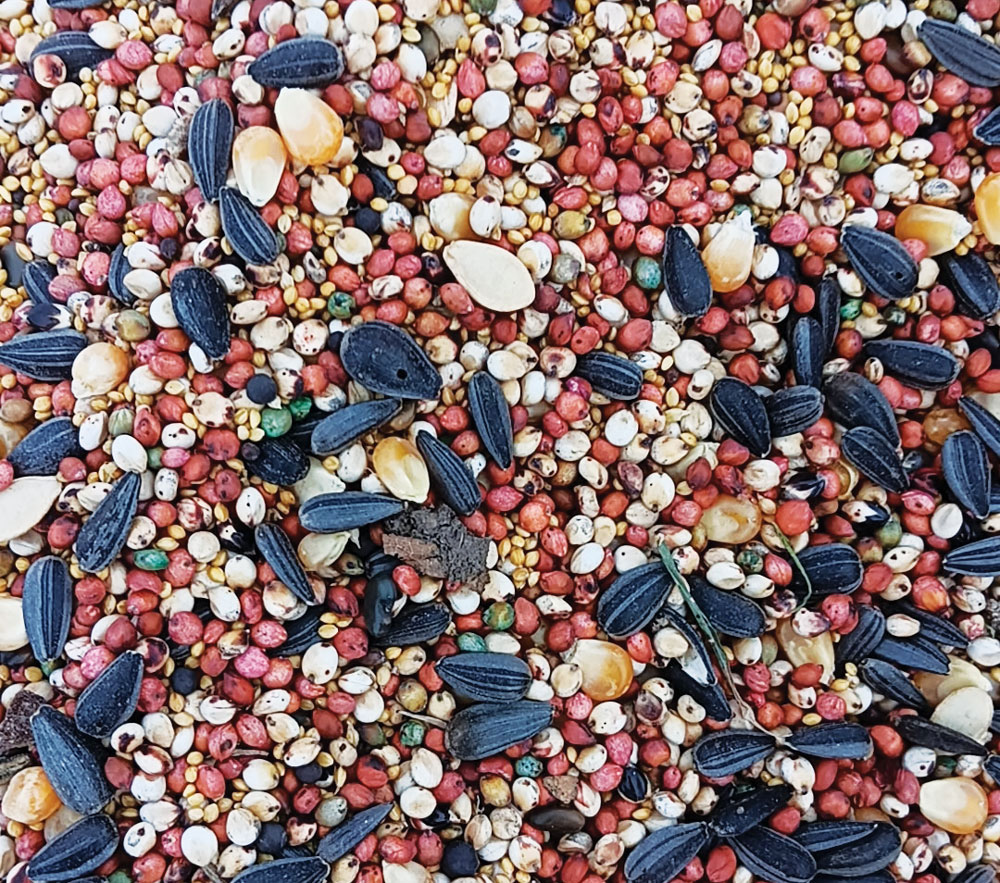
MIXING IT UP. A sample of the warm-season cover crop mix Thompson uses to enhance or extend grazing season when he pulls cattle off summer pasture grasses. For 2026 he hopes livestock are on a warm-season cover mixture of millet, sunflower, sorghum sudangrass, cow peas and maybe soybeans mixed in. “We’ll just have to monitor how much moisture we have to work with and adjust accordingly,” he says, “because we don’t want to hammer the grasses too hard after a dry 2025.” Michael Thompson
Taking precision crop nutrition even further, Thompson says farmers in all environments are going to have to become more “savvy” about comprehensive soil testing, pulling leaf and tissue samples, and not just relying on what the co-op agronomist or university fact sheet recommends.
“We must home in on each piece of ground evaluating nutrient needs of each more closely. There will be some that need additional nutrients, and some where growers can pull back a bit. But, over the next 10 to 15 years, especially with increased regulatory attention on watersheds, I don’t think we can just keep front-loading our nutrients,” he says.
Biologicals in a Drought
Thompson tries continually to run on-farm test plots or agronomic projects, and over the past year he’s been monitoring some small-scale biological trials involving commercial and home-brewed products.
“While some of my field trials were aborted because of drought, some small plotwork I did with vermicompost showed a 10–12-bushel difference,” Thompson explains. “It wasn’t a lot of data, but it was enough I’m going to continue testing.
“We are also looking at some biologicals like in-furrow yucca extract and kelp, and they showed positive returns,” he says. “None were 30-40-bushel yield swings, but all the treatments paid for the product — especially the inexpensive vermicompost I made at home,” he laughs.
Although his results were positive, he cautions against making too much out of his project because of its lack of replication over sufficient time.
The 2025 Conservation Ag Operator Fellowship program is made possible with the support of Titan Tires and Yetter Farm Equipment.

Titan International, Inc., is leading global manufacturer and supplier of Goodyear Farm Tires, Titan tires, Titan wheels, and undercarriage products for a wide variety of off-the-road equipment within the Agricultural, Earthmoving, Mining, Construction and Consumer sectors. Supporting a strong network of aftermarket dealers and blue-chip OEM customers all over the world, Titan is a company that end-users can count on for innovative and durable products and quality service.

Profitable Solutions for Production Agriculture For over 95 years, Yetter Farm Equipment has designed and manufactured innovative and effective solutions for the agriculture industry. Today, we are proud to be recognized worldwide as an industry leader in row cleaners, closing wheels, strip-till equipment, planter attachments, fertilizer placement attachments, rotary hoes, toolbars, and harvest attachments. Our extensive experience—combined with our relationships with dealers, OEM partners, and innovative farmers—helps us engineer practical solutions for the many different farming operations and conditions in the agriculture industry. Our goal is that our products help our customers maximize yield potential every year. Visit www.yetterco.com to learn more about Yetter products or call 800-447-5777.