 Premium content is for our Digital-only and Premium subscribers. A Print-only subscription doesn't qualify. Please
No-Till Farmer
Get full access NOW to the most comprehensive, powerful and easy-to-use online resource for no-tillage practices. Just one good idea will pay for your subscription hundreds of times over.

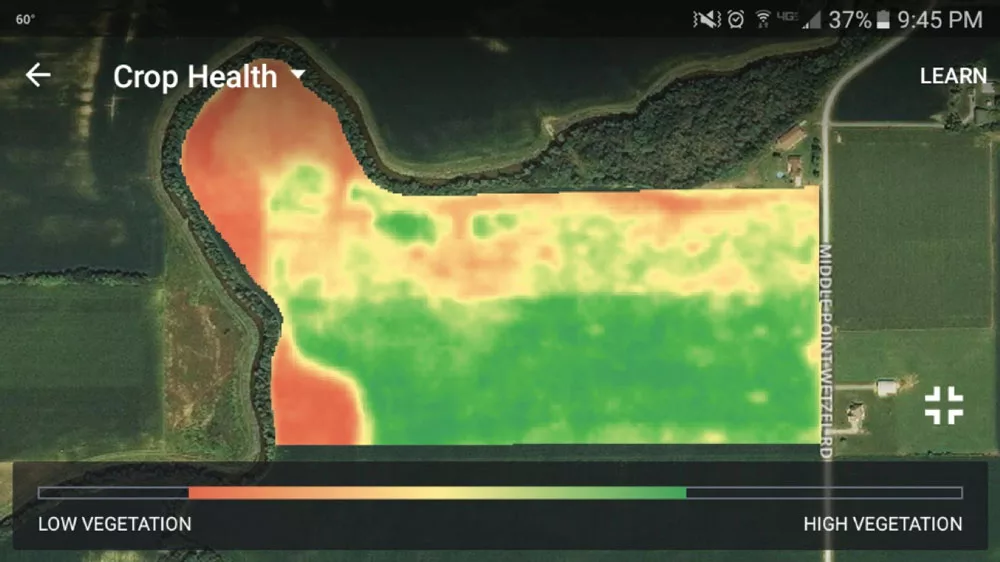
COVER CROP SEEDING DATE AFFECTS SLUGS. This image of Ohio grower Bruce Renner’s field shows how the seeding date of cereal rye impacted slug damage. The top half of the field in red and yellow is where corn was harvested Sept. 28 and seeded immediately to rye. In the bottom half of the field, the corn was harvested 3½ weeks later. The earlier planted rye was thicker and taller, resulting in more slug damage. Slugs will eat virtually all crops and it’s not uncommon to see 20% yield losses from them.
While there are many benefits to long-term no-till and cover cropping, unfortunately, it is also a very stable environment for slugs and voles.
As former NRCS Regional Soil Health Specialist Jim Hoorman explained in a presentation at the 2021 National No-Tillage Conference, slugs like high humidity, low winds, and fields with surface residue and green food. Voles thrive under tall cover crops that protect them from predators and prefer to eat grasses, seeds and high-protein plants.
The good news is that no-tillers don’t need to break out the chisel plow to change course — tillage is only about 60% or less effective in controlling these pests, says Hoorman. Instead, there are preventive measures and practice changes you can make to protect your crops.
The level of pests you have will determine how aggressive you need to be.
To scout for slugs, you can put out a shingle, boards or even newspaper under a rock, which the slugs will crawl under. Oregon State University (OSU) recommends placing traps in five locations in each field, especially in lower areas with high soil organic matter. Check them after a week.
Hoorman says the economic threshold for slug populations is currently unknown in the Midwest, but OSU considers 2-3 slugs per trap to be a medium level, with 4-5 slugs reaching high levels.
To scout for voles, look for many oval-shaped holes and runs in a small bare area, which may run 15-20 feet across. You’ll also see almost no…

Get full access NOW to the most comprehensive, powerful and easy-to-use online resource for no-tillage practices. Just one good idea will pay for your subscription hundreds of times over.
Download these helpful knowledge building tools


We have engineered and developed the most advanced concave system that threshes all crops, eliminates rotor loss, improves grain quality, gives you a cleaner sample – all with one set of XPR concaves.

At Titan International, our product portfolio reflects our commitment to innovation and high-quality products. Titan International offers a full line of solution-focused wheel, tire, and undercarriage products for a wide variety of off-the-road equipment in agriculture, construction, forestry, mining, power sports, high-speed trailers, and outdoor power equipment segments. As one of the largest North American manufacturers, with a network of dealers all over the world, Titan is an industry leader that original equipment manufacturers and operators can count on for durable products and quality service.

Provide expert analysis and decision support to increase productivity and profitability.