.webp?t=1765819283&width=1000)
Takeaways
- Buying bin-run seed can create agronomic, financial and legal problems.
- Know the rules in the federal government’s Plant Variety Protection Act.
- Avoid “Penny-Wise, Pound-Foolish” problems when it comes to cover crop seed.
- Work with an experienced cover crop seed dealer, preferably one who can share his own farming experiences with you.
Several paragraphs in a recent No-Till Farmer article sparked several comments about the use of bin-run cover crop seed. This short item was among one of seven points made in a 1-page article, entitled, “Tips for Reducing the Cost of Cover Crops” that appeared in the January 2026 issue of No-Till Farmer and on our website. The article was reprinted from the No-Till & Cover Crop Handbook , which was produced by the North Jersey RC & DC group, a 180-page guide that we have published.
Here's what appeared in the article …
Consider Bin Run
Bin run seed is harvested by a farmer, stored and planted. Bin run cover crops can cost as little as $5 to $10 an acre.
If you plan to buy bin run seed, strongly consider having it professionally tested first. If improperly stored, the seed may not germinate well. It may be contaminated with noxious weed seeds.
Below you will find two comments citing the concerns with bin-run seed mentioned in this article. The first comes from a friend of Don Wirth of Saddle Bute Seed in Shedd, Oregon, who wished to remain anonymous and the second note is from Don.
Major Concerns with Buying Bin-Run Seed
For more than 40 years I have read and relied on No-Till Farmer for its practical, useful and authoritative articles, which include credible information from no-tillers and other agri-business experts.
Therefore, it was quite surprising to see a recent recommendation to save money by buying bin-run cover crop seed. I’ve never read a No-Till Farmer story that neither provides readers with the source of recommendations nor who wrote the article.
In short, there are a number of potential problems with buying bin-run seed, which can create agronomic, financial, and legal problems for buyers.
Agronomic problems could include seeding different varieties that have different performance results. Both financial and legal problems for a buyer and user could occur if they knowingly or unknowingly buy and plant bin-run cover crop seed varieties that are legally protected by the federal law on Plant Variety Protection. The PVP doesn’t apply only to seed with biotech traits for herbicides and insect resistance.
I understand and empathize with the financial pressure that exists for American farmers, but buying and using bin-run cover crop seed could easily result in “Penny wise, pound foolish” problems.
Work with a reputable and experienced seed dealer for cover crop seeds, especially one who also farms.
Thank you for your long commitment to the financial success of your readers who rely on you for credible insights.
— A long-time No-Till Farmer reader who wishes to remain anonymous
Plant Variety Protection Worries
I am very disappointed with this item because of the following reasons.
- What if the bin-run seed being sold happens to be under Plant Variety Protection rules? Does this make No-Till Farmer liable? Probably not, but this matter needs some serious thought. Why not tell producers to collect some of the neighbors’ weeds that made it through the season and plant them on your farm? And was it originally from a quality cover crop seed variety?
- I have been discovering and bringing quality cover crop seeds to the market along with other seed producers for close to 25 years. The cost of cover crop seed is what percentage of the total cost of planting and establishing cover crops?
To get the full benefit of a species, we need to be sure to have the best variety. As an example I caught another seed company a few years ago promoting their annual ryegrass for turf use as cover crop seed. This variety had been bred to grow small; thus the roots did not go as deep as needed, which kept farmers from getting the full benefit of the species.
- Would you tell a producer to use corn out of a grain bin as seed? With hybridization that is not possible, but how is that different than what was stated in this article in regard to cover crop seed?
— Don Wirth, Saddle Bute Seed, Shedd, Oregon
More Information from the University of Nebraska
From the No-Till Farmer archives, a 2019 article from the University of Nebraska, “Can I Use or Sell Seed from my Harvested Cover Crop?” provides more details on this important topic.
If you have thoughts on these cover crop seed concerns, please share them with me at lessitef@lessitermedia.com
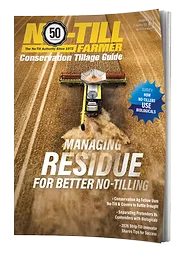
And if you are looking for an exceptional educational present for a family member or friend, our No-Till & Cover Crop Handbook can be a special gift, whether for a veteran no-tiller, strip-tiller, cover cropper or someone thinking of moving their cropping operation in this direction.