Require Subscription

Enter-Carbon-Lottery-1.jpg

No-Tillers Enter The Carbon Lottery

Storing carbon is becoming a value-added option for Canadian growers.
A small group of no-till farmers will become the first in Canada to be paid for storing carbon in their soils as part of a pilot project exploring ways of reducing greenhouse gas emissions.
Read More
24-Hours-A-Day-1.jpg

No-Till 24 Hours A Day, Accurately

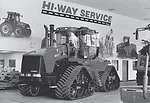
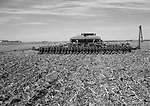
Big no-till acreages with a short seeding window of opportunity call for big capacity equipment.
Because of a small window of opportunity for spring seeding, western Canada no-tillers are investing in large capacity equipment to get drilling and spraying done in a hurry.
Read More
What-Ive-Leaned-Jul-05-1.jpg
What I've Learned from No-Tilling

No-Till Takes Less Inputs, Offers Higher Yields

Equipment use with no-till is so low that this Nebraska farmer doesn’t worry about higher fuel costs.
A series of dry springs and a problem with potential carryover of a soybean herbicide back in the 1980s were the two primary incentives that drove us to try no-till.
Read More
Dick-Lyons.jpg

Open Mind, New Ideas Can Carry No-Tillers To New Levels

Continuous no-tilling, conservation dollars and more efficiency are some of the goals for those willing to reassess and revise their management practices.
“I want you to start thinking out of the box,” says no-tiller Dick Lyons. “We’ve got to continually change. If we are not willing to change, we’re not going to make it,” he says, pointing to the economic, competitive and environmental challenges facing all farmers.
Read More
Tough-Competition-1.jpg

Tough No-Till Competition

In the late 1960s and early 1970s, we taught Brazilian farmers how to no-till successfully. Now, they’re kicking our butts in the worldwide export market due to lower cropping costs and a tremendous boost in no-tilled acres.
When several University of Kentucky agronomists and others headed to South America 35 years ago to show farmers there how to no-till, little did they realize that demonstrating this new technology would eventually turn Brazil into a major player in the world food market and a serious competitor for our grain exports. It’s not likely that they foresaw the eventual impact this would have on prices being paid to American farmers today.
Read More
With-70-Sweet-Corn-1.jpg
What I've Learned from No-Tilling

With 70 Sweet Corn Varieties, Timely Planting Is Critical

Paying attention to detail is necessary when strip-tilling and no-tilling a crop that costs as as much as $1,500 per acre to produce.
When we're asked if we “created” our name as a marketing strategy, we are quick to point out we’re the fourth generation of Sweets to grow sweet corn in northeastern Ohio. My great-grandfather Dermott Sweet started the operation in 1880, and for more than a century we were primarily a wholesale company.
Read More

We Asked, And You Said

We asked No-Till Farmer’s online E-Tip recipients several questions about their no-till operations over the past few weeks, and their answers might confirm your own experiences. Or they might surprise you. Here’s what your fellow no-tillers had to say.

Top Articles

Current Issue

NTF-July-2026_BookWithPages_Curl_art-link.png

No-Till Farmer

Get full access NOW to the most comprehensive, powerful and easy-to-use online resource for no-tillage practices. Just one good idea will pay for your subscription hundreds of times over.

Subscribe Now

View More

Must Read Free Eguides

Download these helpful knowledge building tools
View More
Top Directory Listings