Require Subscription

Swinford.jpg
What I've Learned from No-Tilling

Time Savings Allow for Speciality Crops

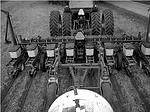
High-starch corn and Roundup Ready soybean seed are two crops made possible because no-tilling gives Sam Swinford the time needed for these niche markets.
We made our initial commitment to continuous no-tilling during the early years of Roundup Ready soybean development. We had gained experience with no-tilling double-cropped soybeans into wheat stubble, but we weren’t totally impressed. We found that heavy residue from the wheat crop tied up nitrogen and was costing us fertilizer dollars. We were also experimenting with no-tilling soybeans into corn stubble, which was getting easier with new narrow-row equipment.
Read More

Dream-Machine-2.jpg

Dream Machine Makes Higher Yields Come True

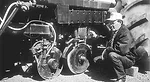
Not satisfied with what the market had to offer, this Missouri no-tiller designed his own strip-till machine and was rewarded with higher yields and freedom from compaction worries.
They say necessity is the mother of invention. For Paul Lanpher, a persistent desire for equipment that simply worked better on his farm led him to develop equipment designed for his no-till operation. It’s a desire that he dreamed up about 7 years ago. And after several modifications and updates, Lanpher is excited about his strip-till Dream Machine.
Read More
value_of_Residue-2.jpg

Determine Residue’s Value Now

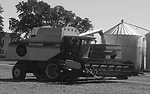
When selling residue becomes an option, no-tillers will have to consider the residue needed for soil protection and the cost to replace lost nutrients.
Corn residue generates increasing interest as a source of value-added products, most notably ethanol. But before you begin to collect corn stover, it’s important to realize the value of leaving residue for your no-tilled ground. Collecting the stover might offer some no-tillers a great opportunity to pull additional income from their fields; but for others, the value of the residue is greater if it is left on the ground.
Read More
Frank Comments

New Control For Nematodes

Over the past few years, numerous benefits have been demonstrated for seeding annual ryegrass as a cover crop in a no-till system. However, another exciting benefit may be the use of this cover crop as an alternative method for controlling soybean cyst nematodes (SCN), which can cost a no-tiller as much as 15 bushels per acre in lost soybean yields.
Read More

Spray Pattern Dynamics: Single Flat Spray vs. Twin Flat Spray

Despite earlier recommendations, twin flat fan nozzles don’t offer the canopy penetration needed to fight Asian soybean rust.
After the asian soybean rust scare hit in autumn of 2004, many of us in the sprayer industry began advocating the use of twin flat fan nozzles to better treat the disease. It turns out we were wrong. By creating two spray patterns out of one, twin flat fan nozzles reduce the force of each spray by half, meaning there is not much force with which to penetrate the soybean canopy.
Read More

Top Articles

Current Issue

NTF-July-2026_BookWithPages_Curl_art-link.png

No-Till Farmer

Get full access NOW to the most comprehensive, powerful and easy-to-use online resource for no-tillage practices. Just one good idea will pay for your subscription hundreds of times over.

Subscribe Now

View More

Must Read Free Eguides

Download these helpful knowledge building tools

View More
Top Directory Listings