Require Subscription

DSC_0095.jpg

11 Things He’s Learned About Strip-Till

20 years after inventing the Corn Belt’s version of the strip-till rig, Richard Follmer shares a few of the practice’s advantages and must-do tips and techniques.
If you haven't heard of Richard Follmer, just know that you've probably used a version of his invention if you've used a strip-till unit recently. The owner of Progressive Farm Products in Hudson, Ill., invented the midmount, dual-placement strip-till toolbar that is being used by thousands of Corn Belt farmers.
Read More
DSC_0033.jpg
No-Till Notes

Working Up The Precision Learning Curve

Managing your farm fields as mini fields will lead to better nutrient management, proper seeding rates and more profitable yields.
This past spring, I took a big step and invested a significant amount of money in some new precision farming equipment. For years, we have been using a yield monitor to record our yields and evaluate corn hybrids and soybean varieties in our on-farm replicated plots.
Read More
cover

Soil Amendments May Be Missing Piece Of The Production Puzzle

Soil amendments work in harmony with other inputs to increase water infiltration, correct compaction and maximize crop production.
If only farming were as easy as poking a seed in the ground in the spring and harvesting a bumper crop in the fall. The more we learn about farming, however, the more we realize what a science it actually is - and a complex one at that!
Read More
cover

Better Soils, Fertility Management Give Indiana No-Tiller Better Results

Gypsum, drainage and a wiser approach to fertility have improved soil biology and corn and soybean yields for Jack Maloney.
Jack Maloney used to be your typical farmer when it came to managing soil and fertility. He relied heavily on his local co-op for recommendations — after all, their agronomists had spent years in school studying science, chemistry and biology.
Read More
Wendte_Men.jpg
What I've Learned from No-Tilling

Nudging Closer To A Never-Till System

Wendte brothers bring differing career experiences together to take on a tough no-till challenge in the flat, black soils of central Illinois.
I was pleased when the Illinois Department of Agriculture reported in late 2006 that no-till acres in the state had, for the first time, exceeded the number of conventionally tilled acres.
Read More
DSC_0041_faded-copy.jpg

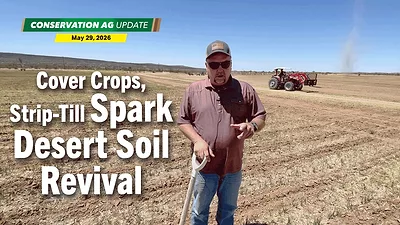
Undercover With Cover Crops

Cover crops work from top to root tip to bring physical, chemical and biological benefits to a productive no-till system.
When left to her own devices, Mother Nature makes sure there is something living and growing in the soil at all times.
Read More
Needham_IMG_8826.jpg

The No-Till Target: Efficient Fertilizer Placement

How and where you apply your fertilizer — and in what form — can make a big impact on your no-till yields.
What producer doesn’t want to make the most efficient use of their fertilizer dollars? But more than ever, no-tillers are looking for ways to slash fertilizer costs while maximizing corn, soybean and wheat yields, says Phil Needham.
Read More
_DSC0015.jpg

Why They Strip-Till... And What They’ve Picked Up

Five strip-tillers explain the benefits of this system in their operations.
A growing number of farmers are switching to strip-till for a variety of reasons. Whether it’s to warm up soils that remain cold for too long in the spring, to trim input costs, to reduce compaction, improve drainage or other reasons, strip-till is getting a closer look these days.
Read More

Top Articles

Current Issue

NTF-July-2026_BookWithPages_Curl_art-link.png

No-Till Farmer

Get full access NOW to the most comprehensive, powerful and easy-to-use online resource for no-tillage practices. Just one good idea will pay for your subscription hundreds of times over.

Subscribe Now

View More

Must Read Free Eguides

Download these helpful knowledge building tools
View More
Top Directory Listings