 Premium content is for our Digital-only and Premium subscribers. A Print-only subscription doesn't qualify. Please
No-Till Farmer
Get full access NOW to the most comprehensive, powerful and easy-to-use online resource for no-tillage practices. Just one good idea will pay for your subscription hundreds of times over.
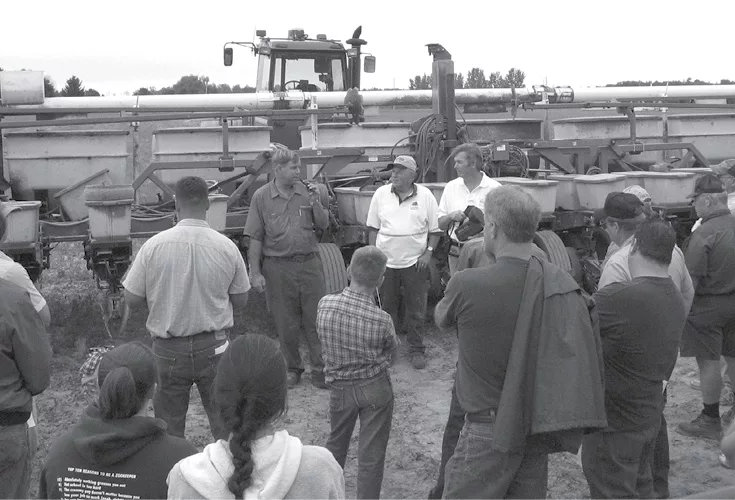
NAME: Donn Branton
LOCATION: LeRoy, N.Y.
YEARS NO-TILLING: 23
ACRES NO-TILLED: 1,300
CROPS NO-TILLED: No-tills processing peas, wheat, oats and alfalfa; strip-tills soybeans, grain corn, sweet corn and dry beans; zone-tills grain corn, soybeans and oats
I’m trying to figure out the best practices to manage each of our acres in an economical way. I’m not just going to stick with one practice across the whole farm to say I’m doing it. It has to show returns.
That’s one of the reasons I don’t just no-till. Over the years, I’ve found there’s a place for “pure” no-till, zone-till and strip-till on my farm.
The region where I farm is known as the breadbasket of New York. Nearby Rochester is known as Flour City due to all the flour mills that used to be located there.
It’s a fertile area, but it presents its challenges, such as rocks. One area on my farm has bedrock that sticks right out of the ground. There’s a stone quarry nearby, but the bedrock on my side of the highway isn’t good enough to mine, so we farm it.
I raise processing peas, soybeans, sweet corn, grain corn, dry beans, wheat, oats and alfalfa on hills and hollows with soils that vary from loamy to sandy to high clay. Some are deep soils; others are very shallow.
The blanket approach doesn’t work for me for fertility or inputs like fungicides. I continually work and plan to make sure each of…


Get full access NOW to the most comprehensive, powerful and easy-to-use online resource for no-tillage practices. Just one good idea will pay for your subscription hundreds of times over.
Download these helpful knowledge building tools

We have engineered and developed the most advanced concave system that threshes all crops, eliminates rotor loss, improves grain quality, gives you a cleaner sample – all with one set of XPR concaves.

At Titan International, our product portfolio reflects our commitment to innovation and high-quality products. Titan International offers a full line of solution-focused wheel, tire, and undercarriage products for a wide variety of off-the-road equipment in agriculture, construction, forestry, mining, power sports, high-speed trailers, and outdoor power equipment segments. As one of the largest North American manufacturers, with a network of dealers all over the world, Titan is an industry leader that original equipment manufacturers and operators can count on for durable products and quality service.

Provide expert analysis and decision support to increase productivity and profitability.