1. Where can I find reliable no-till information?
Each farmer determines the right way of implementing zero-till themslef as it depends on their specific conditions: climate, soil, finance. You will find the best approach, if you study the global experience of no-till use.
In order to learn it, you'll have to become a student and look for any opportunity to obtain new knowledge.
There are plenty of learning opportunities:
- Articles on no-till technology from international experts and scientists (there is an abundance of them online). The articles will give you an idea of major principles and approaches employed in this technology.
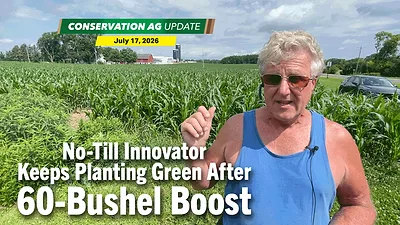
- YouTube: Many farmers who eliminated soil tillage have become video bloggers. YouTube hosts a lot of videos featuring no-till adoption in different countries and in different soil and climatic conditions. This is a very convenient source of information: you can learn something new and see how it works on video.
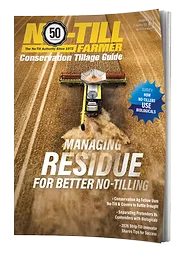
- Magazines: Many agricultural magazinespublish useful articles and interviews with scientists and practitioners who work with no-till.
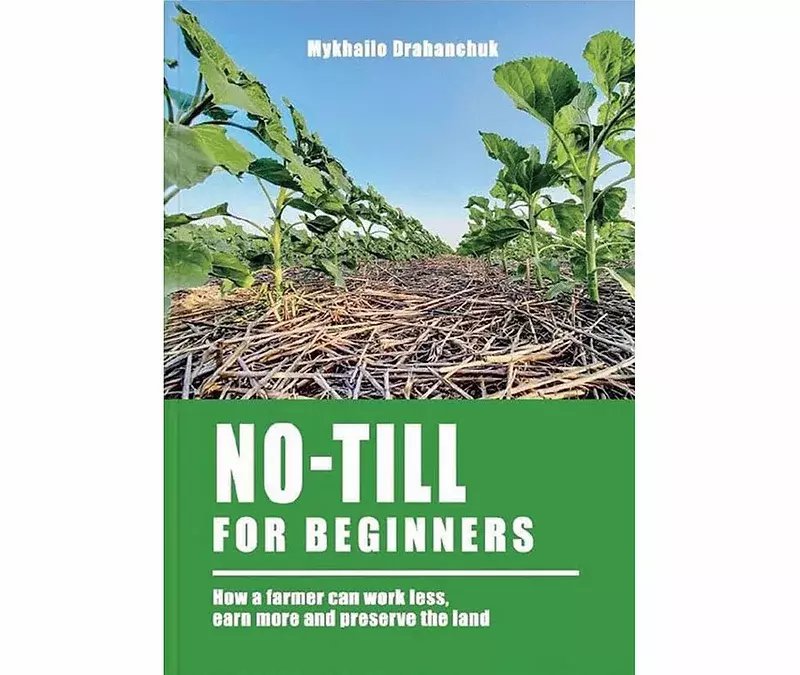
- Books on no-till are a good source for thoughtful studying of basics of this technology. Unfortunately, they are not numerous and they are difficult to get. The book you're reading now was published in an attempt to cure a deficit of such sources of information.
- Educational workshops and conferences: one of the best places to gain new knowledge.
- Field days and various no-till tours are a good opportunity to see practical implementation of the technology directly in a field and in various climatic conditions.
My advice: keep developing professionally and use all available resources: read articles and books, watch videos, attend various training events and of course, implement obtained knowledge in practice.
Practical assignment:
- Review the sources, where you take no-till information from. Write them down.
- Think about the sources, which you don't use. Write why.
2. Use every opportunity for networking.
Various workshops, conferences and field days are not just sources of new knowledge and valuable information. This is also a wonderful opportunity for networking, sharing experience and meeting like-minded people.
You will meet like-minded people, new business partners and friends among the participants. Additionally, these events may be a meeting point with representatives of different companies offering their products and services to farmers.
Adoption of no-till in different climatic conditions may vary depending on the area. Thus, it is very important to listen to colleagues working in conditions similar to yours.
Find out who implements zero-tillage farming in your region, district or maybe in the neighborhood. Learning from their experience may be very valuable for you. Discuss your problems with them, share your success stories, ask questions and invite them to visit you on your farm.
Practical assignment:
- Find out which-no-till events will be held in your region soon. Plan to attend.
- If you're a big farmer, attend the event with your specialists. The transition will be easier, if you have like-minded people beside you.
- Make friends with as many participants as possible and exchange contact information.
- Establish contact with no-tillers working close to you. Start sharing your experience with them and ask for feedback.
3. Do not stop studying.
Trial-and-error method is key.
In fact, while studying a certain issue or a certain problem, or listening to colleagues' advice, you come to a conclusion that there is no single correct solution.
There may be several correct solutions. Which will be best in your conditions?
Try different solutions on your fields by establishing trial plots. The size of the trial will be different, depending on the farmer's needs. Somebody needs just several acres, while others may need dozens of acres. In Kazakhstan, it is simpler for the no-tillers to establish trials in cells. Each cell is 400 hectares. In fact, the area is not important. The important thing is unbiased judgment when assessing the findings. For this, you will need to establish a test plot in the field. This will enable you to be sure about appropriateness of your choice or solution.
Somebody may think that this approach is too complicated; however, this is the most appropriate way to assess ideas under your specific conditions. Make sure you start small and then bring it to your commercial fields. If something goes wrong, you will pay a smaller price.

No-Till Farmer's "Getting Started With No-Till Farming" is brought to you courtesy of Calmer Corn Heads.
Farmer Invented. Farmer Tested. Farmer Proven.® Calmer boasts this motto proudly as it references our farmer-first mentality and state-of-the art technology.
Calmer offers a custom experience, suited to your farm’s needs. Whether its talking with our experienced sales team or directly with the folks who designed and built your corn head, we are committed to providing you top-notch service without the red tape of a big corporation. Calmer specializes in products suited to benefit your no-till operation including the patented BT Chopper® Stalk Rolls, versatile Corn Head Upgrade Kit for harvest efficiency and residue management, and the High-Performance Concave Upgrade Kit.
We know Calmer products work because we run them on our own farms; that’s why we offer a 100% Satisfaction or Your Money Back Guarantee!