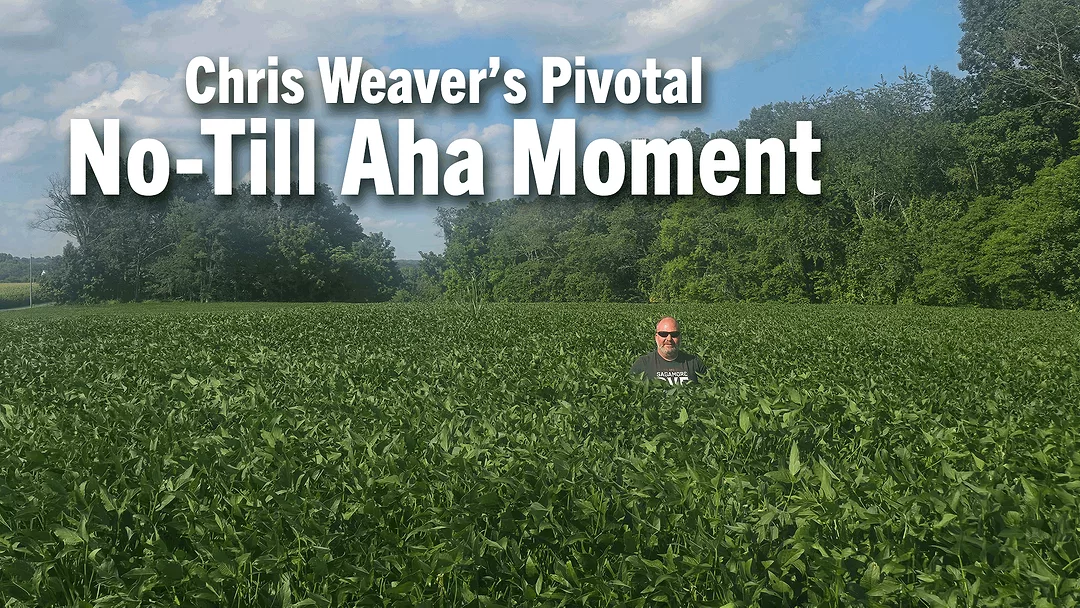
A couple months ago we reported on Maryland no-tiller Chris Weaver’s record-breaking 154-bushel, non-irrigated soybean crop. Cover crops, timely fertility and a slow and steady harvest are all big keys to his no-till success. But he says one of his biggest aha moments came a few years ago in the winter.
“We also run a feedlot. One of the aha moments for me with running that feedlot was the yellow straw that we had out there in the manure, and what I was noticing was our corn yields kept decreasing. I wasn't composting that straw. It was taking away my nitrogen. So now we compost all of our manure before we put it out. We used to haul a couple hundred loads of manure out of our feedlot. Now we're down to 50 or 60 because we have less manure because we're composting it there inside our facility. The same thing's happening with our fodder. Just because I'm going out there in no-till situations and I have fodder and I didn't see the soil move over the winter, that nitrogen you're putting out or that fertility you're putting out that's regenerating your biology to really get it kicking to eat your crop. So if you're not doing something in the fall to get your biology working, then you got serious problems. Not in seven degree temperatures like we have right now, but most times when it snows, some of our ground is the last to get snow on it because our biology's got at two to five degrees warmer that the snow's not landing on the ground because our soils are warmer.”
Every year, Weaver stays true to a simple acronym, S.T.O.P., which stands for “Start Thinking Out your Plan.” If you go into a growing season without a plan, you’re not going to succeed, he says.
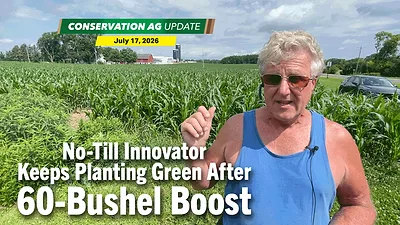
Watch the full Video of this episode of Conservation Ag Update.