 Premium content is for our Digital-only and Premium subscribers. A Print-only subscription doesn't qualify. Please
No-Till Farmer
Get full access NOW to the most comprehensive, powerful and easy-to-use online resource for no-tillage practices. Just one good idea will pay for your subscription hundreds of times over.

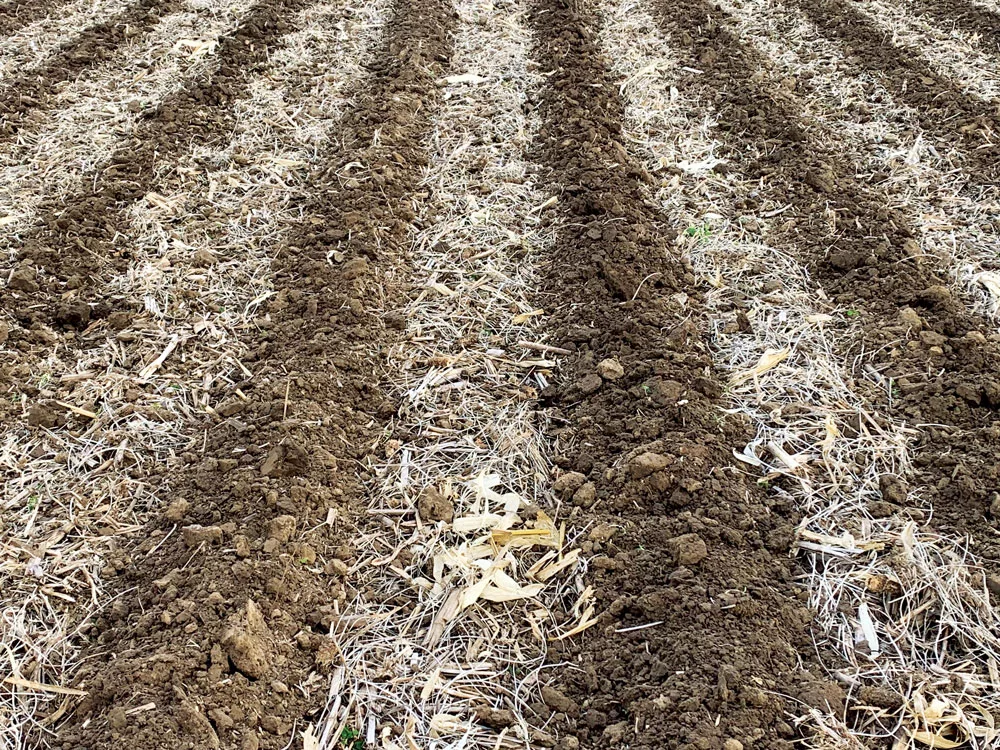
TWO PASSES. Luke Koffman applies phosphorus and potassium while making strips in the fall. He follows it up with a “freshener pass” in the spring, which often includes nitrogen and sulfur applications. Luke Koffman
Luke Koffman grew up on a small dairy farm in Eden, Wis., where conventional tillage was the standard. The third-generation farmer knew there had to be a better way.
That better way revealed itself in the summer of 2018 during the Wisconsin Farm Technology Days in Portage County. Luke and his dad, Ed, stopped by the Environmental Tillage Systems (ETS) booth and got an up-close look at a SoilWarrior for the first time. They were invited to a demo and were impressed by what they saw.
“I had already been reading about strip-till in No-Till Farmer and Strip-Till Farmer magazines, but seeing the practice in action for the first time had a wow factor to it,” Koffman says. “It was a transformative experience when we saw strip-tilled corn at the demo. After that, there was no going back.”
The Koffmans rented a SoilWarrior the following fall and put strip-till to the test with a side-by-side trial. One field was chisel plowed in the fall and cultivated in the spring. The other field was strip-tilled.
“The funny thing about that first year is the strip-tilled corn looked shorter,” Koffman says. “I called Dave Sender from ETS and said, ‘What did you get me into? This corn is a foot-and-a-half shorter.’ He kept telling me to just wait, height doesn’t mean anything. The strip-tilled corn, which was chopped for silage, ended up being 1-2 tons per acre better than the conventional corn. There was no going back after seeing that.”

Get full access NOW to the most comprehensive, powerful and easy-to-use online resource for no-tillage practices. Just one good idea will pay for your subscription hundreds of times over.
Download these helpful knowledge building tools

We have engineered and developed the most advanced concave system that threshes all crops, eliminates rotor loss, improves grain quality, gives you a cleaner sample – all with one set of XPR concaves.

At Titan International, our product portfolio reflects our commitment to innovation and high-quality products. Titan International offers a full line of solution-focused wheel, tire, and undercarriage products for a wide variety of off-the-road equipment in agriculture, construction, forestry, mining, power sports, high-speed trailers, and outdoor power equipment segments. As one of the largest North American manufacturers, with a network of dealers all over the world, Titan is an industry leader that original equipment manufacturers and operators can count on for durable products and quality service.

Provide expert analysis and decision support to increase productivity and profitability.