
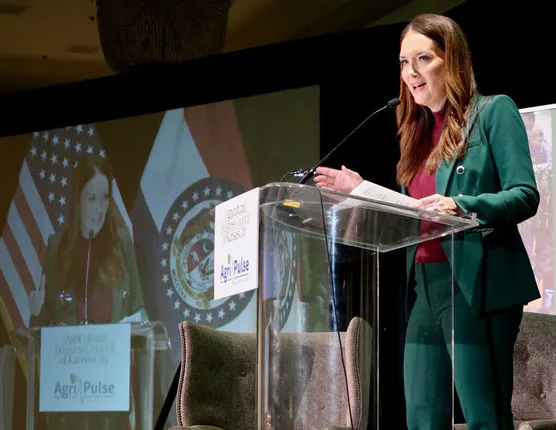
With the U.S. farm economy stuck in a tailspin, U.S. Secretary of Agriculture Brooke Rollins said federal prosecutors will be taking a closer look at the causes of high and volatile input costs plaguing farmers.
Rollins announced Thursday the U.S. Department of Justice signed a memorandum of understanding with USDA, “that represents a joint commitment by both agencies” to protect farmers and ranchers from unacceptable increases in feed, fertilizer, fuel, seed, equipment and other “essential goods.”
Rollins says the agencies also want to ensure competitive supply chains, lower consumer prices and a more resilient agriculture and food supply.
The Antitrust Division of DOJ will work hand in hand with the USDA, Rollins says, to, “take a hard look and scrutinize competitive conditions in the agricultural marketplace, including antitrust enforcement that promotes free market competition.”
Rollins said she is especially concerned about undue influence in the fertilizer market, given that a “significant portion” of the country’s fertilizer production is overseas.
“The cost of doing business for farmers and ranchers has increased drastically, and commodity prices slumped. The Trump Administration is holding these companies accountable and will investigate why input prices have not come back down,” Rollins says.
At the Agriculture Outlook Forum in Kansas City, Rollins spoke on the current state of the farm economy, noting U.S. farm production inputs are significantly more costly than 4 years ago, putting pressure on farmers’ bottom lines. According to the USDA, between 2020 and this year, seed expenses have increased 18%, fuel and oil expenses increased 32%, fertilizer expenses increased 37% and interest expenses increased by 73%.
Rollins did not sugarcoat the situation farmers are in. The trade deficit will likely approach $50 billion by years’ end without new trade deals being announced. President Trump is working on a longer-term fix — “the complete realignment of the world economy around American agriculture and American goods.”
But as harvest approach she acknowledged that loans must be secured for the coming crop season, and that, “there are mouths to feed tonight, and we have to make some difficult decisions right now. I do not have silver bullet. I have stayed up many nights wishing for a silver bullet, praying for a silver bullet.”
Producers are also grappling with China’s retaliatory tariffs on US goods. The Asian nation — the world’s largest soybean importer — has yet to book a single shipment of the U.S. oilseed this season, fueling anxiety among farmers as this year’s harvest moves ahead.
Rollins says she’s pushing the Federal Reserve to continue lowering interest rates so farmers can borrow money at more reasonable rates.
Addressing labor cost increases, Rollins says it’s driven by the “high cost” of utilizing the H-2A program to secure seasonal labor — specifically the “artificially inflated” Adverse Effect Wage Rates set by the Department of Labor using USDA data.
Rollins says the USDA Farm Labor Survey was never designed to be used for setting government-mandated wage rates and is duplicative of other DOL data sources, so it’s being discontinued.
The USDA is working with the Department of Labor and Department of Homeland Security on regulatory changes to make the H-2A program, “more affordable and more accessible for American agriculture.”
Brighter Future
Rollins did share positive news for the agriculture market. Bloomberg reported Wednesday the Trump administration would be providing additional financial aid to farmers, with announcement potentially coming in the next couple of weeks.
Rollins said the USDA has expedited emergency aid payments of more than $8 billion to over 560,000 farmers since March, and on Thursday the agency released the $2 billion in remaining funding for the Emergency Commodity Assistance Program (ECAP).
The USDA announced the purchase 417,000 metric tons of commodities to support the international food aid programs —equivalent to more than 16 million bushels of corn and sorghum.
The One Big Beautiful Bill will provide additional $285 million each year in agricultural trade promotion and facilitation to help American agriculture expand markets overseas. The USDA repurposed Biden-era funding to kickstart the program one year early, with $285 million on Oct. 2nd launching the America First Trade Promotion Program to expand market opportunities for American agricultural products.
In addition to ECAP, USDA has provided more than $2 billion through two rounds of Emergency Livestock Relief Program (ELRP) assistance to livestock producers impacted by drought and wildfires, and floods. Producers have also received over $5.5 billion through Stage 1 of the Supplemental Disaster Relief Program, with Stage 2 assistance to be announced in October.