
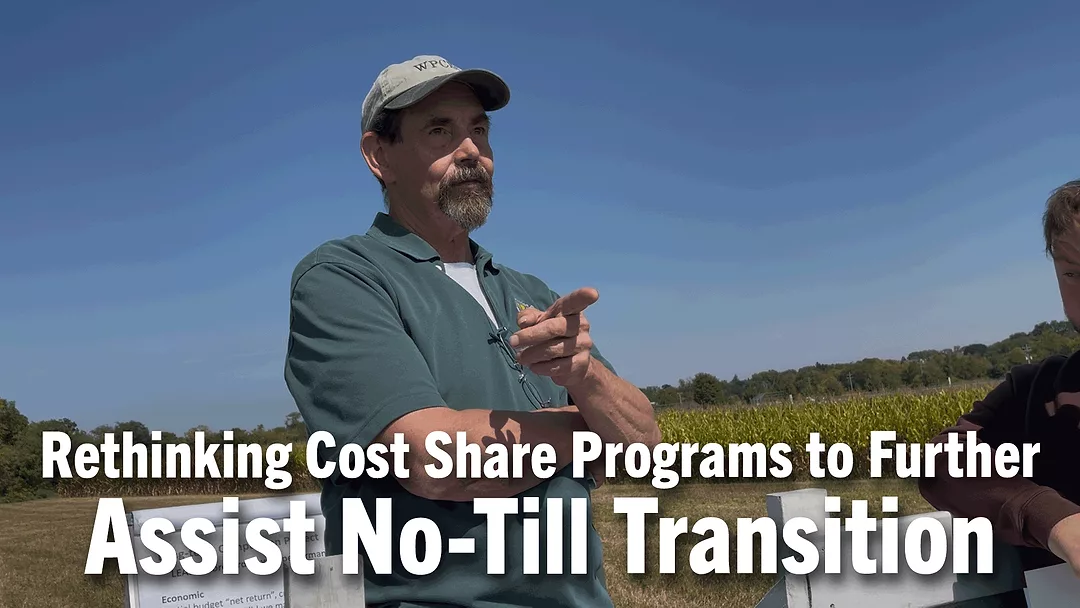
Meanwhile, independent research agronomist Jim Stute shared new economic data from the two plots. Here’s his big takeaway from the study so far.
“Our takeaway in studying the differences between conventional and regenerative is that we do have a definitive transition slump in the regen, we saw a yield reduction. Our 3-year reduction in yield and income equated to almost $300 per acre, which is a huge hole to dig out of. There are a lot of reasons behind it that’s site-specific here, like just a lack of precipitation during our growing seasons and we haven’t been able to supercharge our soil biology to get them working their magic on the regen system. The take-home is if you’re transitioning, look at using cost share programs for both cover crops and no-till, and you’ll get closer. What we recommend is maybe we need to rethink cost share. Instead of cost sharing programs and specific practices, let’s cost share transition so that people have a chance to transition to regen on rental ground without having an economic penalty.”
Stute will explore the economic benefits of cover crops during a classroom presentation at the 2026 National No-Tillage Conference. Head to NoTillConference.com for more information.
Watch the full version of this episode of Conservation Ag Update.