
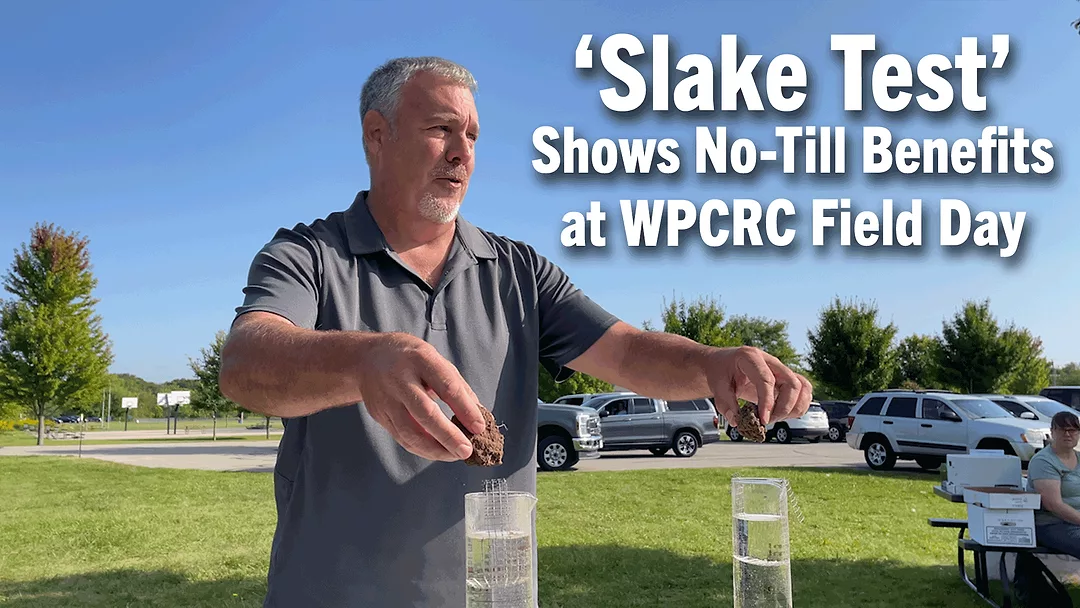
With harvest season quickly approaching, now is the perfect time for a late-summer field day. The Watershed Protection Committee of Racine County kicked off their annual event in southeast Wisconsin with an eye-popping visual comparison between no-till and conventional tillage. Check it out.
“They’re both the same soil but this is because of the regenerative agriculture and the conventional that’s been going on up there (in the test plots), this is only 4 years now of difference. We’re going to take the darker, healthier soil that we’re creating doing this research and compare it to the conventional. I haven’t done this yet, so hopefully this works. When we talk water quality, that’s why Eagle Lake donated to us. They say we don’t want this (runoff) in our lake; we want that (no-till soil) in our lake.”
“The nitrogen, the phosphorus, things that promote algae growth, weed growth, things that are costing these lake associations money. They want to see this where there’s not a lot of that incorporated in the surface runoff from the farm fields.”
Perfect way to kick off the field day, as attendees next got an up-close look at the test plots comparing conventional tillage to no-till and cover crops. It took less than a minute for a cup of water to infiltrate the no-till plot, whereas the water was still standing in the conventional plot at the end of this 40-minute presentation.
Watch the full version of this episode of Conservation Ag Update.