 Premium content is for our Digital-only and Premium subscribers. A Print-only subscription doesn't qualify. Please
No-Till Farmer
Get full access NOW to the most comprehensive, powerful and easy-to-use online resource for no-tillage practices. Just one good idea will pay for your subscription hundreds of times over.

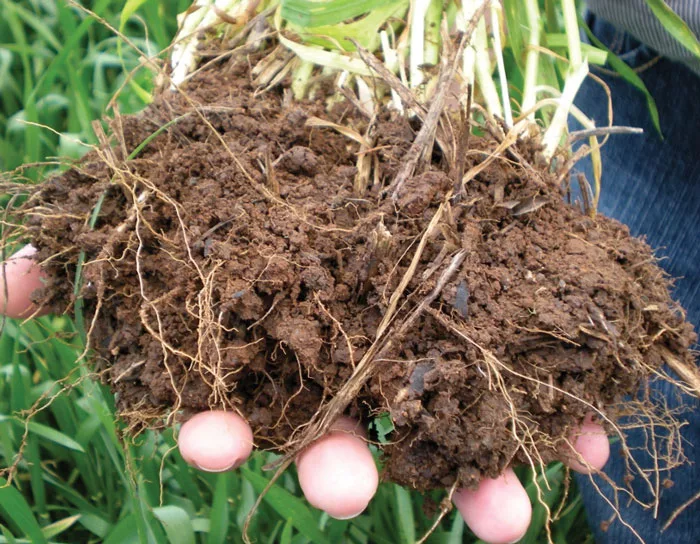
AN EXCEPTION. Not all plant species form rhizosheaths. Grasses tend to form rhizosheaths, but it depends on the conditions, says rhizosphere ecologist Jill Clapperton. Jill Clapperton
No-Till Innovator and world renowned rhizoecologist Jill Clapperton returned to the National No-Tillage Conference earlier this year and gave attendees, as usual, a fascinating nuts-and-bolts address on soil health and the components that make it healthy.
Clapperton had spent the last 4 years in Boston as the co-founder and director of R&D and laboratory operations for Edacious PBC, but she returned last year to the firm she founded, Rhizoterra. “I built a big food lab with the idea being that we would be able to look at how we're producing food and link that back to the nutrition and the food,” Clapperton says.
“Because intuitively and innately, we all believe that when we have healthy soils, we grow very nutritious food that is good, and from healthy soils. I built the lab and it’s taking samples today. However, I needed to get my hands back in the ground and come to meetings like this and get refueled. I needed to feed my soul and make my heart sing.”
Below are some of the most seminal points from Clapperton about soil health that should be valuable for beginners or veteran no-tillers.
One mistake growers might make is comparing their farm to someone else’s farm.
“Everybody has their own agroecosystem. What you do is unique for you. It's unique for your area. It’s unique for the equipment you use. It’s unique for the soil types that you have and the crops that you grow and…

Get full access NOW to the most comprehensive, powerful and easy-to-use online resource for no-tillage practices. Just one good idea will pay for your subscription hundreds of times over.
Download these helpful knowledge building tools

We have engineered and developed the most advanced concave system that threshes all crops, eliminates rotor loss, improves grain quality, gives you a cleaner sample – all with one set of XPR concaves.

At Titan International, our product portfolio reflects our commitment to innovation and high-quality products. Titan International offers a full line of solution-focused wheel, tire, and undercarriage products for a wide variety of off-the-road equipment in agriculture, construction, forestry, mining, power sports, high-speed trailers, and outdoor power equipment segments. As one of the largest North American manufacturers, with a network of dealers all over the world, Titan is an industry leader that original equipment manufacturers and operators can count on for durable products and quality service.

Provide expert analysis and decision support to increase productivity and profitability.