Australian Federal Court Ends All Roundup Litigation — Could It Happen Here?
By Dennis Rudat, Farm News Media
Published January 14, 2025
The Federal Court of Australia has brought an end to the last Roundup case in that country, closing all pending injury litigation cases there against Bayer, citing a prior 322-page ruling that scientific evidence does not support a link between glyphosate and non-Hodgkin lymphoma (NHL).
In a Dec. 24, 2024, ruling, the Federal Court of Australian granted Bayer’s request to discontinue a class-action suit known as Fenton v Monsanto Australia Pty Ltd involving allegations related to Roundup.
That ruling follows Bayer’s earlier victory in a July 2024 ruling known as the McNickle case in the same court which, according to Bayer, was the first Roundup final judgment outside of the United States on the question of whether glyphosate, the active ingredient in Roundup, causes NHL.
In the McNickle ruling, the federal court said the case was to resolve the “Central Common Question” of if exposure to the herbicide which contained glyphosate and branded as “Roundup” increased an individual’s risk of developing NHL.
“It is not proven in this proceeding on the balance of probabilities, that throughout the relevant period, use of and/or exposure to Roundup Products increased an individual’s risk of developing NHL; and/or caused an individual to develop NHL,” the court stated in the July 2024 ruling.
Similar to the McNickle case, the court said the Central Common Question in the Fenton proceeding was whether or not Roundup was a human carcinogen.
Fenton, a heavy user of Roundup between 2000 and 2008, was diagnosed with NHL in 2008. In November 2019, prior to the commencement of the McNickle case, Fenton filed a class-action suit on his own behalf and all persons who suffered personal injury from March 1987 to November 2019 due to the use of Roundup.
“This is an outcome consistent with worldwide regulatory and scientific assessments, including from the Australian Pesticides and Veterinary Medicines Authority, concluding that glyphosate is not carcinogenic,” Bayer said in a statement.
Australia has banned further glyphosate court cases…
Bayer said it intends to continue its multipronged strategy to significantly contain the Roundup litigation in the U.S., noting it has achieved favorable rulings in 15 of the last 22 trials.
“The company has a winning record in court and will continue to try cases, based on the overwhelming scientific and regulatory evidence in support of the safety of glyphosate,” Bayer said.
Additionally, Bayer said it will seek a U.S. Supreme Court review on the cross-cutting question of whether all of the state-based warning claims in this litigation are preempted by federal law and is currently evaluating cases to determine the best vehicle for this appeal.
With more than 360 grower and industry groups, Bayer said it continues to engage with policymakers at the federal and state level for legislative certainty around labeling in the U.S. market.
“Without reform, the U.S. risks the availability of a domestic-produced crop protection tool that has consistently been found to be safe by regulatory bodies worldwide. The misapplication of the law by the litigation industry is driving up the cost of food and threatening its supply,” Bayer added.
In an open letter on glyphosate titled, “American Agriculture at Risk,” Bayer said the company has “stood at the forefront of health and safety while producing some of America’s most trusted and iconic brands” for over 160 years.
“One such product is the herbicide glyphosate which, sold to farmers as Roundup, is one of the most important inventions in agriculture in the last 50 years and has been thoroughly evaluated and certified multiple times by the U.S. Environmental Protection Agency (EPA), the European Food Safety Authority, and all other leading safety and regulatory bodies around the world as safe to use,” the company said.
According to Bayer, Roundup has enabled millions of American farmers to have better yields while lowering their weed control input costs, noting the World Health Organization, which didn’t actually conduct any original studies, is the only group to categorize glyphosate as a probable carcinogen.
“Despite the clear science behind Roundup’s safety and benefits, thousands of lawsuits persist in courts across the country, fueled by over $100 million dollars in expansive marketing and TV ads by the litigation industry to recruit and accumulate plaintiffs,” Bayer said.
Noting the U.S. litigation industry has fought to prevent the EPA’s rigorous analysis and science-based conclusion that Roundup is safe to use from being shown in court, Bayer said attorneys have relied on junk science to mislead juries.
“We win when juries have access to all the relevant evidence and scientific information,” the company said. “So, when the whole story is not told, billions of dollars are diverted to the litigation industry — billions that could have been invested into expanding our leading R&D programs and other important investments.”
Bayer warns the impact of courtrooms will be felt at every dinner table in America in the form of higher food prices if U.S farmers lose access advanced agricultural technology and products.
“If American farmers lose a critical tool like glyphosate based on the litigation industry’s actions, they will face even harder choices,” Bayer said. “Bayer is the only domestic manufacturer of glyphosate. If this keeps up, farmers will be left with two options — grow less food or rely on foreign supplies of the product.”
While Bayer said it plans to continue providing U.S. farmers with Roundup, it also warns there’s “a limit to what we can do. We hope others will soon recognize how high the stakes go, well beyond one product or industry to touch upon fundamental American values and interests.”
Read the original article on Michigan Farm News »
Glyphosate on Trial: A Science-Based Defense in Four Acts
By Ashley Quigley BSc (Hons), MRSC, Technical Development Manager @ Surfachem
Published April 11, 2025
Glyphosate has become one of the most polarising substances in modern agriculture. For some, it symbolises everything wrong with industrial farming: corporate influence, synthetic chemicals, and GMO crops. For others, it's a vital, well-regulated tool that supports food production and environmental conservation. This article offers a reasoned, science-grounded defence of glyphosate — not as a miracle chemical, but as a case study in how emotion and ideology can distort public understanding of risk.
Understanding Toxicity: What the Data Actually Shows
A perspective grounded in toxicology, regulation, and common sense Glyphosate is arguably the most criticised pesticide in the world, yet ironically, it's also one of the safest — when evaluated through the lenses of toxicology, residue monitoring, and environmental impact.
Understanding Toxicity: What LD₅₀ Really Tells Us Toxicologists use the LD₅₀ (Lethal Dose 50) as a standard measure of acute toxicity — it tells us how much of a substance (in mg per kg of body weight) is needed to kill 50% of test animals, typically rats. The higher the LD₅₀, the less acutely toxic the substance.
Glyphosate: LD₅₀ of 5600 mg/kg → categorised as "slightly toxic"
Copper sulfate: LD₅₀ ~30 mg/kg
Pyrethrin: LD₅₀ as low as 200 mg/kg
Azadirachtin: LD₅₀ ~3540 mg/kg
Note: LD₅₀ only measures acute toxicity. Other endpoints like chronic exposure or reproductive effects are also studied by regulators — and glyphosate has passed numerous comprehensive evaluations by agencies including EFSA, ECHA, and the EPA.
Check substances and regulatory decisions at the EU Pesticides Database https://food.ec.europa.eu/plants/pesticides/eu-pesticides-database_en
Environmental Impact: The H400 Hazard Code
In the EU, the classification H400: "Very toxic to aquatic life" is applied to many pesticides — including several approved for organic use.
Important Clarification – This Is EU-Focused This post focuses on pesticides currently authorised in the EU for either organic or conventional farming. Historically, far more hazardous organic pesticides were used — such as rotenone and nicotine sulphate — which are now banned in Europe due to health and environmental concerns.
So Why Defend Glyphosate? Because it's:
- Extensively studied and well-regulated
- Less acutely toxic than many alternatives
- Not classified as hazardous to aquatic life
- Effectively monitored for residue safety
- Used to protect yields, which in turn helps reduce crop loss and the risk of mycotoxin contamination, which can be a serious food safety hazard
Glyphosate’s downfall is due to its association with genetically modified crops…
The Confusion Between Hazard and Risk
Hazard ≠ Risk: Understanding IARC Classifications and the Courtroom FalloutGlyphosate continues to be one of the most scrutinised substances in agriculture, and in Part 1 of this series, we looked at toxicology (LD₅₀) and environmental classifications to demonstrate that, when used correctly, glyphosate is safer than many natural alternatives.
But one issue keeps resurfacing — the infamous classification by the IARC (International Agency for Research on Cancer) as Group 2A: “Probably carcinogenic to humans.” This decision has been repeatedly misunderstood, misused in courtrooms, and misrepresented in public debates.
What Does “Probably Carcinogenic” (Group 2A) Actually Mean? IARC Group 2A is a hazard-based classification. It doesn’t assess how much exposure causes harm, or under what real-world conditions. It simply means: “There is limited evidence in humans, and sufficient evidence in animals that something can cause cancer under certain circumstances.”
Look at the Table in the image to see what else is in the IARC Group 2A list.
So no, glyphosate is not more dangerous than plutonium — it's grouped with everyday things like roast beef and night shifts.
What About the Court Cases?
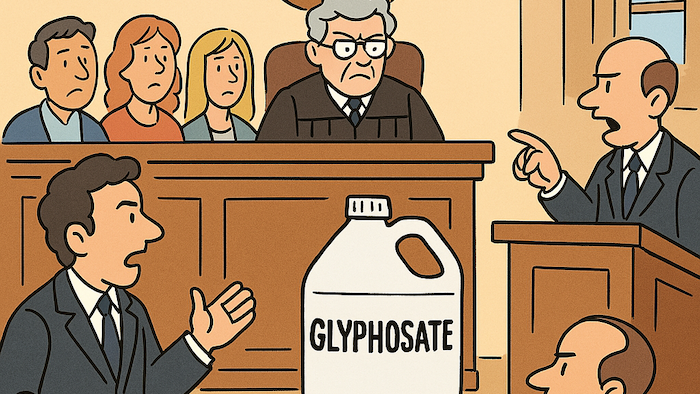
Yes, Monsanto (now part of Bayer) has paid out massive jury verdicts in the US — most famously the Dewayne Johnson case, awarding over $280 million USD (later reduced on appeal). In fact, in the 2024 Johnson v. Monsanto case (Oregon), the court reviewed jury instructions around the EPA's role and acknowledged that those instructions could be misleading. Jurors are often asked to make decisions without properly considering or being allowed to weigh regulatory conclusions — a major disconnect between courtroom outcomes and global scientific assessments.
But here’s the uncomfortable truth:
- These were jury trials, not scientific evaluations.
- Jurors were swayed by emotion, personal hardship, and anti-corporate sentiment — not by the vast body of global scientific evidence.
Similar courtroom oddities have occurred before:
- McDonald’s Hot Coffee Lawsuit (1994) – $2.9 million awarded to a woman burned by hot coffee (later reduced).
- Tobacco Litigation – Multi-billion dollar settlements despite widespread public awareness of risks.
- Vioxx (Merck) – Billions paid, though the full scientific picture remains complex.
These cases show that courts are not the right venue to determine scientific truth.
The Scientific Consensus Remains Firm Despite the IARC's classification, all major regulatory agencies — including EFSA, ECHA, the US EPA, Health Canada, and the WHO/FAO JMPR — have reviewed the full dataset on glyphosate and concluded :Glyphosate is unlikely to pose a carcinogenic risk to humans under normal use.
So What’s the Takeaway? Glyphosate is classified as probably carcinogenic in the same way hot coffee or working the night shift is. And massive court verdicts reflect emotional decisions, not scientific ones. Let’s defend the role of evidence-based policy in agriculture — not emotion-driven narratives or courtroom drama.
Read the full post on LinkedIn »
First Case of Glyphosate Resistance Confirmed on United Kingdom Farm
By Richard Allison
Published April 14, 2025
Growers using glyphosate to clean stubble ahead of direct drilling spring crops are urged to remain vigilant this spring, following confirmation of the first case of glyphosate resistance on a United Kingdom (UK) farm in Kent.
The Weed Resistance Action Group (WRAG) earlier this year announced the discovery of the first field population of any weed to have glyphosate resistance in the UK.
Discovered in several fields in Kent, suspicions were initially raised as patches of Italian ryegrass (Lolium multiflorum) survived appropriate applications of glyphosate prior to drilling spring crops.
What This Means for Farmers
John Cussans, principle weed science consultant at Adas who led the research, says glyphosate is probably the most important herbicide for UK farmers and there is no obvious replacement, hence any case of resistance is concerning.
“But we must retain perspective; it’s resistance in one weed species on one farm; it is not a widespread problem yet.”
Ryegrass species are high risk with regard to glyphosate resistance…
For context, he explains that over the period 2018-2023, Adas has collated data for samples of Italian ryegrass which were submitted for standard resistance tests. They have been screened with glyphosate, and he didn’t find a single resistant sample.
“This single case does however serve as a firm reminder of the importance of glyphosate stewardship, otherwise we are likely to see more cases.”
In addition to the one confirmed case, three suspect populations of Italian ryegrass are under investigation, with results expected later this year.
To date, Italian ryegrass is the only weed with suspect populations in the UK. Extensive testing of blackgrass and a 2023 survey of 166 brome samples found no populations of concern.
“Experience from around the world suggests ryegrass species are high risk with regards to glyphosate resistance. Globally, there are several cases of resistance in annual ryegrass (lolium rigidum) and Italian ryegrass (lolium multiflorum).”
Read the full article on Farmers Weekly »