 Premium content is for our Digital-only and Premium subscribers. A Print-only subscription doesn't qualify. Please
No-Till Farmer
Get full access NOW to the most comprehensive, powerful and easy-to-use online resource for no-tillage practices. Just one good idea will pay for your subscription hundreds of times over.
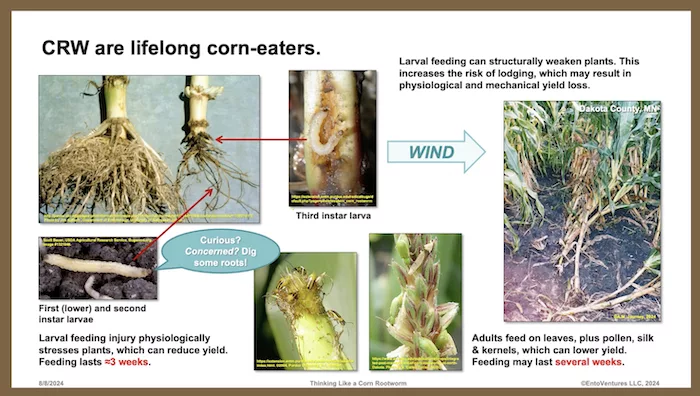
Courtesy: Ann Marie Journey, EntoVentures LLC
Start thinking like a corn rootworm, and you’ll have a better shot at keeping the yield-robbing pest from taking over your cornfields. Those are some words of advice from Ann Marie Journey, an independent soil, wetland and stream health evaluator and founder of EntoVentures LLC.
“When you approach the rootworm as just a problem that has to be solved, you’re not taking into account the animal’s biology,” Journey says. “You’re hitting it just at certain points or with certain methods or controls, and you’re not allowing yourself in effect to have a conversation to gain insight back from the rootworms about what it is that makes them successful in any given place. The more you know about what is making them successful, the more you might be able to make their life more complicated.”
Journey, who conducted extensive research on corn rootworm, insecticides and herbicide-tolerant and rootworm-resistant corn at the Univ. of Minnesota, shared critical information about the “billion-dollar bug” at the 2024 National Strip-Tillage Conference, along with 5 practices that could make your farm more rootworm-resilient.
Healthy soils with plenty of life are a rootworm’s worst nightmare because they’re easy targets to be eaten by viruses, bacteria, protists (algae, flagellates, amoebae), fungi, nematodes, worms, arthropods (centipedes, millipedes, mites, spiders, springtails, insects) and vertebrates.
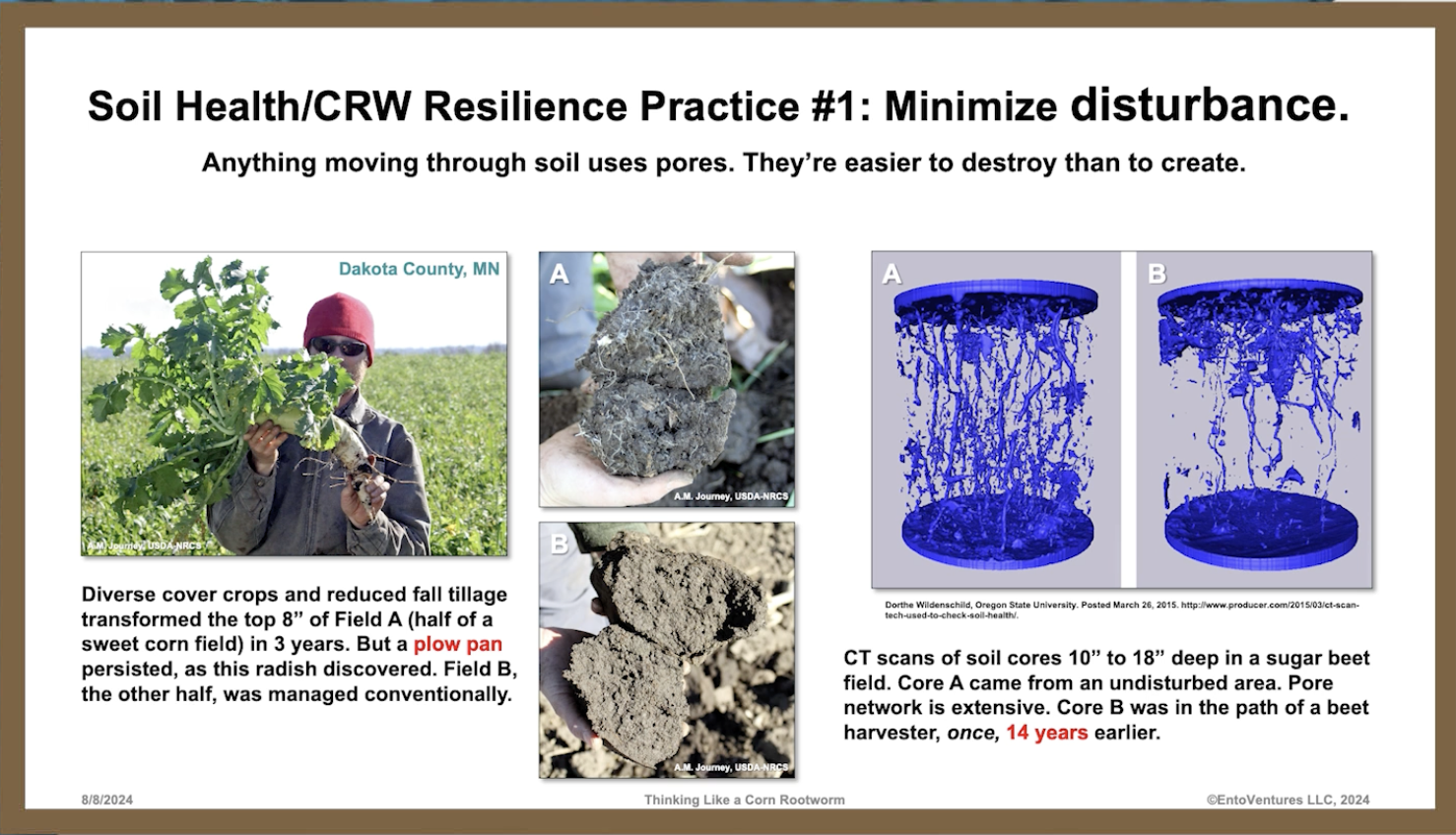
“In healthy soil, you might have 5-20,000 pounds of these organisms per acre in the top 6 inches,” Journey says. “There should be a lot of these natural enemies to…

Get full access NOW to the most comprehensive, powerful and easy-to-use online resource for no-tillage practices. Just one good idea will pay for your subscription hundreds of times over.
Download these helpful knowledge building tools

We have engineered and developed the most advanced concave system that threshes all crops, eliminates rotor loss, improves grain quality, gives you a cleaner sample – all with one set of XPR concaves.

At Titan International, our product portfolio reflects our commitment to innovation and high-quality products. Titan International offers a full line of solution-focused wheel, tire, and undercarriage products for a wide variety of off-the-road equipment in agriculture, construction, forestry, mining, power sports, high-speed trailers, and outdoor power equipment segments. As one of the largest North American manufacturers, with a network of dealers all over the world, Titan is an industry leader that original equipment manufacturers and operators can count on for durable products and quality service.

Provide expert analysis and decision support to increase productivity and profitability.