 Premium content is for our Digital-only and Premium subscribers. A Print-only subscription doesn't qualify. Please
No-Till Farmer
Get full access NOW to the most comprehensive, powerful and easy-to-use online resource for no-tillage practices. Just one good idea will pay for your subscription hundreds of times over.
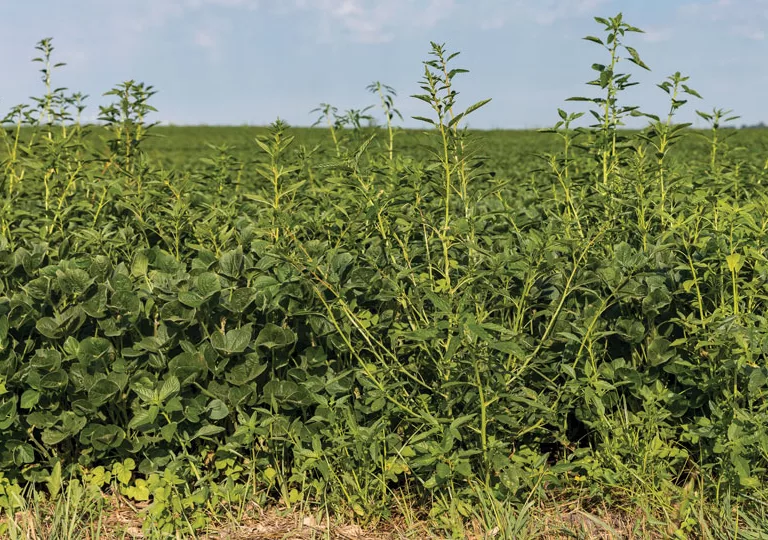
The increasing incidence of herbicide-resistant weeds is a headache for many no-tillers, but for those trying to deliver product for the growing non-GMO market, it’s especially challenging.
Mark Loux, a weed specialist with Ohio State University Extension, says developing a good weed management program is key to successfully no-tilling non-GMO crops, especially soybeans.
“Non-GMO corn is actually pretty easy,” he said during a presentation at the 2021 Conservation Tillage and Technology Conference. “The full complement of broad-spectrum herbicides can be used, just like in transgenic corn.”
The only difference with corn, he says, is glyphosate and glufosinate can’t be used in a post-emergence application, and Enlist Duo and Enlist One products can’t be applied later at the higher rate like could be done with Enlist corn.
“But you have all the same broad spectrum, residual herbicides, and a lot of very good pre-mixes,” he says. “And you can also make your own mixes because most of these products are made up of generic components at this point.”
Non-GMO soybeans, on the other hand, are much more difficult to manage because of a handful of problematic weeds — marestail, waterhemp, giant ragweed and common ragweed — that have developed resistance to many weed control options.
When…

Get full access NOW to the most comprehensive, powerful and easy-to-use online resource for no-tillage practices. Just one good idea will pay for your subscription hundreds of times over.
Download these helpful knowledge building tools

We have engineered and developed the most advanced concave system that threshes all crops, eliminates rotor loss, improves grain quality, gives you a cleaner sample – all with one set of XPR concaves.

At Titan International, our product portfolio reflects our commitment to innovation and high-quality products. Titan International offers a full line of solution-focused wheel, tire, and undercarriage products for a wide variety of off-the-road equipment in agriculture, construction, forestry, mining, power sports, high-speed trailers, and outdoor power equipment segments. As one of the largest North American manufacturers, with a network of dealers all over the world, Titan is an industry leader that original equipment manufacturers and operators can count on for durable products and quality service.

Provide expert analysis and decision support to increase productivity and profitability.