 Premium content is for our Digital-only and Premium subscribers. A Print-only subscription doesn't qualify. Please
No-Till Farmer
Get full access NOW to the most comprehensive, powerful and easy-to-use online resource for no-tillage practices. Just one good idea will pay for your subscription hundreds of times over.
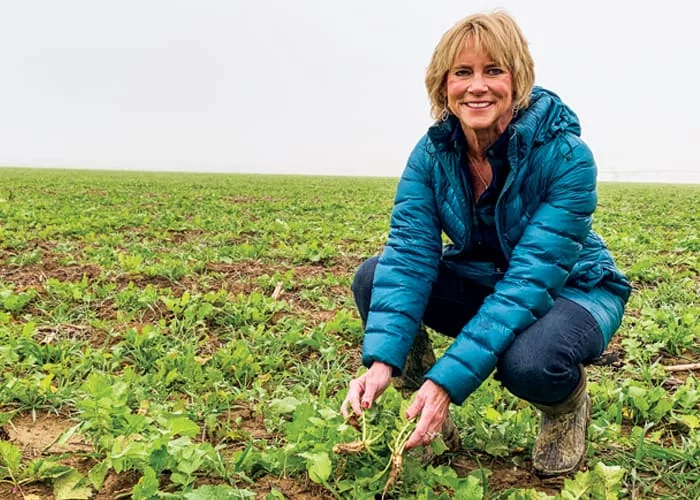
Annie Dee
We went from farming white sugar sand to farming the heaviest of clay soils when my family moved our farming operation from Florida to Alabama in 1989. To say the move made farming a bit different would be a drastic understatement.
In Florida, we could disc in the morning, get a decent-sized rain in the afternoon and be planting in the field by 5 p.m. In Alabama, the tight clays have earned the title “12 o’clock soils”— before 12:00 it’s too wet to do field work and after 12 it’s too hard and dry.
There are literally brick facilities here using these soils as their base material. When farmed conventionally our soils would form cracks so bottomless you could drop a 6-foot stick down them and it probably ended up in China.
Challenging soils are one of many reasons we practice conservation-based farming, including using no-till and cover crops. When we first arrived in Alabama we were dealing with seriously degraded soils.
There was tremendous compaction, terrible weed pressure and soil fertility was almost nonexistent, thanks partly to the fact the ground had been leased and heavily used for years without many inputs going…

Get full access NOW to the most comprehensive, powerful and easy-to-use online resource for no-tillage practices. Just one good idea will pay for your subscription hundreds of times over.
Download these helpful knowledge building tools

We have engineered and developed the most advanced concave system that threshes all crops, eliminates rotor loss, improves grain quality, gives you a cleaner sample – all with one set of XPR concaves.

At Titan International, our product portfolio reflects our commitment to innovation and high-quality products. Titan International offers a full line of solution-focused wheel, tire, and undercarriage products for a wide variety of off-the-road equipment in agriculture, construction, forestry, mining, power sports, high-speed trailers, and outdoor power equipment segments. As one of the largest North American manufacturers, with a network of dealers all over the world, Titan is an industry leader that original equipment manufacturers and operators can count on for durable products and quality service.

Provide expert analysis and decision support to increase productivity and profitability.