 Premium content is for our Digital-only and Premium subscribers. A Print-only subscription doesn't qualify. Please
No-Till Farmer
Get full access NOW to the most comprehensive, powerful and easy-to-use online resource for no-tillage practices. Just one good idea will pay for your subscription hundreds of times over.
While surface drainage may be enough to remove excess water from many no-tilled fields, John and Alex Young know from experience their water issues can’t be solved that way.
Raising corn, wheat and double-cropped soybeans on very uneven terrain near Herndon in southwestern Kentucky, they farm variable soils with high clay content and both fragipans and limestone strata that restrict water movement.
“If you have too much water and you can’t get rid of it, that acre of land is worth just about zero to you,” says John, who ran a tiling company with his wife Beth during the 1970s.
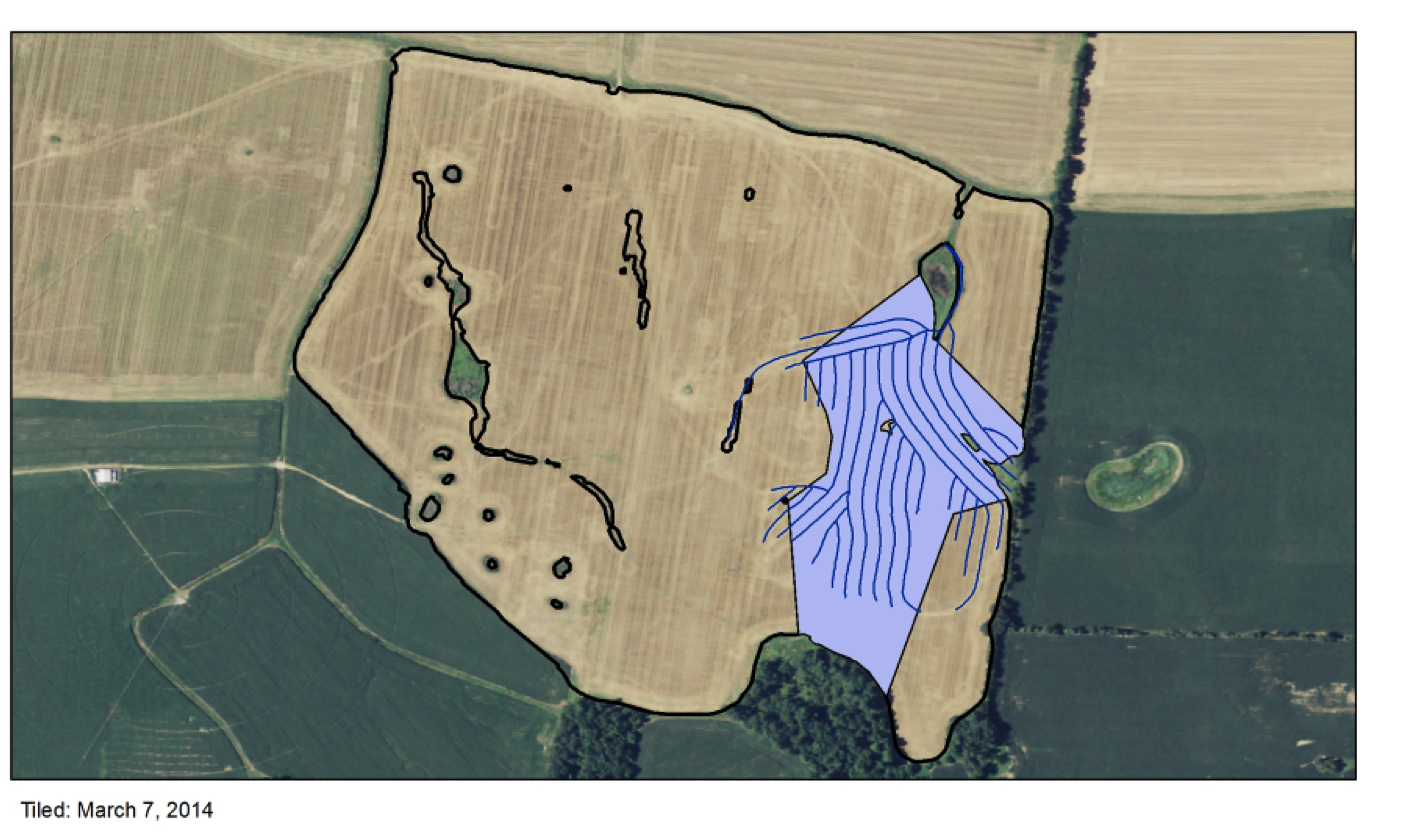 Winter wheat yields in this field near Herndon, Ky., on a farm rented by John and Alex averaged about 11.5% below the field average in 2012. Most of that loss was from the poorly drained area shown in blue. But after that area was tiled in 2014, yield in the entire field measured only 1.4% below average.
In the last few decades, the family, along with several land owners, has spent anywhere from $500 an acre to install tile drainage to as much as $1,800 an acre where there is no nearby outlet. Their laterals are sometimes as close as 30 feet apart and, due to their local topography, are able to discharge water into natural draws and feed the watershed instead of building holding basins.
The fields where the Youngs would typically tile fields are fairly productive in a dry year, but during a wet spring…

Get full access NOW to the most comprehensive, powerful and easy-to-use online resource for no-tillage practices. Just one good idea will pay for your subscription hundreds of times over.
Download these helpful knowledge building tools

We have engineered and developed the most advanced concave system that threshes all crops, eliminates rotor loss, improves grain quality, gives you a cleaner sample – all with one set of XPR concaves.

At Titan International, our product portfolio reflects our commitment to innovation and high-quality products. Titan International offers a full line of solution-focused wheel, tire, and undercarriage products for a wide variety of off-the-road equipment in agriculture, construction, forestry, mining, power sports, high-speed trailers, and outdoor power equipment segments. As one of the largest North American manufacturers, with a network of dealers all over the world, Titan is an industry leader that original equipment manufacturers and operators can count on for durable products and quality service.

Provide expert analysis and decision support to increase productivity and profitability.