 Premium content is for our Digital-only and Premium subscribers. A Print-only subscription doesn't qualify. Please
No-Till Farmer
Get full access NOW to the most comprehensive, powerful and easy-to-use online resource for no-tillage practices. Just one good idea will pay for your subscription hundreds of times over.
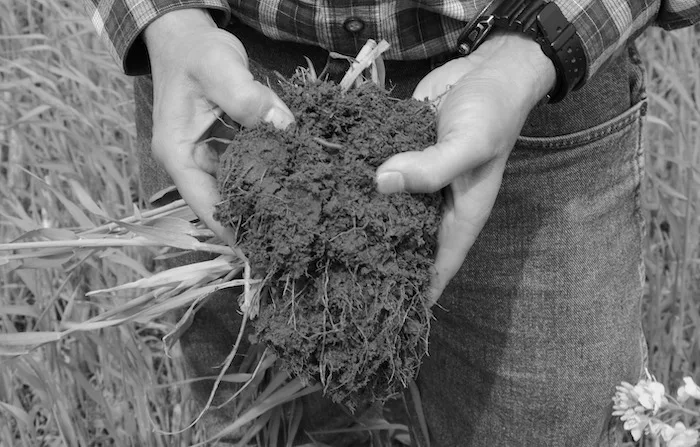
If you've ever been to a no-till gathering or conference, such as the National No-Tillage Conference, you’ve heard testimonial after testimonial about the soil metamorphism that occurs when making the switch from conventionally-tilled ground to no-till. Farmers say it better holds moisture, and isn’t easily disturbed; something especially beneficial to farmers prone to drought or erosion.
But does anyone know why? Sure, you might say, it’s because of the root structure left in the soil. But is that the only reason?
Thanks to a study done by Sara Wright at the U. S. Department of Agriculture in Beltsville, Md., we now know the answer. It has to do with root structure and careful soil management practices. It also lists no-till as the best practice available to keep soils and plants healthy, not that you needed us to tell you that.
A green material was discovered in 1996. The only initial observations about the substance was that it was a hardy material that was produced by a certain strain of fungi.
What resulted is the discovery of glomalin, eventually providing yet another explanation why no-till soils are far more healthier than conventionally tilled soils. The glomalin, belonging to a group of soil fungi, acts as a glue to help stabilize your soils.
Apparently the fungi is beneficial to plants as well as the soil, because hyphae, or the hair-like structures that project from the fungus, explore more soil than plants can reach and carry phosphorus to the plant…
Get full access NOW to the most comprehensive, powerful and easy-to-use online resource for no-tillage practices. Just one good idea will pay for your subscription hundreds of times over.
Download these helpful knowledge building tools

We have engineered and developed the most advanced concave system that threshes all crops, eliminates rotor loss, improves grain quality, gives you a cleaner sample – all with one set of XPR concaves.

At Titan International, our product portfolio reflects our commitment to innovation and high-quality products. Titan International offers a full line of solution-focused wheel, tire, and undercarriage products for a wide variety of off-the-road equipment in agriculture, construction, forestry, mining, power sports, high-speed trailers, and outdoor power equipment segments. As one of the largest North American manufacturers, with a network of dealers all over the world, Titan is an industry leader that original equipment manufacturers and operators can count on for durable products and quality service.

Provide expert analysis and decision support to increase productivity and profitability.