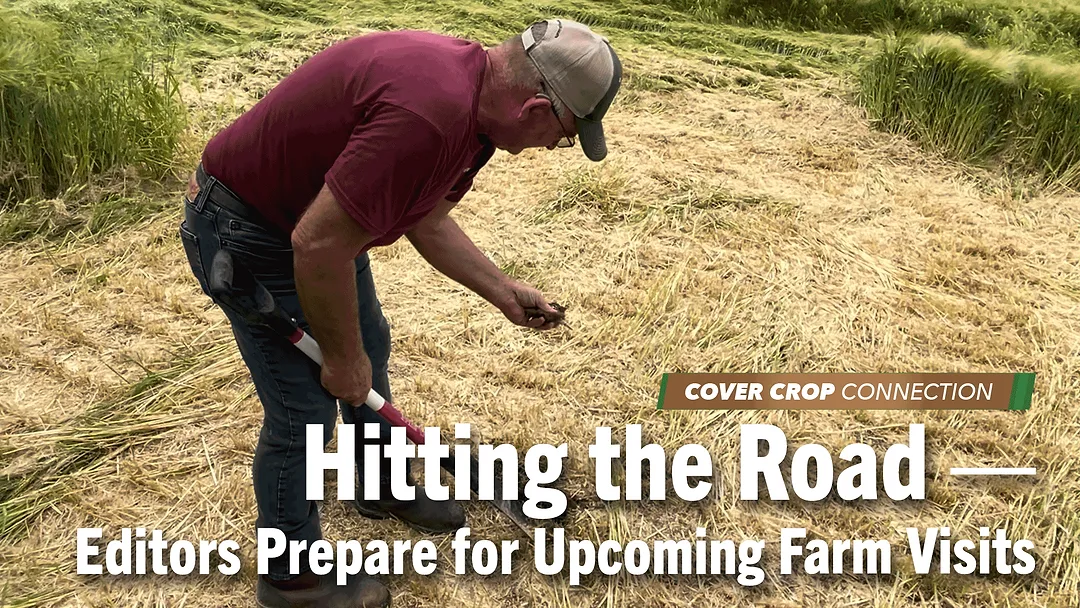
As the weather heats up and farmers everywhere get busier, the editorial team and I are getting plans squared away to hit the road and travel to several farms and field days in the coming months. Just like last year, my first big trip of the summer will take me out east where I’ll visit a handful of farmers in the Maryland, Delaware and Pennsylvania areas. In case you missed the content last time around, here’s a clip from a conversation I had last year with Elizabethtown, Pa., no-tiller Jim Hershey.
Jim Hershey: “So we raise corn, soybeans, wheat, and barley, and I like to add cover crops because cover crop is... I feel it's a cash crop for me even though I don't harvest it. What it's doing for the soil is just... I've seen tremendous improvement in soil profile, the soil health and water infiltration and the list goes on.”
Mackane Vogel: “Yeah, something I learned last year when I did my couple of East Coast farm visits, I visited Delaware and a couple farms in Maryland, Pennsylvania because of the Chesapeake Bay and just some of those other watershed areas, it seems like cover crops have really become almost kind of mandatory for a lot of farmers in those areas. But I mean from an erosion standpoint, it seems crucial for this area.”
Jim Hershey: “And when I started, well, then I've been cover cropping for 27, 28 years now, and planting green like 17 of those years, or maybe even in 20, I lose track it anymore. But originally for me the cover crop thing was erosion along with the no-till. It was just another way of managing your soils to help hold water, help hold soil from running off. Little did we know back then how much benefit the cover crops were doing for everything underneath the soil that we didn't see or we didn't monitor or we didn't know what was going on down there and we still don't know everything. We're learning new things all the time about how carbon sequestration, well, that you didn't hear a decade ago. I mean now it's new things evolving all the time, and so every acre of our crop land will get covered with some either multi-species cover crop or just a single cereal grain or something like that.”
Stay tuned to see which farmers I’ll be visiting this year, as I’ll be sharing blogs, photos and videos from my trip in mid-June. You can find all of that of course, at CoverCropStrategies.com.
Watch the full Video of this episode of Conservation Ag Update.