
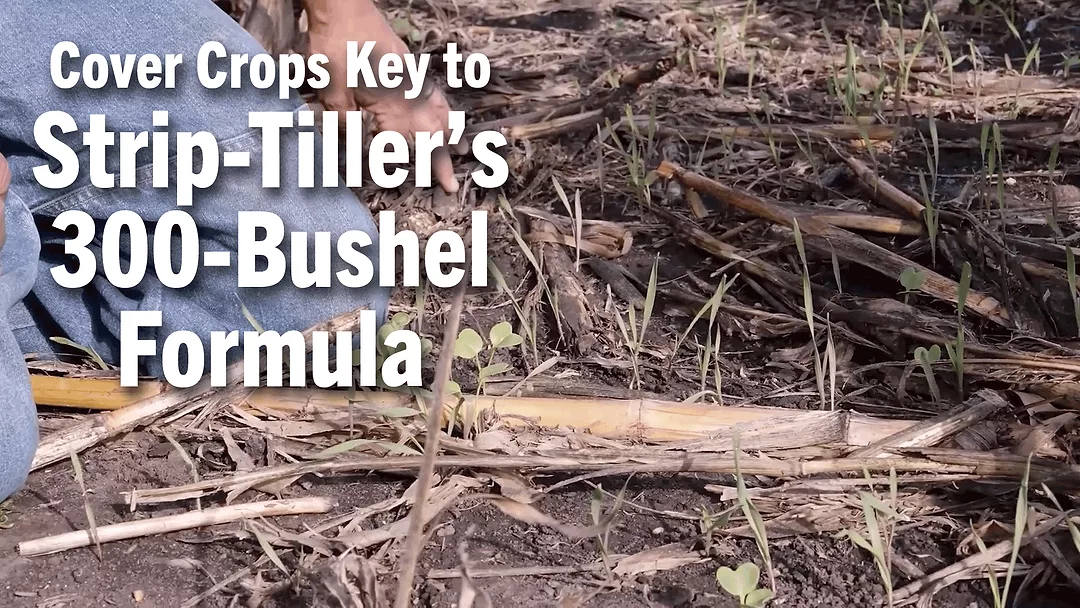
We begin in Lake City, Iowa, where Mark Schleisman and his family had not 1, not 2, but 3 300-bushel corn yield plots in 2025.
That was good enough for the top 3 spots in the NCGA’s Iowa strip-till irrigated category. But conservation, not high yields, is the name of the game for the Schleismans, who also no-till their soybeans. Mark says he uses a cover crop on 100% of his 5,000 acres.
“Cereal rye is always our base. But we always run a mix as well. We’ll have oats with it if it’s something we’re going to graze heavily in the fall. If it’s not going to get grazed heavily in the fall, we’ll just run rape, sometimes turnips or radishes, but primarily rape with our rye.”
“If it’s a field with a lot of point rows, we’ll go ahead and do it with a drone. If it’s soybean fields that are going to come off early, we have a vertical-till machine set up with an air seeder on front of it. Some of the corn acres, we’ll come in with a high-clearance machine that has an air machine on it as well.”
“Our cover crops honestly our full width tillage — it replaces that. The root system from that rye or the rape and radishes out there, that’s our tillage because you have cover crops growing everywhere. For us, that loosens the soil, opens it up, creates the channels for the water to infiltrate. We just think it does everything for us.”
A mix of cereal rye and rapeseed was grazed on Schleisman’s 317-bushel, contest-winning plot. He terminated the covers about 5 days before planting.
Watch the full Video of this episode of Conservation Ag Update.