 Premium content is for our Digital-only and Premium subscribers. A Print-only subscription doesn't qualify. Please
No-Till Farmer
Get full access NOW to the most comprehensive, powerful and easy-to-use online resource for no-tillage practices. Just one good idea will pay for your subscription hundreds of times over.
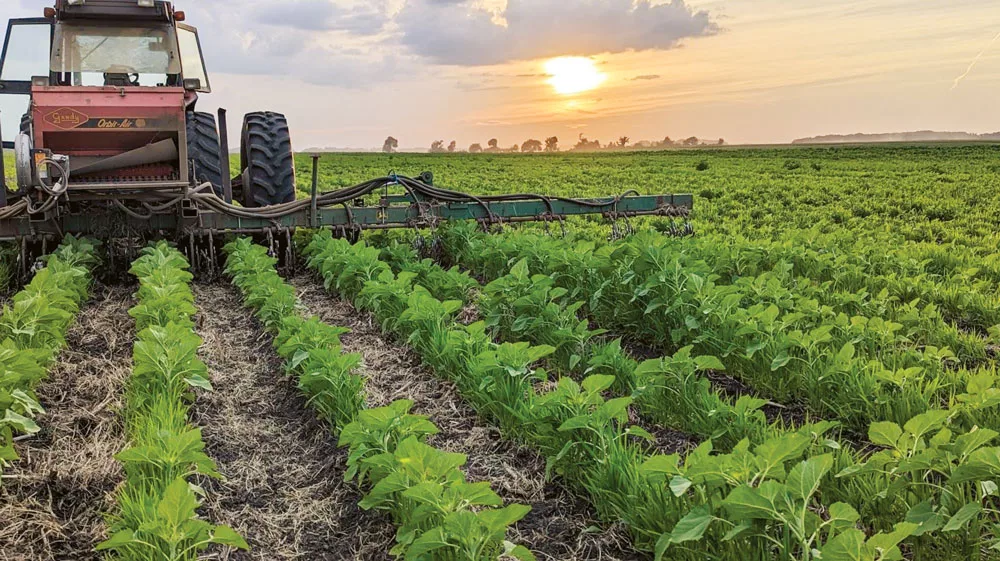
BETWEEN THE ROWS. Cotter has used this home-built 40-foot interseeder for nearly 10 years to plant multi-species cover crop blends between crop rows. He says the rotary hoe wheels work well in residue, fluffing the material up as the cover crop seed drops to the ground before being covered and protected by the mulch. Tom Cotter
As a third-grader Tom Cotter spent several afternoons in school after the bell rang because, as he says: “I was terrible at school.”
The punishment turned out to be a blessing. It was during those “after school” sessions where he was introduced to the game of chess, which became a lifelong passion. He credits the game with helping him develop the thinking skills he uses daily managing a highly-diverse, 800-acre farming/grazing operation that includes both no-till and organic crop production.
Cotter Farm was established in 1874 outside Austin, Minn., and was tilled conventionally until 2013 when Tom began no-tilling and strip-tilling. The annual cropping system included corn, soybeans, one field of sweet corn, a few acres of alfalfa, and a winter crop of cereal rye. The operation also included a 500-head feedlot.
Today 60% of the farm is in no-till corn, soybeans, sweet corn, canning peas, sunflowers, cereal rye, alfalfa and interseeded cover crops with 50 cow/calf pairs and 50-100 grass-fed finished feeders grazing every acre. The remaining 40% produces organic corn, soybeans, sweet corn, sunflowers, oats, buckwheat, hemp-grain/fiber and CBD and cover crops for forage.
“What we’re doing today with the multi-crop rotations and interseeded covers growing throughout the year has boosted our fields’ water infiltration significantly…

Get full access NOW to the most comprehensive, powerful and easy-to-use online resource for no-tillage practices. Just one good idea will pay for your subscription hundreds of times over.
Download these helpful knowledge building tools

We have engineered and developed the most advanced concave system that threshes all crops, eliminates rotor loss, improves grain quality, gives you a cleaner sample – all with one set of XPR concaves.

At Titan International, our product portfolio reflects our commitment to innovation and high-quality products. Titan International offers a full line of solution-focused wheel, tire, and undercarriage products for a wide variety of off-the-road equipment in agriculture, construction, forestry, mining, power sports, high-speed trailers, and outdoor power equipment segments. As one of the largest North American manufacturers, with a network of dealers all over the world, Titan is an industry leader that original equipment manufacturers and operators can count on for durable products and quality service.

Provide expert analysis and decision support to increase productivity and profitability.