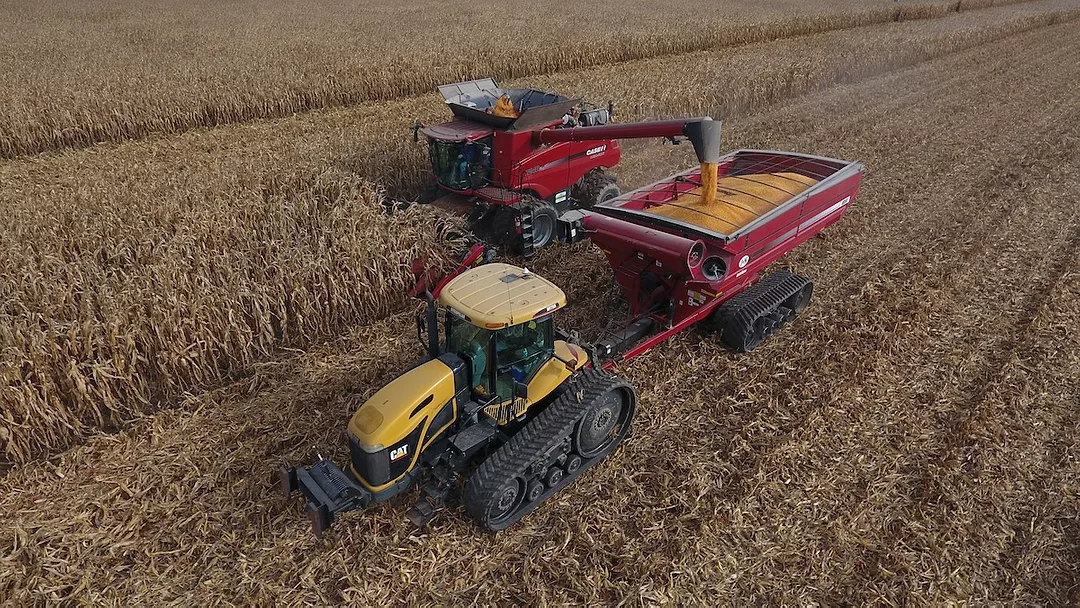
Are you getting everything you can from your harvest data? Your harvest technology is already collecting valuable insights, but many growers I talk to aren’t using it to its full potential.
The opportunity isn’t in collecting more data — it's in closing the gap between what you’re capturing and how you’re applying it. No additional investment required, just strategic focus on three key areas that transform raw numbers into actionable intelligence for the upcoming season: maximizing your existing technology, trial design and connecting your data to economic reality.
Maximize Your Existing Technology
Maximizing your technology begins with consistent data entry. Whether you’re running a trial or making a pass over non-trial acres, it’s important to input product information in real-time. Too often, variety trials go undocumented because operators forget to take notes or tell the computer system they're switching hybrids, making it nearly impossible to recapture that information at harvest. Don’t get in a hurry and forget to document.
Calibration is equally critical to knowing your true yield increase. Check your harvest yield monitors before harvest begins and compare your data against elevator slips to ensure accuracy. Ultimately, data is only as valuable as the information you put in. Without proper entry and calibration, even the best intentions for data collection won't yield actionable insights.
Tracking your trial locations is also imperative. If you can’t identify the trial boundaries at harvest, you can’t capture that information. That’s a big loss.
Design Trials That Answer Your Questions
In addition to a reliable data collection system, you need to make sure you’re gathering the right data through well-designed trials. These best practices will help you do that:
- Keep your trials simple and uniform. This keeps your data clean and easy to analyze.
- Test in multiple fields. This allows you to collect data from different soils or environments.
- Minimize environmental variables. If you have an area that gets heavy deer damage, contains multiple soil types or is prone to flooding, avoid using that area for a test plot.
- Eliminate product variables. Test one input at a time. For example, if you’re doing a side-by-side comparison on foliar versus non-foliar, make sure your fungicides and crop protection stay the same.
Connect Yield Data to Economic Reality
Accurate data collection is just the starting point. Once the harvest is in, review the data you collected and tie it back to your economic analysis. Track input costs against yield and quality data to determine your return on investment. It’s easy to get excited about a four-bushel yield increase, but if that yield costs you more in inputs than what you recouped, then it’s not a viable strategy.
Resist the urge to make judgments based on one season. If you get two failures, then the program isn’t for you. But if you get two borderline results or two wins, give it another year before you change 100% of your acres. That way, you’re not basing your decisions on a one-time experiment.
Over time, your own multi-year, multi-field data will become your most valuable benchmark for decision-making. However, comparing your data against regional averages or industry benchmarks can also help you see where you’re hitting the mark and where there is room for improvement. In challenging markets, this analysis helps you identify your highest-return practices and allocate limited resources strategically.
Before making decisions, run economic analyses across multiple scenarios using different commodity prices. We all know today’s economics could be different from next year’s – it’s important not to make reactionary decisions and change a whole fertilizer program or cropping rotation based on speculation.
The Bottom Line
Harvest data is an important piece of the input planning puzzle. Don’t let the hustle of the harvest season keep you from leveraging it. Reach out to your agronomist – they can help you analyze your ROI and build a crop nutrition plan for next season that balances plant health and economics. You’ll find more information on data collection best practices on our website,agroliquid.com.Stephanie Zelinko, national agronomist at AgroLiquid, has over 20 years of research experience, bridging the company’s sales, agronomy and research teams to develop agronomic solutions for growers. A Michigan State graduate with a master’s in Research Administration, Zelinko understands the importance good agronomics play in successful farming – she also applies that vast knowledge at home, where she and her husband farm.