 Premium content is for our Digital-only and Premium subscribers. A Print-only subscription doesn't qualify. Please
No-Till Farmer
Get full access NOW to the most comprehensive, powerful and easy-to-use online resource for no-tillage practices. Just one good idea will pay for your subscription hundreds of times over.

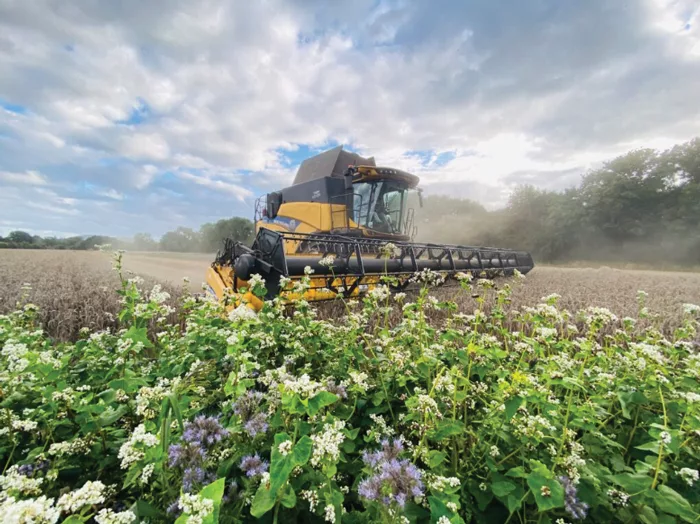
NEW IDEAS. A new benchmarking report comparing 78 farms across Europe provides data showing how regenerative farming can outperform the average conventional system, while also improving ecological outcomes. Source: Direct Driller
Editor’s note: This article is being shared via Direct Driller, a conservation tillage magazine based in the U.K.
Pioneering regenerative farms across Europe are delivering 20% higher gross margins than the average conventional farm, while using 61% less synthetic nitrogen and 75% less pesticide
Yields were only 2% lower on average, despite those reduced inputs, with many farms achieving parity or better.
Those are some of the headline figures from a new report from the European Alliance for Regenerative Agriculture (EARA), which collected survey data from 78 regenerative farms covering a total of 5,300 acres across 14 European Union countries between 2021 and 2023.
The report marks the beginning of EARA’s farmer-led research program, which aims to measure what Europe’s most pioneering farmers are achieving, both agriculturally and ecologically.
To do that, the researchers have developed what they call a novel, farmer-centered index called ‘Regenerating Full Productivity’ (RFP) to understand and track real-world productivity of agriculture.
This metric captures the full spectrum of land stewardship outcomes — agronomic, ecological and economic, the report authors state. It builds on the conventional Total Factor Productivity (TFP) model used by many governments to compare trends across farming sectors and evaluate sector competitiveness.
“RFP integrates field-levels measurements, farmer-generated data and satellite imagery, benchmarked at local, national and European levels,” the report says.
Using this metric the report says the regenerative farmers delivered 33% higher regenerating full productivity on average, in the study period of 2021 to 2023, with gains ranging from 13%-52%.
The data…
Get full access NOW to the most comprehensive, powerful and easy-to-use online resource for no-tillage practices. Just one good idea will pay for your subscription hundreds of times over.
Download these helpful knowledge building tools


We have engineered and developed the most advanced concave system that threshes all crops, eliminates rotor loss, improves grain quality, gives you a cleaner sample – all with one set of XPR concaves.

At Titan International, our product portfolio reflects our commitment to innovation and high-quality products. Titan International offers a full line of solution-focused wheel, tire, and undercarriage products for a wide variety of off-the-road equipment in agriculture, construction, forestry, mining, power sports, high-speed trailers, and outdoor power equipment segments. As one of the largest North American manufacturers, with a network of dealers all over the world, Titan is an industry leader that original equipment manufacturers and operators can count on for durable products and quality service.

Provide expert analysis and decision support to increase productivity and profitability.