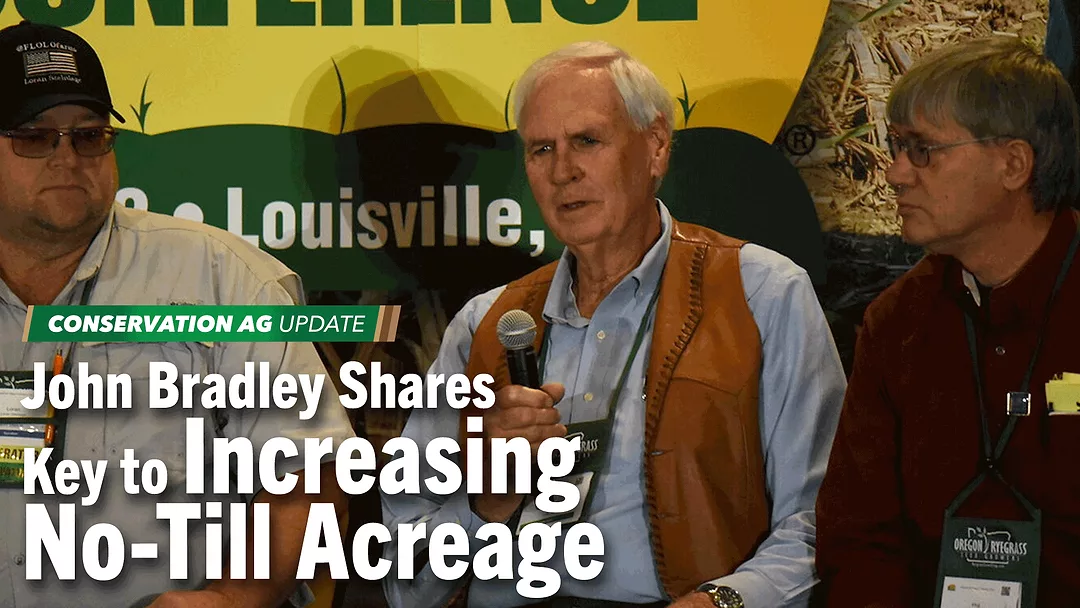
Special treat now, we’re catching up with No-Till Legend John Bradley. The longtime Univ. of Tennessee agronomist was instrumental in the development of no-till in the south in the 1970s and 80s. Bradley credits much of the success to the local farmers who stepped up to the plate as champions for the practice.
“An extension agent would go out and work with a farmer on new innovations. And then they would use him, if you would, as a leader or an example and have field days around him.”
“And where we had those people, you could actually pinpoint where we would get it going. And then when that particular local leader or leaders, maybe it was two or three different farmers, would fade out that no-till went down. To do no-till, one of the first things I recommend is you need a mentor. And that's what this person acted as, a mentor. They could go to him ask questions. They could go to his farm. They could look at his drill. They could look at his planter. They could look at his spray rigs.”
“The concept that I had and worked with was the extension setup test demonstration farms. When I worked for Monsanto, we called them Centers of Excellence. And I went to all the cotton states, and we set those up mainly one for state, sometimes two. And those farmers became the local leaders and spokespeople. And then we would use them in local regional meetings to give how they made it work in their situation.”
“And we had noticed when something, it was pretty much a full-time job keeping them going and answering questions. But when they dropped out of the picture from one reason or the other, the acres went down.”
Watch the full version of this episode of Conservation Ag Update.