Harvest season will be here before you know it. Let’s check in with No-Till Legend Marion Calmer, who shares some insights on how he’s dealing with heavy residue on his Alpha, Ill., farm.
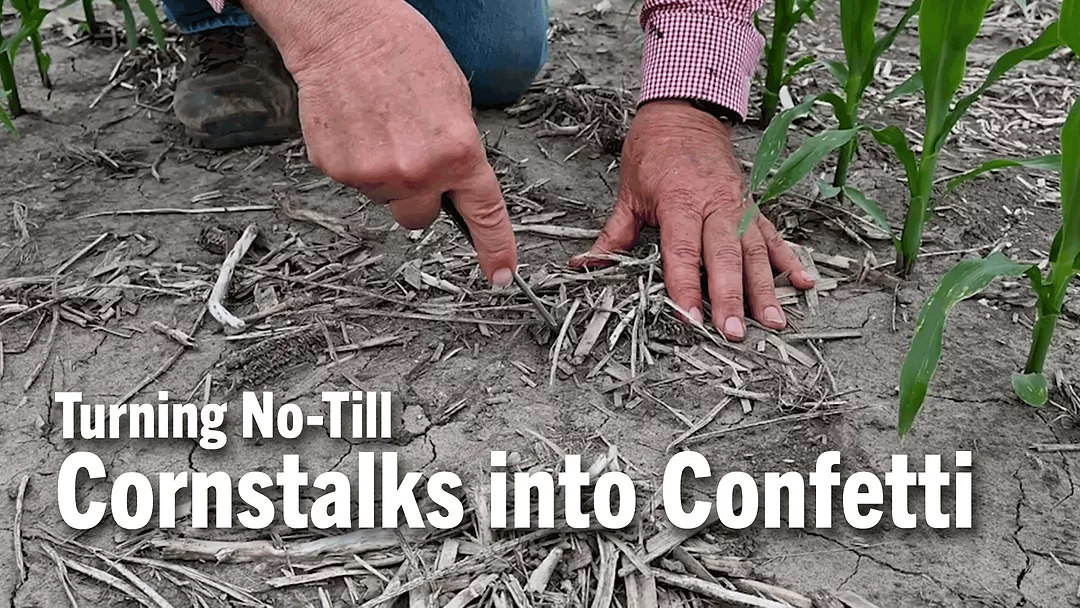
“We planted into corn and we’re in a corn-soybean rotation. This cornstalk residue here was actually harvested about 18 months ago. You can see how well it’s decomposed, and you can see the pieces that were cut with a BT Chopper about an inch long or so. What’s interesting is the earthworms were able to come in here and grab all of that small confetti and pile it up around the hole here. You can see there’s the earthworm hole. He was able to take all that residue and pile it up and make a nice little home for himself. I still believe the faster I can get cornstalk residue to decompose, I get it back in the soil and I don’t have to deal with it, and I don’t have to worry about it washing away with all the heavy rains we had this year.”
Marion says it’s the same principle with soybean harvest. When he’s harvesting soybeans, he keeps the teeth engaged on the straw chopper. He wants the soybean straw to decompose as quick as possible.
Watch the full version of this episode of Conservation Ag Update.